Knowledge Why are alumina crucibles recommended over quartz crucibles for liquid aluminum? Ensure Experimental Accuracy
Author avatar

Tech Team · Kintek Solution

Updated 3 weeks ago

Why are alumina crucibles recommended over quartz crucibles for liquid aluminum? Ensure Experimental Accuracy


Alumina crucibles are the superior choice for Sieverts method experiments involving liquid aluminum due to their high refractoriness and excellent chemical stability. Unlike quartz, which is susceptible to chemical attack by active liquid aluminum and its alloying elements, alumina remains inert at high temperatures, preserving both the physical integrity of the container and the chemical purity of the sample.

The success of the Sieverts method relies on precise volume and temperature calibration. Using quartz leads to container erosion, which not only contaminates the aluminum sample but also alters the thermal distribution within the apparatus, invalidating critical dead volume calibrations.

The Critical Role of Chemical Stability

Preventing Chemical Attack

Liquid aluminum is chemically active and aggressive toward many containment materials. Quartz crucibles are vulnerable to this aggression and will degrade when exposed to the molten metal.

Resistance to Alloying Elements

The risk of degradation increases significantly when the aluminum contains alloying elements. Active elements such as magnesium and lithium accelerate the chemical attack on quartz, making it unsuitable for complex alloy experiments.

Alumina's Inertness

Alumina acts as a robust barrier due to its high chemical stability. It resists reaction with liquid aluminum, ensuring the crucible retains its structure even under the intense thermal conditions required for these experiments.

Impact on Experimental Accuracy

Maintaining Sample Purity

When a crucible reacts with its contents, the container material leaches into the melt. By resisting this erosion, alumina prevents cross-contamination, ensuring that the data collected reflects the properties of the aluminum, not the impurities from the crucible.

Preserving Thermal Distribution

The Sieverts method is highly sensitive to temperature gradients. If a quartz crucible erodes, its physical geometry and wall thickness change, which alters the temperature distribution within the absorption bulb.

Protecting Dead Volume Calibration

Accurate determination of hydrogen solubility depends on a constant "dead volume" (the free space in the reactor). Because crucible erosion alters the thermal profile, it negatively affects the dead volume calibration, leading to erroneous measurements of hydrogen solubility.

Understanding the Risks of Improper Selection

The Consequence of Erosion

Choosing quartz over alumina is not merely a durability issue; it is a data integrity issue. The physical erosion of the quartz creates a cascade of errors that begins with contamination and ends with incorrect solubility data.

Limitations of Quartz

While quartz is often used in other high-temperature applications, its compatibility with aluminum is poor. It lacks the necessary resistance to the specific chemical activity of aluminum and lithium or magnesium alloys, making it a liability for this specific methodology.

Making the Right Choice for Your Experiment

Select your crucible material based on your specific experimental parameters:

  • If your primary focus is Measurement Accuracy: Use alumina to maintain a consistent temperature distribution and ensure valid dead volume calibration.
  • If your primary focus is Alloy Testing: Use alumina to prevent aggressive reactions from active elements like magnesium or lithium.

By prioritizing chemical inertness, you ensure that your apparatus remains a neutral vessel rather than an active variable in your results.

Summary Table:

Feature Alumina Crucibles Quartz Crucibles
Chemical Stability High (Inert to molten Al) Low (Susceptible to erosion)
Sample Purity Preserved (No contamination) Risk of cross-contamination
Alloy Compatibility Resistant to Mg and Li Degrades with active alloys
Thermal Profile Remains constant Changes due to wall erosion
Measurement Impact Accurate dead volume Invalidates calibration

Elevate Your Material Research with KINTEK

Precision in the Sieverts method starts with the right containment. KINTEK specializes in high-quality laboratory equipment and consumables, including durable alumina crucibles and high-performance ceramics designed to withstand the most aggressive molten metals.

Whether you are conducting hydrogen solubility tests or complex alloy experiments, our expertise ensures your apparatus remains a neutral vessel, not an active variable. From high-temperature furnaces and vacuum systems to specialized PTFE products and crushing equipment, we provide the tools needed for uncompromising accuracy.

Ready to optimize your lab's performance? Contact us today to find the perfect solution for your high-temperature applications.

References

  1. P. N. Anyalebechi. Hydrogen Solubility in Liquid and Solid Pure Aluminum—Critical Review of Measurement Methodologies and Reported Values. DOI: 10.4236/msa.2022.134011

This article is also based on technical information from Kintek Solution Knowledge Base .

Related Products

People Also Ask

Related Products

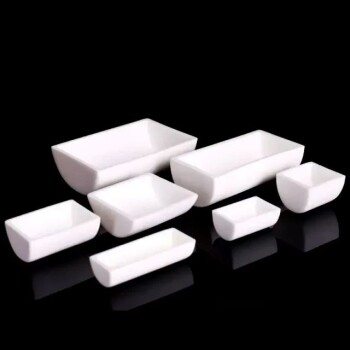
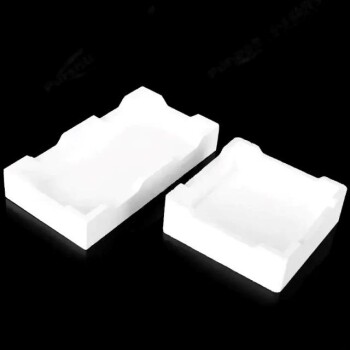
Arc-Shaped Alumina Ceramic Crucible High Temperature Resistant for Engineering Advanced Fine Ceramics

Arc-Shaped Alumina Ceramic Crucible High Temperature Resistant for Engineering Advanced Fine Ceramics

In the journey of scientific exploration and industrial production, every detail is crucial. Our arc-shaped alumina ceramic crucibles, with their excellent high temperature resistance and stable chemical properties, have become a powerful assistant in laboratories and industrial fields. They are made of high-purity alumina materials and manufactured through precision processes to ensure excellent performance in extreme environments.

Alumina Al2O3 Ceramic Crucible Semicircle Boat with Lid for Engineering Advanced Fine Ceramics

Alumina Al2O3 Ceramic Crucible Semicircle Boat with Lid for Engineering Advanced Fine Ceramics

Crucibles are containers widely used for melting and processing various materials, and semicircular boat-shaped crucibles are suitable for special smelting and processing requirements. Their types and uses vary by material and shape.

Engineering Advanced Fine Ceramics Alumina Crucibles (Al2O3) for Thermal Analysis TGA DTA

Engineering Advanced Fine Ceramics Alumina Crucibles (Al2O3) for Thermal Analysis TGA DTA

TGA/DTA thermal analysis vessels are made of aluminum oxide (corundum or aluminum oxide). It can withstand high temperature and is suitable for analyzing materials that require high temperature testing.

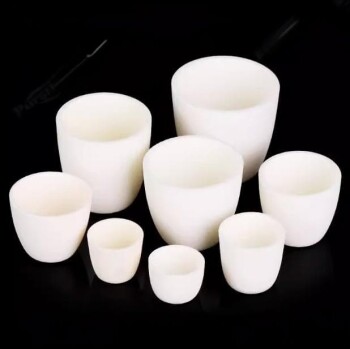
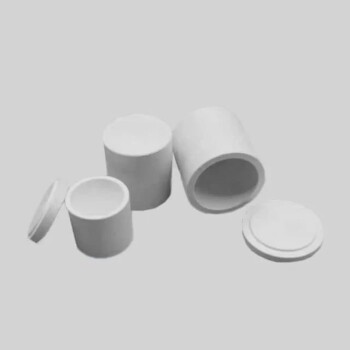
Engineering Advanced Fine Ceramics Alumina Al2O3 Crucible With Lid Cylindrical Laboratory Crucible

Engineering Advanced Fine Ceramics Alumina Al2O3 Crucible With Lid Cylindrical Laboratory Crucible

Cylindrical Crucibles Cylindrical crucibles are one of the most common crucible shapes, suitable for melting and processing a wide variety of materials, and are easy to handle and clean.

Engineering Advanced Fine Alumina Al2O3 Ceramic Crucible for Laboratory Muffle Furnace

Engineering Advanced Fine Alumina Al2O3 Ceramic Crucible for Laboratory Muffle Furnace

Alumina ceramic crucibles are used in some materials and metal melting tools, and flat-bottomed crucibles are suitable for melting and processing larger batches of materials with better stability and uniformity.

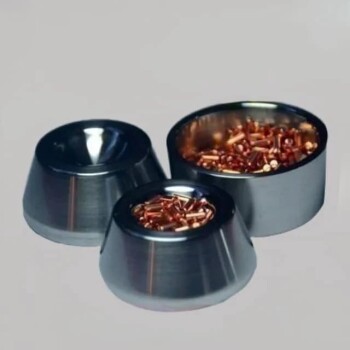
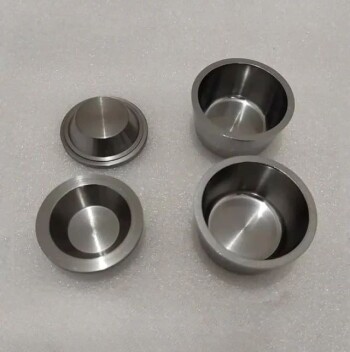
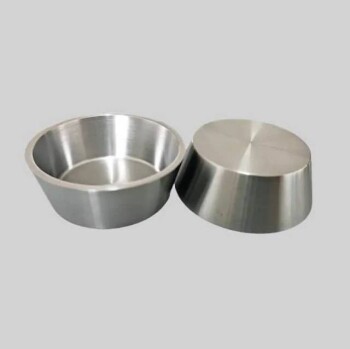
Electron Beam Evaporation Coating Tungsten Crucible and Molybdenum Crucible for High Temperature Applications

Electron Beam Evaporation Coating Tungsten Crucible and Molybdenum Crucible for High Temperature Applications

Tungsten and molybdenum crucibles are commonly used in electron beam evaporation processes due to their excellent thermal and mechanical properties.

Evaporation Crucible for Organic Matter

Evaporation Crucible for Organic Matter

An evaporation crucible for organic matter, referred to as an evaporation crucible, is a container for evaporating organic solvents in a laboratory environment.

Custom Machined and Molded PTFE Teflon Parts Manufacturer with PTFE Crucible and Lid

Custom Machined and Molded PTFE Teflon Parts Manufacturer with PTFE Crucible and Lid

PTFE crucibles, made from pure Teflon, offer chemical inertness and resistance from -196°C to 280°C, ensuring compatibility with a wide range of temperatures and chemicals. These crucibles feature machine-finished surfaces for easy cleaning and prevention of contamination, making them ideal for precise laboratory applications.

Electron Beam Evaporation Coating Gold Plating Tungsten Molybdenum Crucible for Evaporation

Electron Beam Evaporation Coating Gold Plating Tungsten Molybdenum Crucible for Evaporation

These crucibles act as containers for the gold material evaporated by the electron evaporation beam while precisely directing the electron beam for precise deposition.

Electron Beam Evaporation Coating Oxygen-Free Copper Crucible and Evaporation Boat

Electron Beam Evaporation Coating Oxygen-Free Copper Crucible and Evaporation Boat

Electron Beam Evaporation Coating Oxygen-Free Copper Crucible enables precise co-deposition of various materials. Its controlled temperature and water-cooled design ensure pure and efficient thin film deposition.

High Temperature Muffle Oven Furnace for Laboratory Debinding and Pre Sintering

High Temperature Muffle Oven Furnace for Laboratory Debinding and Pre Sintering

KT-MD High temperature debinding and pre-sintering furnace for ceramic materials with various molding processes. Ideal for electronic components such as MLCC and NFC.

Vertical Laboratory Tube Furnace

Vertical Laboratory Tube Furnace

Elevate your experiments with our Vertical Tube Furnace. Versatile design allows for operation under various environments and heat treatment applications. Order now for precise results!

Molybdenum Disilicide (MoSi2) Thermal Elements Electric Furnace Heating Element

Molybdenum Disilicide (MoSi2) Thermal Elements Electric Furnace Heating Element

Discover the power of Molybdenum Disilicide (MoSi2) Heating Element for high-temperature resistance. Unique oxidation resistance with stable resistance value. Learn more about its benefits now!

Boron Nitride (BN) Crucible for Phosphorous Powder Sintered

Boron Nitride (BN) Crucible for Phosphorous Powder Sintered

Phosphorus powder sintered boron nitride (BN) crucible has a smooth surface, dense, pollution-free and long service life.

Electron Beam Evaporation Coating Conductive Boron Nitride Crucible BN Crucible

Electron Beam Evaporation Coating Conductive Boron Nitride Crucible BN Crucible

High-purity and smooth conductive boron nitride crucible for electron beam evaporation coating, with high temperature and thermal cycling performance.

Vacuum Heat Treat and Pressure Sintering Furnace for High Temperature Applications

Vacuum Heat Treat and Pressure Sintering Furnace for High Temperature Applications

Vacuum pressure sintering furnaces are designed for high temperature hot pressing applications in metal and ceramic sintering. Its advanced features ensure precise temperature control, reliable pressure maintenance, and a robust design for seamless operation.

58L Precision Laboratory Ultra Low Temperature Upright Freezer for Critical Sample Storage

58L Precision Laboratory Ultra Low Temperature Upright Freezer for Critical Sample Storage

Ultra-low temperature freezer for labs, reliable -86°C storage, stainless steel interior, energy-efficient. Secure your samples now!

Automatic Lab Cold Isostatic Press CIP Machine Cold Isostatic Pressing

Automatic Lab Cold Isostatic Press CIP Machine Cold Isostatic Pressing

Efficiently prepare samples with our Automatic Lab Cold Isostatic Press. Widely used in material research, pharmacy, and electronic industries. Provides greater flexibility and control compared to electric CIPs.

Shaking Incubators for Diverse Laboratory Applications

Shaking Incubators for Diverse Laboratory Applications

Precision lab shaking incubators for cell culture & research. Quiet, reliable, customizable. Get expert advice today!

Cylindrical Press Mold with Scale for Lab

Cylindrical Press Mold with Scale for Lab

Discover precision with our Cylindrical Press Mold. Ideal for high-pressure applications, it molds various shapes and sizes, ensuring stability and uniformity. Perfect for lab use.


Leave Your Message