Knowledge Why are boron nitride coatings and graphite paper applied to graphite molds? Enhance Your Hot-Press Sintering Success
Author avatar

Tech Team · Kintek Solution

Updated 3 days ago

Why are boron nitride coatings and graphite paper applied to graphite molds? Enhance Your Hot-Press Sintering Success


Boron nitride coatings and graphite paper function primarily as critical isolation and lubrication layers between the raw material and the mold walls. By creating a physical and chemical barrier, these materials prevent the sintering composite—such as ZrB2-SiC—from reacting with or adhering to the rigid graphite mold under high heat and pressure.

Core Takeaway High-temperature sintering creates an environment prone to chemical bonding between the sample and the containment vessel. Boron nitride and graphite paper disrupt this potential bond, ensuring the final product can be removed cleanly without damaging the sample’s surface or destroying the expensive graphite mold.

The Mechanics of Isolation and Lubrication

Preventing Chemical Reactions

At elevated sintering temperatures, raw materials often become highly reactive. Without a barrier, the composite powder can chemically bond with the carbon in the graphite mold.

Boron nitride (BN) is thermally stable and chemically inert. It acts as a shield, effectively stopping diffusion or reaction between the composite (like ZrB2-SiC) and the mold walls.

Ensuring Smooth Demolding

Friction is a major challenge when ejecting a solidified sample from a rigid mold. Adhesion caused by heat and pressure can make removal impossible without mechanical force that might crack the sample.

These coatings provide lubrication, significantly reducing the coefficient of friction. This allows the finished sample to slide out of the mold smoothly after the process is complete.

Preserving Integrity and Longevity

Maintaining Sample Surface Quality

Direct contact with the mold wall can lead to surface defects, pitting, or carbonization of the sample.

By using these liners, you ensure the integrity of the sample surface. The sample emerges with a smoother finish, requiring less post-processing or grinding.

Extending Mold Service Life

Graphite molds are expensive precision tools. If a sample sticks, removing it often requires breaking or chipping the mold.

Furthermore, porous graphite can absorb molten elements during the process. Boron nitride seals these pores, protecting the mold from erosion and penetration, which significantly extends its reuse cycle.

Operational Considerations and Trade-offs

Managing Thermal Expansion

A distinct advantage of using graphite paper (specifically flexible graphite foil) is its compressibility.

Different materials expand at different rates when heated. The flexibility of graphite paper helps alleviate mechanical stress caused by mismatches in thermal expansion between the rigid mold and the densifying powder.

Application Precision

While these materials are essential, their application requires care. Boron nitride must be applied uniformly; a patchy coating can lead to localized sticking and sample failure.

Similarly, the thickness of the graphite paper must be accounted for in the mold design tolerances. If ignored, the final dimensions of the sintered part may be inaccurate.

Making the Right Choice for Your Goal

To maximize the success of your hot-press loading process, choose your barrier method based on your specific operational priorities:

  • If your primary focus is surface finish: Prioritize a high-quality, uniformly sprayed boron nitride coating to seal pores and ensure a defect-free skin on the sample.
  • If your primary focus is mold longevity: Utilize flexible graphite paper in conjunction with coatings to create a robust physical buffer that absorbs stress and prevents melt penetration.
  • If your primary focus is preventing reaction: Ensure the selected barrier material is chemically inert specifically regarding the metal or composite powder you are sintering (e.g., Titanium vs. ZrB2-SiC).

Proper isolation is not just a safety measure; it is a fundamental requirement for achieving metallurgical bonding within the sample while keeping the tooling intact.

Summary Table:

Barrier Material Primary Function Key Benefit
Boron Nitride (BN) Chemical Isolation Prevents reactions & seals mold pores for better surface finish.
Graphite Paper Mechanical Buffer Absorbs thermal expansion stress & facilitates easy sample ejection.
Combined Use System Protection Maximizes mold longevity and ensures sample integrity under pressure.

Optimize Your Sintering Outcomes with KINTEK Precision

Maximize the efficiency and lifespan of your laboratory equipment with high-performance solutions from KINTEK. Whether you are working with hot-press systems, high-temperature furnaces (vacuum, CVD, or induction melting), or hydraulic presses, our expertise ensures your materials research remains precise and cost-effective.

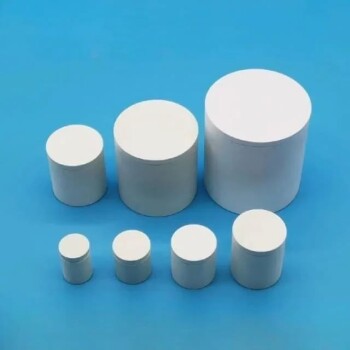
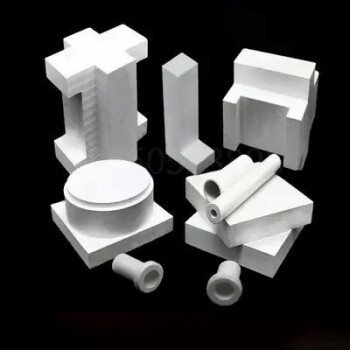
We provide a comprehensive range of graphite molds, ceramics, and crucibles, along with the essential consumables like PTFE products and boron nitride solutions needed to protect your investment and ensure superior sample quality. Don't let mold adhesion or surface defects compromise your results.

Ready to elevate your lab's performance? Contact our technical experts today to find the perfect equipment and consumables tailored to your specific research needs.

Related Products

People Also Ask

Related Products

Custom PTFE Teflon Parts Manufacturer for PTFE Tweezers

Custom PTFE Teflon Parts Manufacturer for PTFE Tweezers

PTFE tweezers inherit the excellent physical and chemical properties of PTFE, such as high temperature resistance, cold resistance, acid and alkali resistance, and corrosion resistance to most organic solvents.

Horizontal High Temperature Graphite Vacuum Graphitization Furnace

Horizontal High Temperature Graphite Vacuum Graphitization Furnace

Horizontal Graphitization Furnace: This type of furnace is designed with the heating elements placed horizontally, allowing for uniform heating of the sample. It's well-suited for graphitizing large or bulky samples that require precise temperature control and uniformity.

Custom CVD Diamond Coating for Lab Applications

Custom CVD Diamond Coating for Lab Applications

CVD Diamond Coating: Superior Thermal Conductivity, Crystal Quality, and Adhesion for Cutting Tools, Friction, and Acoustic Applications

Graphite Vacuum Continuous Graphitization Furnace

Graphite Vacuum Continuous Graphitization Furnace

High-temperature graphitization furnace is a professional equipment for graphitization treatment of carbon materials. It is a key equipment for the production of high-quality graphite products. It has high temperature, high efficiency and uniform heating. It is suitable for various high-temperature treatments and graphitization treatments. It is widely used in metallurgy, electronics, aerospace, etc. industry.

400-700nm Wavelength Anti Reflective AR Coating Glass

400-700nm Wavelength Anti Reflective AR Coating Glass

AR coatings are applied on optical surfaces to reduce reflection. They can be a single layer or multiple layers that are designed to minimize reflected light through destructive interference.

Ultra-High Temperature Graphite Vacuum Graphitization Furnace

Ultra-High Temperature Graphite Vacuum Graphitization Furnace

The ultra-high temperature graphitization furnace utilizes medium frequency induction heating in a vacuum or inert gas environment. The induction coil generates an alternating magnetic field, inducing eddy currents in the graphite crucible, which heats up and radiates heat to the workpiece, bringing it to the desired temperature. This furnace is primarily used for graphitization and sintering of carbon materials, carbon fiber materials, and other composite materials.

1400℃ Controlled Atmosphere Furnace with Nitrogen and Inert Atmosphere

1400℃ Controlled Atmosphere Furnace with Nitrogen and Inert Atmosphere

Achieve precise heat treatment with KT-14A controlled atmosphere furnace. Vacuum sealed with a smart controller, it's ideal for lab and industrial use up to 1400℃.

Vertical High Temperature Graphite Vacuum Graphitization Furnace

Vertical High Temperature Graphite Vacuum Graphitization Furnace

Vertical high temperature graphitization furnace for carbonization and graphitization of carbon materials up to 3100℃.Suitable for shaped graphitization of carbon fiber filaments and other materials sintered in a carbon environment.Applications in metallurgy, electronics, and aerospace for producing high-quality graphite products like electrodes and crucibles.

1200℃ Split Tube Furnace with Quartz Tube Laboratory Tubular Furnace

1200℃ Split Tube Furnace with Quartz Tube Laboratory Tubular Furnace

KT-TF12 split tube furnace: high-purity insulation, embedded heating wire coils, and max. 1200C. Widely used for new materials and chemical vapour deposition.

Graphite Vacuum Furnace Negative Material Graphitization Furnace

Graphite Vacuum Furnace Negative Material Graphitization Furnace

Graphitization furnace for battery production has uniform temperature and low energy consumption. Graphitization furnace for negative electrode materials: an efficient graphitization solution for battery production and advanced functions to enhance battery performance.

Graphite Vacuum Furnace IGBT Experimental Graphitization Furnace

Graphite Vacuum Furnace IGBT Experimental Graphitization Furnace

IGBT experimental graphitization furnace, a tailored solution for universities and research institutions, with high heating efficiency, user-friendliness, and precise temperature control.

1400℃ Laboratory High Temperature Tube Furnace with Alumina Tube

1400℃ Laboratory High Temperature Tube Furnace with Alumina Tube

Looking for a tube furnace for high-temperature applications? Our 1400℃ Tube Furnace with Alumina Tube is perfect for research and industrial use.

Graphite Vacuum Furnace High Thermal Conductivity Film Graphitization Furnace

Graphite Vacuum Furnace High Thermal Conductivity Film Graphitization Furnace

The high thermal conductivity film graphitization furnace has uniform temperature, low energy consumption and can operate continuously.

Custom PTFE Teflon Parts Manufacturer Laboratory High Temperature Mixing Paddle Mixer

Custom PTFE Teflon Parts Manufacturer Laboratory High Temperature Mixing Paddle Mixer

The PTFE mixing paddle mixer is a versatile and robust tool designed for laboratory use, particularly in environments requiring high resistance to chemicals and extreme temperatures. Crafted from high-quality PTFE, this mixer boasts several key features that enhance its functionality and durability.

Engineering Advanced Fine Ceramics Head Tweezers with Pointed Elbow Zirconia Ceramic Tip

Engineering Advanced Fine Ceramics Head Tweezers with Pointed Elbow Zirconia Ceramic Tip

Zirconia ceramic tweezers are a high-precision tool made of advanced ceramic materials, especially suitable for operating environments that require high precision and corrosion resistance. This type of tweezers not only has excellent physical properties, but is also popular in the medical and laboratory fields because of its biocompatibility.

Platinum Sheet Electrode for Laboratory and Industrial Applications

Platinum Sheet Electrode for Laboratory and Industrial Applications

Elevate your experiments with our Platinum Sheet Electrode. Crafted with quality materials, our safe and durable models can be tailored to fit your needs.

Twin Screw Extruder Plastic Granulation Machine

Twin Screw Extruder Plastic Granulation Machine

Twin screw extruder plastic granulation machine is designed for the mixing and processing experiments of engineering plastics, modified plastics, waste plastics and masterbatches.

Silicon Carbide (SIC) Ceramic Sheet Wear-Resistant Engineering Advanced Fine Ceramics

Silicon Carbide (SIC) Ceramic Sheet Wear-Resistant Engineering Advanced Fine Ceramics

Silicon carbide (sic) ceramic sheet is composed of high-purity silicon carbide and ultra-fine powder, which is formed by vibration molding and high-temperature sintering.

Precision Machined Zirconia Ceramic Ball for Engineering Advanced Fine Ceramics

Precision Machined Zirconia Ceramic Ball for Engineering Advanced Fine Ceramics

zirconia ceramic ball have the characteristics of high strength, high hardness, PPM wear level, high fracture toughness, good wear resistance, and high specific gravity.

PTFE Electrolytic Cell Electrochemical Cell Corrosion-Resistant Sealed and Non-Sealed

PTFE Electrolytic Cell Electrochemical Cell Corrosion-Resistant Sealed and Non-Sealed

Choose our PTFE Electrolytic Cell for reliable, corrosion-resistant performance. Customize specifications with optional sealing. Explore now.


Leave Your Message