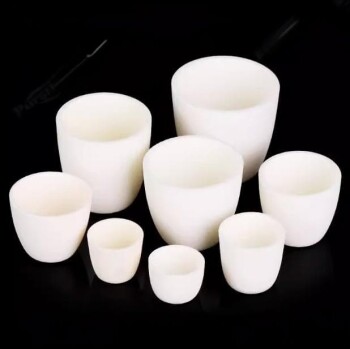
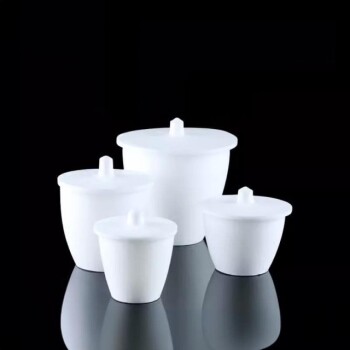
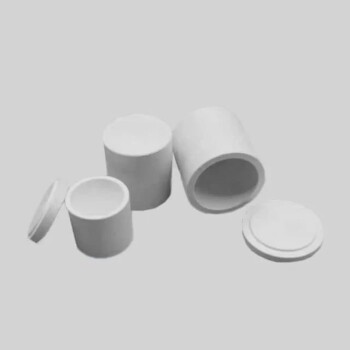
Covered ceramic crucibles are used at 1173 K because they create a controlled, oxygen-deficient micro-environment necessary for pyrolysis. This specific setup prevents the wheat straw from undergoing direct combustion by blocking external air infiltration. By ensuring the biomass decomposes through heat alone rather than burning, researchers can precisely measure the mass of volatile gases released.
The core purpose of a covered ceramic crucible is to isolate the sample from oxygen, transforming a combustion process into a devolatilization reaction. This allows for the accurate quantification of volatile matter based solely on thermal decomposition at 1173 K.
The Role of the Micro-Environment
Preventing Oxidative Combustion
The primary function of the crucible lid is to act as a physical barrier against atmospheric oxygen. Without this seal, the wheat straw would react with oxygen and burn, leading to an overestimation of volatile matter due to the loss of fixed carbon.
Facilitating Pure Pyrolysis
Under the restricted-oxygen conditions created by the lid, the biomass undergoes pyrolysis. This process uses intense heat to break down complex organic molecules into vapors and gases without the interference of fire.
Preserving Sample Integrity
The "near-isolated" environment ensures that the gases released from the wheat straw create a positive pressure inside the crucible. This further prevents external air from entering during the critical heating phase at 1173 K.
Material Advantages of Ceramic
Chemical Inertness and Stability
High-purity ceramics, such as alumina, are chosen because they do not react with the biomass or the resulting char. This chemical neutrality ensures that the crucible's mass remains constant, providing high detection precision for minute weight changes.
High Thermal Conductivity
Ceramic materials efficiently transfer heat from the furnace to the sample. This rapid and uniform heat distribution is essential for reaching the target temperature of 1173 K quickly, which is standard for volatile matter characterization.
Resistance to Thermal Shock
Determining volatile matter involves moving samples into and out of high-temperature environments. Quality ceramic crucibles are designed to withstand these severe thermal shocks without cracking or degrading over time.
Understanding the Trade-offs
The Risk of Improper Sealing
The accuracy of the test is entirely dependent on the fit of the lid. If the lid is warped or poorly seated, "micro-leaks" will allow oxygen to enter, causing partial combustion and distorting the final data.
Material Fragility vs. Performance
While alumina offers superior thermal stability, it is inherently brittle. Users must balance the need for high-temperature precision with the risk of mechanical failure if the crucibles are handled roughly or cooled too abruptly.
Contamination Over Time
Repeated use can lead to the buildup of residual carbon or mineral ash within the ceramic pores. If not cleaned or replaced regularly, these residues can react with new samples, compromising the objectivity of the results.
How to Apply This to Your Analysis
Achieving reliable results in biomass characterization depends on both the equipment used and the rigor of the testing protocol.
- If your primary focus is data precision: Ensure the crucible lid fits perfectly to maintain a strict oxygen-deficient environment and prevent oxidative weight loss.
- If your primary focus is equipment longevity: Select high-purity alumina crucibles to minimize chemical reactions and ensure the vessel can withstand repeated cycles at 1173 K.
By utilizing the protective environment of a covered ceramic crucible, you ensure that mass loss is a true reflection of volatile content rather than a result of environmental interference.
Summary Table:
| Key Feature | Function at 1173 K | Analytical Benefit |
|---|---|---|
| Crucible Lid | Oxygen-deficient seal | Prevents combustion; allows pure pyrolysis |
| Ceramic Material | High thermal conductivity | Ensures rapid and uniform sample heating |
| Chemical Inertness | Non-reactive alumina | Maintains mass stability for high precision |
| Shock Resistance | Withstands thermal cycling | Prevents cracking during rapid furnace insertion |
Maximize Your Lab's Analytical Precision with KINTEK
Precise volatile matter determination requires more than just high temperatures; it demands high-quality materials that provide a perfect micro-environment. KINTEK specializes in premium laboratory equipment designed for the most rigorous biomass characterization and material science protocols.
Whether you need high-purity alumina crucibles, precision muffle and atmosphere furnaces, or milling systems for sample preparation, we provide the reliability required to eliminate oxidative errors and ensure consistent results. Our extensive portfolio also includes:
- Advanced Furnaces: Tube, vacuum, CVD, and induction melting systems.
- Sample Processing: Hydraulic presses (pellet, hot, isostatic) and crushing equipment.
- Lab Essentials: High-pressure reactors, electrolytic cells, and durable ceramics.
Ready to upgrade your research capabilities? Contact our experts today to find the perfect solution for your high-temperature analysis needs.
References
- Jialiu Lei, Dongnan Zhao. Insights into Pyrolysis Kinetics, Thermodynamics, and the Reaction Mechanism of Wheat Straw for Its Resource Utilization. DOI: 10.3390/su151612536
This article is also based on technical information from Kintek Solution Knowledge Base .
Related Products
- Arc-Shaped Alumina Ceramic Crucible High Temperature Resistant for Engineering Advanced Fine Ceramics
- Alumina Al2O3 Ceramic Crucible Semicircle Boat with Lid for Engineering Advanced Fine Ceramics
- Engineering Advanced Fine Ceramics Alumina Al2O3 Crucible With Lid Cylindrical Laboratory Crucible
- Engineering Advanced Fine Alumina Al2O3 Ceramic Crucible for Laboratory Muffle Furnace
- Engineering Advanced Fine Ceramics Alumina Crucibles (Al2O3) for Thermal Analysis TGA DTA
People Also Ask
- Why Use Alumina Crucibles & Powder Burial for NaSICON? Ensure Phase Purity and Prevent Elemental Volatilization
- What is the primary purpose of using alumina crucibles for LLTO ceramics? Optimize Your High-Temperature Sintering
- Why are alumina crucibles and mother powder essential for LATP sintering? Optimize Your Solid Electrolyte Performance
- Why are high-purity alumina crucibles used for liquid lead corrosion experiments? Ensure Data Accuracy at 550°C
- Primary considerations for choosing alumina crucibles and quartz tubes in indium intercalation: Ensure Material Purity