Knowledge Why are high-purity alumina crucibles selected for syngas production? Ensure Durability and Purity in Co-Electrolysis
Author avatar

Tech Team · Kintek Solution

Updated 19 hours ago

Why are high-purity alumina crucibles selected for syngas production? Ensure Durability and Purity in Co-Electrolysis


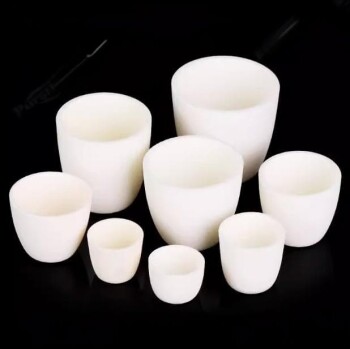
High-purity alumina crucibles are the definitive choice for molten salt co-electrolysis due to their superior resistance to aggressive chemical environments. They are specifically selected to withstand the highly corrosive nature of molten carbonate and hydroxide electrolytes while maintaining structural integrity at operating temperatures between 500 and 600 degrees Celsius.

Molten salt co-electrolysis requires a vessel that is effectively invisible to the reaction it contains. High-purity alumina is selected because its high-density structure prevents physical salt penetration, while its chemical inertness prevents erosion, ensuring the structural stability and chemical purity of the syngas production process.

Defying Chemical Erosion

The primary challenge in syngas production via co-electrolysis is the aggressiveness of the electrolyte medium. Alumina provides a necessary chemical barrier.

Withstanding Corrosive Electrolytes

The process utilizes molten carbonate and hydroxide electrolytes, which are notoriously corrosive to standard materials. High-purity alumina possesses exceptional chemical inertness, allowing it to resist attack from these specific molten salts. This resistance prevents the vessel walls from thinning or degrading during the reaction.

Ensuring Reaction Purity

Beyond preventing leaks, the crucible must not contaminate the chemical process. Alumina ensures that the reaction vessel does not leach impurities into the melt. This guarantees the chemical purity of the electrolysis environment, which is critical for efficient syngas generation.

Structural Integrity and Density

Chemical resistance is only half the equation; the physical structure of the crucible is equally vital for containment.

The Criticality of High Density

High-purity alumina crucibles are engineered with a high-density structure. This is essential to prevent the molten salts from penetrating the pores of the ceramic. Without this density, salts would seep into the crucible walls, compromising the vessel's strength and leading to premature failure.

Thermal Stability Range

The co-electrolysis process typically operates between 500 and 600 degrees Celsius. Alumina demonstrates exceptional high-temperature stability within this range. It maintains its shape and load-bearing capacity without softening or reacting, ensuring consistent performance throughout the thermal cycle.

Understanding the Trade-offs

While high-purity alumina is the optimal choice, it is important to recognize the limitations regarding material specifications.

The Necessity of Specification

Not all alumina is created equal; standard or lower-purity alumina lacks the density required for this application. Using a crucible with lower density or higher porosity will lead to rapid salt penetration and structural failure. Therefore, the trade-off is a strict requirement for high-purity, high-density variants, as generic ceramic alternatives cannot survive the corrosive molten salt environment.

Making the Right Choice for Your Project

To ensure the success of your syngas production setup, align your material selection with your specific operational priorities.

  • If your primary focus is Equipment Longevity: Prioritize high-density alumina structures to prevent salt penetration and extend the physical life of the crucible.
  • If your primary focus is Product Purity: Prioritize high chemical inertness to eliminate the risk of container-related contamination leaching into your electrolyte.

By selecting high-purity alumina, you transform the reaction vessel from a potential point of failure into a reliable, inert foundation for high-temperature electrolysis.

Summary Table:

Feature High-Purity Alumina Benefit
Chemical Resistance Resists corrosive carbonate and hydroxide electrolytes
Density High-density structure prevents molten salt penetration
Thermal Stability Maintains structural integrity at 500°C – 600°C
Purity Zero-leach material ensures electrolyte and syngas purity
Longevity Resists wall thinning and degradation for extended use

Optimize Your Co-Electrolysis with KINTEK Materials

Don't let corrosive electrolytes compromise your syngas production. KINTEK specializes in premium laboratory ceramics and high-temperature equipment, providing the high-density, high-purity alumina crucibles essential for demanding molten salt applications.

Our extensive portfolio supports your entire research lifecycle, including:

  • Advanced Ceramics: High-purity Alumina, PTFE products, and specialized crucibles.
  • Reaction Systems: High-temperature high-pressure reactors, autoclaves, and electrolytic cells.
  • Thermal Processing: Muffle, tube, and vacuum furnaces for precise temperature control.

Contact KINTEK today to source the reliable, inert foundations your laboratory needs for high-performance chemical engineering.

References

  1. Yue Liu, Hongjun Wu. Syngas production: diverse H<sub>2</sub>/CO range by regulating carbonates electrolyte composition from CO<sub>2</sub>/H<sub>2</sub>O <i>via</i> co-electrolysis in eutectic molten salts. DOI: 10.1039/c7ra07320h

This article is also based on technical information from Kintek Solution Knowledge Base .

Related Products

People Also Ask

Related Products

Alumina Al2O3 Ceramic Crucible Semicircle Boat with Lid for Engineering Advanced Fine Ceramics

Alumina Al2O3 Ceramic Crucible Semicircle Boat with Lid for Engineering Advanced Fine Ceramics

Crucibles are containers widely used for melting and processing various materials, and semicircular boat-shaped crucibles are suitable for special smelting and processing requirements. Their types and uses vary by material and shape.

Arc-Shaped Alumina Ceramic Crucible High Temperature Resistant for Engineering Advanced Fine Ceramics

Arc-Shaped Alumina Ceramic Crucible High Temperature Resistant for Engineering Advanced Fine Ceramics

In the journey of scientific exploration and industrial production, every detail is crucial. Our arc-shaped alumina ceramic crucibles, with their excellent high temperature resistance and stable chemical properties, have become a powerful assistant in laboratories and industrial fields. They are made of high-purity alumina materials and manufactured through precision processes to ensure excellent performance in extreme environments.

Engineering Advanced Fine Ceramics Alumina Crucibles (Al2O3) for Thermal Analysis TGA DTA

Engineering Advanced Fine Ceramics Alumina Crucibles (Al2O3) for Thermal Analysis TGA DTA

TGA/DTA thermal analysis vessels are made of aluminum oxide (corundum or aluminum oxide). It can withstand high temperature and is suitable for analyzing materials that require high temperature testing.

Engineering Advanced Fine Alumina Al2O3 Ceramic Crucible for Laboratory Muffle Furnace

Engineering Advanced Fine Alumina Al2O3 Ceramic Crucible for Laboratory Muffle Furnace

Alumina ceramic crucibles are used in some materials and metal melting tools, and flat-bottomed crucibles are suitable for melting and processing larger batches of materials with better stability and uniformity.

Electron Beam Evaporation Coating Tungsten Crucible and Molybdenum Crucible for High Temperature Applications

Electron Beam Evaporation Coating Tungsten Crucible and Molybdenum Crucible for High Temperature Applications

Tungsten and molybdenum crucibles are commonly used in electron beam evaporation processes due to their excellent thermal and mechanical properties.

Custom Machined and Molded PTFE Teflon Parts Manufacturer with PTFE Crucible and Lid

Custom Machined and Molded PTFE Teflon Parts Manufacturer with PTFE Crucible and Lid

PTFE crucibles, made from pure Teflon, offer chemical inertness and resistance from -196°C to 280°C, ensuring compatibility with a wide range of temperatures and chemicals. These crucibles feature machine-finished surfaces for easy cleaning and prevention of contamination, making them ideal for precise laboratory applications.

Evaporation Crucible for Organic Matter

Evaporation Crucible for Organic Matter

An evaporation crucible for organic matter, referred to as an evaporation crucible, is a container for evaporating organic solvents in a laboratory environment.

Electron Beam Evaporation Coating Gold Plating Tungsten Molybdenum Crucible for Evaporation

Electron Beam Evaporation Coating Gold Plating Tungsten Molybdenum Crucible for Evaporation

These crucibles act as containers for the gold material evaporated by the electron evaporation beam while precisely directing the electron beam for precise deposition.

Electron Beam Evaporation Coating Oxygen-Free Copper Crucible and Evaporation Boat

Electron Beam Evaporation Coating Oxygen-Free Copper Crucible and Evaporation Boat

Electron Beam Evaporation Coating Oxygen-Free Copper Crucible enables precise co-deposition of various materials. Its controlled temperature and water-cooled design ensure pure and efficient thin film deposition.

Boron Nitride (BN) Crucible for Phosphorous Powder Sintered

Boron Nitride (BN) Crucible for Phosphorous Powder Sintered

Phosphorus powder sintered boron nitride (BN) crucible has a smooth surface, dense, pollution-free and long service life.

Electron Beam Evaporation Coating Conductive Boron Nitride Crucible BN Crucible

Electron Beam Evaporation Coating Conductive Boron Nitride Crucible BN Crucible

High-purity and smooth conductive boron nitride crucible for electron beam evaporation coating, with high temperature and thermal cycling performance.

Molybdenum Disilicide (MoSi2) Thermal Elements Electric Furnace Heating Element

Molybdenum Disilicide (MoSi2) Thermal Elements Electric Furnace Heating Element

Discover the power of Molybdenum Disilicide (MoSi2) Heating Element for high-temperature resistance. Unique oxidation resistance with stable resistance value. Learn more about its benefits now!

Engineering Advanced Fine Ceramics Aluminum Oxide Al2O3 Heat Sink for Insulation

Engineering Advanced Fine Ceramics Aluminum Oxide Al2O3 Heat Sink for Insulation

The hole structure of the ceramic heat sink increases the heat dissipation area in contact with the air, which greatly enhances the heat dissipation effect, and the heat dissipation effect is better than that of super copper and aluminum.

Precision Machined Yttrium Stabilized Zirconia Ceramic Rod for Engineering Advanced Fine Ceramics

Precision Machined Yttrium Stabilized Zirconia Ceramic Rod for Engineering Advanced Fine Ceramics

Zirconia ceramic rods are prepared by isostatic pressing, and a uniform, dense and smooth ceramic layer and transition layer are formed at high temperature and high speed.

Twin Screw Extruder Plastic Granulation Machine

Twin Screw Extruder Plastic Granulation Machine

Twin screw extruder plastic granulation machine is designed for the mixing and processing experiments of engineering plastics, modified plastics, waste plastics and masterbatches.

Graphite Disc Rod and Sheet Electrode Electrochemical Graphite Electrode

Graphite Disc Rod and Sheet Electrode Electrochemical Graphite Electrode

High-quality graphite electrodes for electrochemical experiments. Complete models with acid and alkali resistance, safety, durability, and customization options.

PTFE Electrolytic Cell Electrochemical Cell Corrosion-Resistant Sealed and Non-Sealed

PTFE Electrolytic Cell Electrochemical Cell Corrosion-Resistant Sealed and Non-Sealed

Choose our PTFE Electrolytic Cell for reliable, corrosion-resistant performance. Customize specifications with optional sealing. Explore now.

Silicon Carbide (SIC) Ceramic Sheet Wear-Resistant Engineering Advanced Fine Ceramics

Silicon Carbide (SIC) Ceramic Sheet Wear-Resistant Engineering Advanced Fine Ceramics

Silicon carbide (sic) ceramic sheet is composed of high-purity silicon carbide and ultra-fine powder, which is formed by vibration molding and high-temperature sintering.

Custom PTFE Teflon Parts Manufacturer for PTFE Mesh F4 Sieve

Custom PTFE Teflon Parts Manufacturer for PTFE Mesh F4 Sieve

PTFE mesh sieve is a specialized test sieve designed for particle analysis in various industries, featuring a non-metallic mesh woven from PTFE filament. This synthetic mesh is ideal for applications where metal contamination is a concern . PTFE sieves are crucial for maintaining the integrity of samples in sensitive environments, ensuring accurate and reliable results in particle size distribution analysis.


Leave Your Message