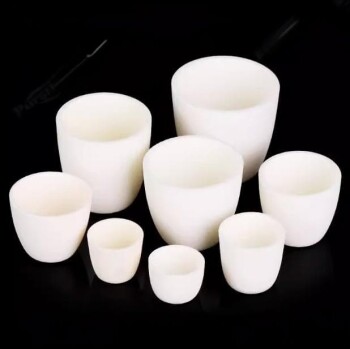
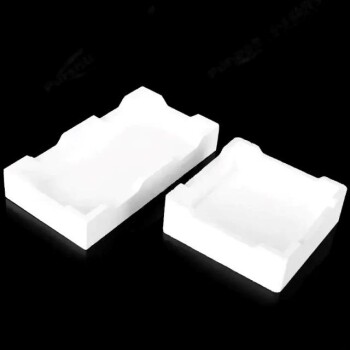
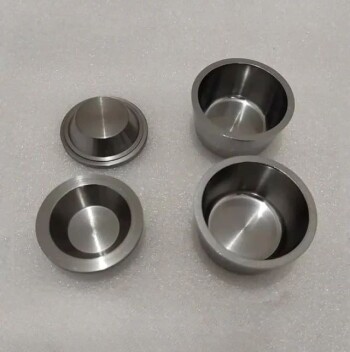
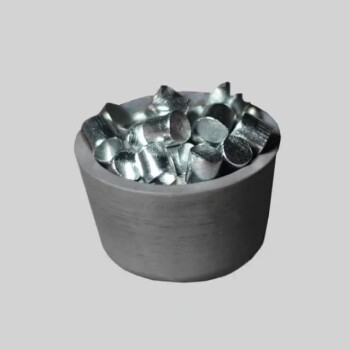
High-temperature chemical stability and thermal shock resistance are the primary technical reasons ceramic crucibles are mandatory for this process. When preparing ZrCu-based master alloys, the melt reaches temperatures exceeding 1400 degrees Celsius, creating an environment that would compromise lesser materials. Specifically, the ceramic material prevents chemical reactions with highly active Zirconium, ensuring the final alloy remains free of introduced impurities.
The core value of a ceramic crucible lies in its dual ability to survive extreme thermal fluctuations without cracking and to remain chemically inert against aggressive Zirconium. This protects both the physical containment of the melt and the chemical purity of the master alloy.
Thermal Resilience in High-Heat Environments
Withstanding Temperatures Over 1400°C
The preparation of ZrCu-based master alloys requires intense heat to achieve a proper melt. Ceramic crucibles are specifically engineered to maintain structural integrity at temperatures exceeding 1400 degrees Celsius. This high melting threshold is the baseline requirement for containing the alloy safely.
Resisting Thermal Shock
The melting process is rarely static; it often involves rapid changes in temperature. These drastic temperature fluctuations induce significant stress on the containment vessel. Ceramic crucibles possess exceptional thermal shock resistance, allowing them to expand and contract without fracturing or cracking during the process.
Ensuring Alloy Purity
Countering Zirconium Reactivity
Zirconium is known as a highly active element, particularly when in a molten state. This chemical aggression means it will attempt to react with the walls of the containment vessel. A standard crucible lacking chemical stability would quickly degrade under this attack.
Preventing Impurity Introduction
The chemical stability of the ceramic crucible acts as a barrier against contamination. Because the ceramic does not react significantly with the Zirconium, it prevents the vessel material from leaching into the molten mixture. This is critical for ensuring the compositional purity of the resulting master alloy is not compromised by foreign elements.
Common Pitfalls in Crucible Selection
The Risk of Structural Failure
Failure to prioritize thermal shock resistance is a critical error in this specific application. If the crucible material is brittle or unable to handle the rapid temperature shifts inherent in the process, the vessel is likely to crack during the melt. This leads to immediate process failure and potential safety hazards.
The Consequence of Reactivity
Using a crucible with low chemical stability is effectively a contamination event. If the vessel wall reacts with the Zirconium, impurity elements are immediately introduced into the alloy matrix. This alters the chemical composition, rendering the master alloy defective for high-precision applications.
Ensuring Process Integrity
The choice of crucible dictates the success of the melt. To achieve a high-quality ZrCu-based master alloy, the vessel must be viewed as an active component of the quality control process.
- If your primary focus is Operational Safety: Prioritize the thermal shock resistance of the ceramic to prevent catastrophic cracking during fluctuations above 1400°C.
- If your primary focus is Chemical Purity: Rely on the high-temperature chemical stability of the ceramic to prevent the active Zirconium from extracting impurities from the crucible walls.
By utilizing a ceramic crucible, you ensure the rigorous demands of heat and chemistry are met without compromising the final product.
Summary Table:
| Feature | Technical Requirement | Benefit for ZrCu-based Alloys |
|---|---|---|
| Temperature Limit | Exceeding 1400°C | Maintains structural integrity during intense melting |
| Thermal Resilience | High Shock Resistance | Prevents cracking/fracture during rapid temperature shifts |
| Chemical Stability | High Inertness | Prevents reactions with highly active molten Zirconium |
| Contamination Control | Low Reactivity | Ensures the compositional purity of the final master alloy |
Elevate Your Material Preparation with KINTEK
Achieving the perfect ZrCu-based master alloy requires precision equipment that withstands the most demanding environments. At KINTEK, we specialize in high-performance laboratory solutions designed for metallurgy and advanced material research.
Our extensive portfolio includes:
- Premium Ceramic Crucibles & Labware: Engineered for extreme thermal shock resistance and chemical inertness.
- Advanced Heating Systems: Including high-temperature muffle, vacuum, and induction melting furnaces.
- Processing Excellence: High-pressure reactors, crushing systems, and hydraulic presses for material preparation.
Whether you are focusing on operational safety or uncompromising chemical purity, KINTEK provides the high-quality consumables and equipment you need to succeed. Contact us today to optimize your melting process!
References
- R. Babilas, Ł. Hawełek. Structure and Corrosion Behavior of Multiphase Intermetallic ZrCu-Based Alloys. DOI: 10.3390/ma17174182
This article is also based on technical information from Kintek Solution Knowledge Base .
Related Products
- Arc-Shaped Alumina Ceramic Crucible High Temperature Resistant for Engineering Advanced Fine Ceramics
- Engineering Advanced Fine Alumina Al2O3 Ceramic Crucible for Laboratory Muffle Furnace
- Alumina Al2O3 Ceramic Crucible Semicircle Boat with Lid for Engineering Advanced Fine Ceramics
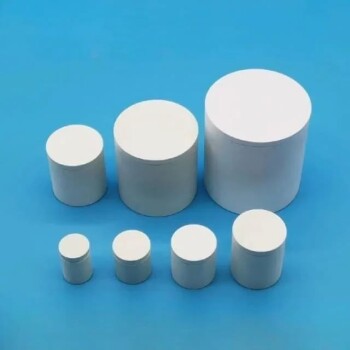
- Engineering Advanced Fine Ceramics Alumina Al2O3 Crucible With Lid Cylindrical Laboratory Crucible
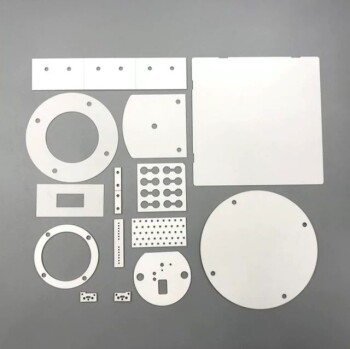
- Custom-Made Alumina Zirconia Special-Shaped Ceramic Plates for Engineering Advanced Fine Ceramics Processing
People Also Ask
- Why Use Alumina Crucibles & Powder Burial for NaSICON? Ensure Phase Purity and Prevent Elemental Volatilization
- What is the primary purpose of using alumina crucibles for LLTO ceramics? Optimize Your High-Temperature Sintering
- Why are alumina crucibles and mother powder essential for LATP sintering? Optimize Your Solid Electrolyte Performance
- Why are high-purity alumina crucibles used for liquid lead corrosion experiments? Ensure Data Accuracy at 550°C
- Primary considerations for choosing alumina crucibles and quartz tubes in indium intercalation: Ensure Material Purity