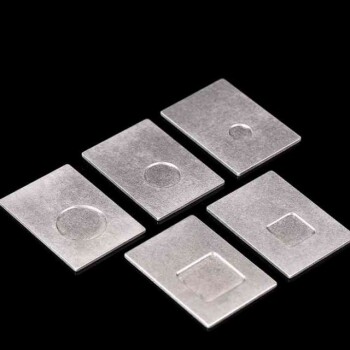
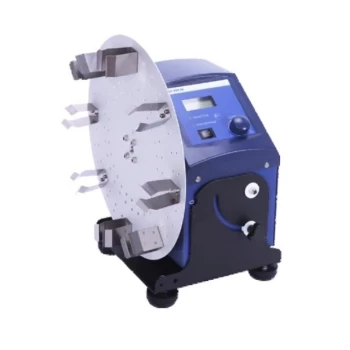
A high-precision rotating sample holder is the critical mechanism for achieving coating uniformity. In the preparation of Aluminum-Zirconium (Al-Zr) coatings, particularly during co-sputtering, the substrate must be evenly exposed to the flux generated by multiple targets. Without this continuous motion, the geometry of the sputtering setup would lead to significant irregularities in the final alloy layer.
By continuously rotating the substrate, the system neutralizes geometric variations in the sputtering process. This ensures that the resulting Al-Zr alloy coating maintains consistent thickness and a uniform chemical composition across the entire surface of the high-strength steel substrate.
The Mechanics of Co-Sputtering Uniformity
Overcoming Angular Variations
In a co-sputtering environment, material sources (targets) are often positioned at specific angles relative to the substrate.
If the sample remains static, these angles create "shadows" or areas of high intensity, leading to uneven deposition. Continuous rotation eliminates the non-uniformity caused by these fixed sputtering angles.
Ensuring Balanced Flux Exposure
Al-Zr coatings require the simultaneous deposition of Aluminum and Zirconium from different targets.
The rotating holder ensures that every point on the substrate is uniformly exposed to the sputtering flux from all targets over time. This prevents the formation of localized areas that are rich in only one element.
The Impact on Coating Quality
Consistency in Thickness
A primary metric for coating failure is variation in thickness, which can lead to stress concentration and delamination.
The rotation mechanism averages out the deposition rate across the sample. This results in a layer with consistent thickness, which is vital for the mechanical performance of the coated high-strength steel.
Homogeneity of Chemical Composition
For an alloy like Al-Zr to function correctly, the aluminum and zirconium atoms must be mixed intimately at the molecular level.
High-precision rotation ensures a highly uniform chemical composition across the entire substrate area. This homogeneity is essential for predicting the material's behavior under stress or environmental exposure.
Understanding the Trade-offs
Mechanical Complexity in Vacuum
While rotation ensures quality, it introduces moving parts into a vacuum chamber environment.
High-precision mechanics require rigorous maintenance to prevent seizing or outgassing, which could contaminate the coating process.
Deposition Rate vs. Uniformity
Achieving perfect uniformity often requires optimizing the rotation speed against the deposition rate.
If the rotation is too slow relative to the sputtering rate, "layering" or pseudo-superlattices may form instead of a true alloy. The process parameters must be tuned to ensure the mixing effect dominates.
Ensuring Process Reliability
If your primary focus is chemical homogeneity:
- Prioritize a rotation speed that is fast enough to blend the flux from the Aluminum and Zirconium targets before distinct layers can form.
If your primary focus is dimensional tolerance:
- Rely on the sample holder's precision to maintain a constant working distance, ensuring the consistent thickness required for high-tolerance applications.
If your primary focus is substrate coverage:
- Use the rotation to mitigate the line-of-sight limitations inherent in sputtering, ensuring even the edges of the high-strength steel substrate are coated.
Precision in rotation is not just a mechanical feature; it is the defining factor between a failed experiment and a high-performance alloy.
Summary Table:
| Feature | Impact on Al-Zr Coating | Benefit to Material Performance |
|---|---|---|
| Continuous Rotation | Neutralizes geometric sputtering variations | Eliminates thickness irregularities and "shadowing" |
| Balanced Flux Exposure | Ensures equal distribution of Al and Zr atoms | Prevents localized elemental clusters (homogeneity) |
| Precision Mechanics | Maintains constant working distance | Ensures dimensional tolerance for high-strength steel |
| Optimized Speed | Facilitates molecular-level mixing | Avoids layering to create a true high-performance alloy |
Elevate Your Thin Film Research with KINTEK
Precision in rotation is the difference between a high-performance alloy and a failed coating. KINTEK specializes in advanced laboratory equipment and consumables, offering the precision tools you need for complex material deposition. Whether you are developing Aluminum-Zirconium coatings or exploring new alloy frontiers, our comprehensive range of CVD/PECVD systems, high-temperature vacuum furnaces, and crushing and milling systems provides the reliability your lab demands.
From high-strength steel substrate preparation with our hydraulic presses to ensuring chemical homogeneity with our high-precision motion systems, KINTEK is your partner in material science excellence.
Ready to achieve superior coating uniformity? Contact us today to discuss your laboratory requirements and see how our tailored solutions can optimize your research outcomes.
References
- Caroline Villardi de Oliveira, Frédéric Sanchette. Structural and microstructural analysis of bifunctional TiO2/Al-Zr thin film deposited by hybrid process. DOI: 10.1016/j.tsf.2020.138255
This article is also based on technical information from Kintek Solution Knowledge Base .
Related Products
- Customizable XRD Sample Holders for Diverse Research Applications
- XRD Sample Holder X-ray Diffractometer Powder Slide
- Sample Support Body for Electrochemical Tests
- Laboratory Disc Rotary Mixer for Efficient Sample Mixing and Homogenization
People Also Ask
- What are the applicable sample dimensions for the sample holder? Ensure a Perfect Fit for Your Lab Samples
- What are the specific storage requirements for a sample holder? Protect Your Lab's Critical Assets
- How can corrosion of the sample holder be prevented when using corrosive chemicals? Protect Your Lab's Integrity
- How should a suitable sample be selected and secured in the holder before an experiment? Ensure Unshakeable Stability for Reliable Data
- What are the general operating procedures for using a sample holder during experiments? Ensure Sample Integrity and Accurate Results