Applying a high pressure of approximately 127 MPa is a critical processing step designed to maximize the "green density" of the LZP powder before it enters the furnace. This substantial mechanical force is required to overcome inter-particle friction, eliminating air voids and forcing the powder particles into intimate physical contact.
High-pressure compaction is the foundational prerequisite for high-performance solid electrolytes. It minimizes internal porosity in the green stage to ensure the final ceramic achieves a relative density over 90 percent, which is essential for maximizing ionic conductivity and mechanical strength.
The Mechanics of Densification
Maximizing Green Density
The primary goal of applying 127 MPa is to increase the density of the "green" (unfired) pellet. Loose LZP powder contains significant free space; this pressure mechanically forces particles closer together to create a tightly packed structure.
Enhancing Physical Contact
Sintering relies on atomic diffusion, which can only occur where particles touch. High pressure deforms the powder particles, significantly increasing the contact area between them. This establishes a continuous solid network, which is necessary for the material to fuse effectively during heat treatment.
The Impact on Sintering and Performance
Promoting Solid-State Sintering
The densification achieved at 127 MPa is not an end in itself but a setup for the sintering process. By reducing the distance between particles, the high pressure lowers the energy barrier required for densification during heating. This allows the material to shrink uniformly and consolidate into a solid ceramic.
Reducing Internal Porosity
Porosity is the enemy of solid-state electrolytes. Any remaining air gaps act as barriers to lithium-ion transport, increasing resistance. The initial high-pressure compaction effectively minimizes these voids, ensuring the final product reaches the target relative density of over 90 percent.
The Strategic Importance of Pressure Control
Controlling Phase Stability
In some ceramic systems, the density of the green body impacts the crystalline phase formed during heating. A dense green body generates compressive stress during sintering, which can inhibit volume expansion. This helps stabilize the preferred high-conductivity crystalline phases and prevents the formation of lower-performance phases.
Managing Shrinkage Rates
Precise pressure application ensures a consistent packing density, which in turn dictates how much the pellet will shrink during firing. By maintaining a pressure around 127 MPa, you ensure predictable shrinkage, allowing for tight control over the final dimensions and preventing warping or cracking.
Making the Right Choice for Your Goal
- If your primary focus is Ionic Conductivity: Prioritize high pressure to eliminate porosity, as dense grain boundaries are essential for efficient ion transport.
- If your primary focus is Dimensional Accuracy: Focus on the consistency of the pressure applied (e.g., holding exactly at 127 MPa) to ensure uniform shrinkage rates across all samples.
Ultimately, the pressure you apply today dictates the density, efficiency, and stability of the electrolyte you produce tomorrow.
Summary Table:
| Factor | Requirement | Impact on LZP Solid Electrolyte Performance |
|---|---|---|
| Applied Pressure | ~127 MPa | Maximizes green density and ensures intimate particle contact. |
| Porosity | Minimum | Reducing air voids lowers resistance to lithium-ion transport. |
| Sintering Result | >90% Relative Density | High pressure lowers the energy barrier for uniform consolidation. |
| Final Property | Ionic Conductivity | Dense grain boundaries are critical for efficient ion mobility. |
| Dimensional Control | Precise Consistency | Manages shrinkage rates to prevent warping or cracking. |
Elevate Your Battery Research with Precision Engineering
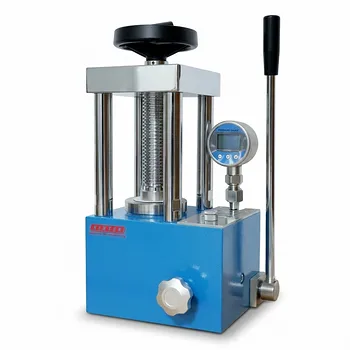
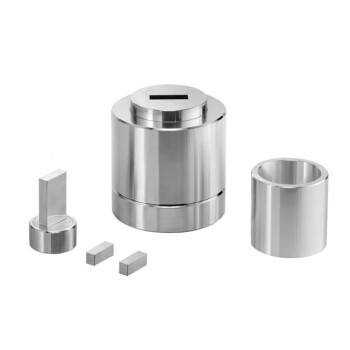
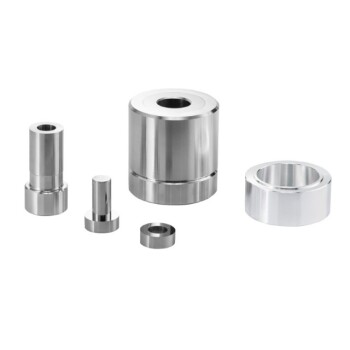
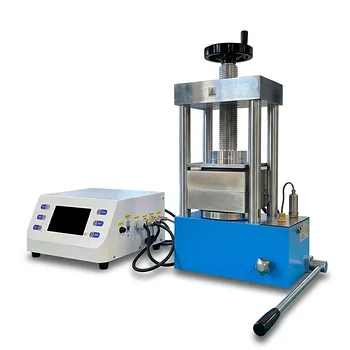
High-performance solid electrolytes demand exact pressure control. KINTEK specializes in advanced laboratory solutions, providing the high-precision hydraulic presses (pellet, hot, and isostatic) and crushing systems required to achieve the critical 127 MPa threshold for LZP fabrication.
From high-temperature furnaces for sintering to specialized battery research tools and consumables, KINTEK empowers researchers to achieve >90% relative density and superior ionic conductivity. Don't let inconsistent compaction compromise your results.
Contact KINTEK today to optimize your lab's pellet preparation!
Related Products
- Automatic Laboratory Hydraulic Pellet Press Machine for Lab Use
- Laboratory Manual Hydraulic Pellet Press for Lab Use
- Automatic Laboratory Hydraulic Press for XRF & KBR Pellet Press
- Laboratory Manual Hydraulic Pellet Press for Lab Use
- Laboratory Hydraulic Press Split Electric Lab Pellet Press
People Also Ask
- What is the role of a laboratory hydraulic pellet press and stainless steel molds in the fabrication of RuO2/NbC anodes?
- What role does a laboratory pellet press play in the enhancement of biomass energy products? Optimize Fuel Efficiency
- What is the purpose of using a laboratory pellet press when evaluating the electronic conductivity of carbon powders? Guide
- How does a laboratory hydraulic pellet press contribute to SiCw/2024 aluminum composite preforms? Optimize Densification
- What is the significance of applying 200 MPa of pressure with a laboratory hydraulic pellet press for composite ceramics?