The selection of a high-purity nickel crucible is driven primarily by its exceptional chemical stability and resistance to corrosion in chloride molten salt environments at high temperatures, specifically around 700°C. By using a material that does not react with the NaCl-MgCl2 mixture, researchers ensure that the container does not degrade, thereby preventing the introduction of foreign impurities into the molten salt.
Core Takeaway The crucible must remain an inert vessel to guarantee experimental validity. High-purity nickel is chosen because it withstands aggressive chloride salts without leaching contaminants, ensuring that any corrosion observed on the test specimen (such as Inconel 617) is caused solely by the salt, not by reaction byproducts from the container.
Chemical Stability in Aggressive Environments
Resistance to Molten Chlorides
Molten chloride salts, such as the NaCl-MgCl2 mixture, create a highly aggressive environment, particularly at elevated temperatures like 700°C.
High-purity nickel is selected because it exhibits intrinsic chemical stability under these specific conditions.
Unlike less stable materials that might rapidly degrade, nickel maintains its structural integrity, preventing catastrophic failure of the containment vessel during high-temperature testing.
Preventing Container-Medium Reactions
The fundamental requirement of a corrosion experiment is that the container must not participate in the reaction.
Nickel is chosen to specifically prevent a reaction between the crucible wall and the corrosive medium.
This inertness is the first line of defense in maintaining a controlled experimental environment.
Preserving Data Integrity
Eliminating External Interference
In corrosion studies, such as those investigating Inconel 617, the goal is to analyze the precise mechanism of degradation.
If the crucible were to corrode, it would release external metal ions into the melt.
High-purity nickel prevents this interference, ensuring the study focuses exclusively on the interaction between the subject alloy and the salt.
Ensuring Component Purity
The introduction of impurities from a degrading crucible changes the chemical composition of the molten salt.
Even trace amounts of leached elements can alter the corrosion potential or catalytic behavior of the salt bath.
By using high-purity nickel, researchers guarantee that the purity of the molten salt components is maintained throughout the duration of the test.
Understanding the Trade-offs
Specificity of Material Selection
It is crucial to understand that no single crucible material is universally inert; the choice relies entirely on the specific salt chemistry.
While Nickel is the superior choice for chlorides at 700°C, other materials like Alumina are preferred for nitrates, and Graphite is often selected for fluorides.
The Risk of Mismatched Materials
Using a crucible material that is incompatible with the specific salt type often leads to "leaching."
This leaching obscures the true corrosion rate of the test specimen, making the resulting data unreliable regarding elemental precipitation or spallation.
Therefore, the choice of nickel is not arbitrary; it is a calculated decision to match the container's resistance profile to the specific aggression profile of chloride salts.
Making the Right Choice for Your Goal
To ensure the accuracy of your corrosion data, select your vessel based on the specific chemical interaction you intend to isolate.
- If your primary focus is studying corrosion mechanisms in chlorides: Use High-Purity Nickel to ensure the salt remains pure and free from container-induced metal ion interference.
- If your primary focus is galvanic corrosion simulation: Consider Graphite (for applicable salts), as its electro-potential can simulate structural interactions, unlike the neutral role intended for nickel.
Ultimately, the integrity of your corrosion data depends as much on the inertness of your crucible as it does on the precision of your measurements.
Summary Table:
| Feature | High-Purity Nickel Crucible | Impact on Research |
|---|---|---|
| Chemical Stability | Resistant to NaCl-MgCl2 at 700°C | Prevents container failure during testing |
| Inertness | Does not react with chloride media | Eliminates secondary reaction byproducts |
| Purity Control | Prevents leaching of metal ions | Ensures salt composition remains constant |
| Data Accuracy | Isolates specimen corrosion | Guarantees results reflect only the test alloy |
| Application | Specific to Chloride molten salts | Optimal choice over Alumina or Graphite for Cl- |
Maximize Your Lab’s Experimental Precision with KINTEK
Don't let container interference compromise your high-temperature research. KINTEK specializes in premium laboratory equipment and consumables, providing high-purity nickel crucibles specifically engineered for aggressive chloride molten salt environments. Our comprehensive range extends to high-temperature furnaces (muffle, tube, vacuum), high-temperature high-pressure reactors, and precision ceramics and crucibles designed to withstand the most demanding thermal conditions.
Whether you are investigating Inconel alloys or advancing battery research, KINTEK provides the inert solutions you need to guarantee data integrity. Contact our technical experts today to source the perfect crucible and thermal processing equipment for your specific application.
References
- Trishelle Marie Copeland-Johnson, Lingfeng He. Assessing the interfacial corrosion mechanism of Inconel 617 in chloride molten salt corrosion using multi-modal advanced characterization techniques. DOI: 10.3389/fnuen.2022.1049693
This article is also based on technical information from Kintek Solution Knowledge Base .
Related Products
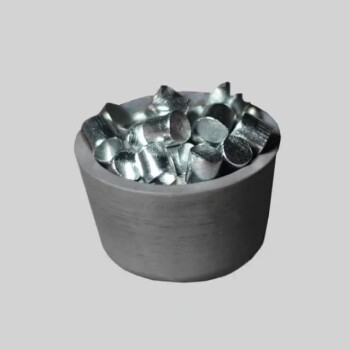
- High Purity Pure Graphite Crucible for Evaporation
- High Purity Pure Graphite Crucible for Electron Beam Evaporation
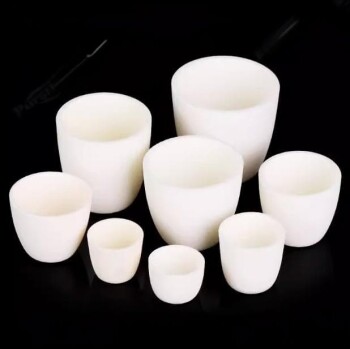
- Arc-Shaped Alumina Ceramic Crucible High Temperature Resistant for Engineering Advanced Fine Ceramics
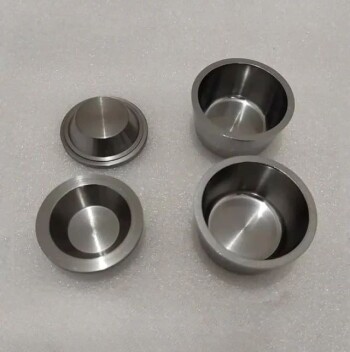
- Electron Beam Evaporation Coating Tungsten Crucible and Molybdenum Crucible for High Temperature Applications
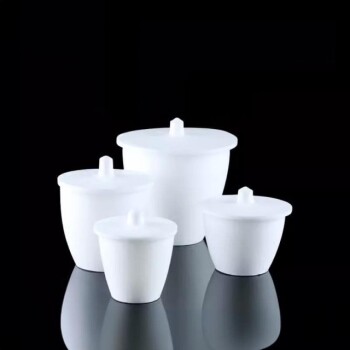
- Custom Machined and Molded PTFE Teflon Parts Manufacturer with PTFE Crucible and Lid
People Also Ask
- Why are high-purity graphite crucibles preferred for sulfide solid electrolytes? Achieve Superior Material Purity
- Why is a high-purity graphite crucible required for Chromel-TaC composites? Ensure Peak Purity at 1400°C
- What role do high-purity graphite crucibles play in molten salt corrosion research? Ensure Reactor-Grade Precision
- Why are high-purity graphite crucibles used for magnesium distillation? Ensure 3N8 Purity & Thermal Stability
- Why is a high-purity graphite crucible ideal for nitrogen-doped graphene at 1500 °C? Maximize Purity and Stability