A high-vacuum reaction chamber is the fundamental control mechanism required for the Chemical Vapor Deposition (CVD) of Titanium Dioxide (TiO2) thin films. It creates a pristine environment that allows for the precise regulation of gas flow kinetics, total pressure, and precursor partial pressures. This control is mandatory to achieve high growth rates and to ensure the efficient removal of reaction by-products that would otherwise contaminate the film.
Core Insight: The vacuum chamber is not merely a container; it is an active variable in the deposition process. It governs the purity and structural integrity of the film by eliminating interference from ambient gases and ensuring that the chemical precursors react exactly where and how you intend.
The Mechanics of Film Quality
Precision Control of Kinetics
The primary function of the high-vacuum environment is to give the operator absolute command over the reaction environment. By lowering the background pressure, you can precisely manipulate the partial pressures of your specific precursors.
Achieving Structural Consistency
This granular control over pressure and flow directly translates to the physical properties of the TiO2 film. The vacuum ensures that the deposition is structurally consistent across the entire surface.
Uniformity on Complex Geometries
One of the most significant advantages of high-vacuum CVD is its ability to coat complex shapes. The controlled gas kinetics allow the vapor to penetrate and coat intricate substrate geometries uniformly, rather than just coating the "line of sight" surfaces.
Optimizing Growth Rates
Contary to the intuition that less pressure might mean "less material," a high-vacuum environment actually facilitates high growth rates. It creates an unobstructed path for precursors to reach the substrate and react efficiently.
Purity and Contamination Control
Elimination of Impurities
A high-vacuum chamber is essential for stripping away ambient air and moisture before the process begins. Even trace amounts of background gases can act as impurities, disrupting the chemical composition and crystal structure of the final film.
Removal of By-Products
The chemical reaction that creates TiO2 generates gaseous by-products. If these are not removed immediately, they can interfere with the growing film or cause defects. The vacuum system continuously evacuates these waste products, ensuring the deposited film remains chemically pure.
Understanding the Trade-offs
Equipment Complexity vs. Film Quality
While atmospheric pressure systems exist for some coatings, they lack the precision required for high-performance TiO2 films. The trade-off for the superior uniformity and purity offered by high-vacuum CVD is the requirement for sophisticated pumping systems and vacuum-sealed chambers.
The Sensitivity of Kinetics
Because the vacuum environment is so responsive, the process becomes highly sensitive to variables. Minor fluctuations in pressure or gas flow can significantly alter the film's properties, requiring rigorous process monitoring and stable equipment.
Making the Right Choice for Your Goal
To leverage high-vacuum CVD effectively for your specific application, consider these focus areas:
- If your primary focus is Optical or Electronic Performance: Prioritize the "base pressure" of your chamber to maximize purity and minimize crystal defects caused by background contaminants.
- If your primary focus is Coating Complex Parts: Focus on optimizing the "working pressure" and gas flow kinetics to ensure the vapor penetrates all surface features uniformly.
The necessity of a high-vacuum chamber lies in its ability to transform a chaotic chemical reaction into a precise, repeatable manufacturing process.
Summary Table:
| Feature | Benefit of High-Vacuum in CVD |
|---|---|
| Purity Control | Eliminates ambient contaminants and moisture for superior film quality. |
| Kinetics Regulation | Precise control over precursor partial pressures and gas flow dynamics. |
| By-product Removal | Efficiently evacuates gaseous waste to prevent film defects. |
| Coating Uniformity | Ensures consistent deposition even on complex or non-planar geometries. |
| Growth Efficiency | Optimizes precursor paths to the substrate for high, stable growth rates. |
Elevate Your Thin Film Research with KINTEK Precision
Achieving superior TiO2 film quality requires uncompromising control over your vacuum environment. KINTEK specializes in high-performance laboratory solutions designed for advanced material science. From state-of-the-art CVD and PECVD systems to high-vacuum reaction chambers, we provide the tools necessary for precise gas kinetics and high-purity deposition.
Whether you are coating complex geometries or developing high-performance electronics, our expert team is ready to equip your lab with specialized high-temperature furnaces, vacuum systems, and essential ceramics.
Ready to optimize your deposition process? Contact KINTEK today to discuss your project needs and discover how our tailored solutions can enhance your research outcomes.
References
- Mphilisi M. Mahlambi, Bhekie B. Mamba. Recent Developments in Environmental Photocatalytic Degradation of Organic Pollutants: The Case of Titanium Dioxide Nanoparticles—A Review. DOI: 10.1155/2015/790173
This article is also based on technical information from Kintek Solution Knowledge Base .
Related Products
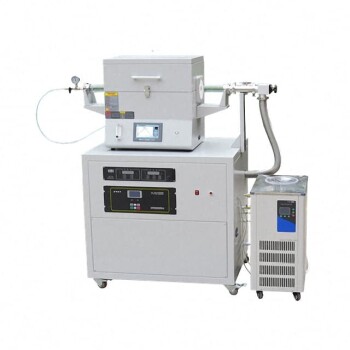
- Split Chamber CVD Tube Furnace with Vacuum Station Chemical Vapor Deposition System Equipment Machine
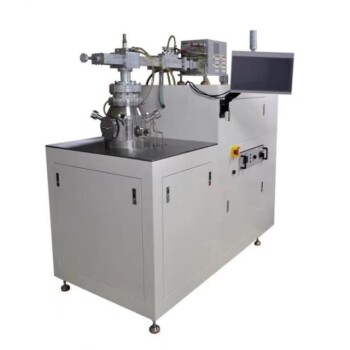
- Customer Made Versatile CVD Tube Furnace Chemical Vapor Deposition Chamber System Equipment
- Chemical Vapor Deposition CVD Equipment System Chamber Slide PECVD Tube Furnace with Liquid Gasifier PECVD Machine
- Multi Heating Zones CVD Tube Furnace Machine Chemical Vapor Deposition Chamber System Equipment
- HFCVD Machine System Equipment for Drawing Die Nano-Diamond Coating
People Also Ask
- What is the function of a tube furnace in CVD SiC synthesis? Achieving Ultra-Pure Silicon Carbide Powders
- What is a CVD tube furnace? A Complete Guide to Thin-Film Deposition
- What are the technical advantages of using a CVD tube furnace? Optimize Silicon-Carbon Battery Anodes
- What is the function of a high-temperature CVD tube furnace in 3D graphene foam prep? Master 3D Nanomaterial Growth
- How does a CVD tube furnace inhibit the sintering of silver supports? Boost Membrane Durability and Performance