Ultrasonic treatment is the definitive method for preparing precursor materials prior to nanosheet synthesis. It employs high-energy cavitation to generate significant local pressure, effectively breaking apart and redispersing agglomerated BiOBr nanosheets in distilled water.
Core Takeaway: The primary goal of using ultrasound is to maximize surface exposure by breaking up particle clumps. This ensures uniform ion exchange, resulting in final nanosheets that are morphologically regular and ultra-thin.
The Mechanism of Dispersion
Creating Local Pressure via Cavitation
Ultrasonic cleaners and high-energy homogenizers do not simply stir the solution; they utilize cavitation.
This process involves the rapid formation and collapse of microscopic bubbles. The collapse generates intense local pressure waves that act as microscopic hammer blows against the solid materials suspended in the liquid.
Breaking Down Agglomerates
In their natural state, precursor materials like BiOBr nanosheets tend to stick together, forming clusters or agglomerates.
The pressure generated by ultrasound forces these clusters apart. This creates a homogeneous dispersion where individual nanosheets float freely in the distilled water, rather than remaining locked in a clump.
Optimizing the Chemical Reaction
Exposing the Surface Area
For a chemical reaction to be efficient, the reagents must be able to touch.
By redispersing the BiOBr, ultrasound ensures that the entire surface area of the nanosheets is exposed. Without this step, the inner surfaces of an agglomerated clump would be hidden from the reacting chemicals.
Facilitating Uniform Ion Exchange
The synthesis of BWO (Bismuth Tungstate) or BMO (Bismuth Molybdate) relies on an ion exchange process involving sodium tungstate or sodium molybdate.
Because the precursor surfaces are fully exposed, these components can make uniform contact with the BiOBr. This prevents "hot spots" where reaction happens too fast, or "dead zones" where it doesn't happen at all.
Achieving Target Material Properties
Ensuring Regular Morphology
The physical shape (morphology) of the final product is dictated by how evenly the reaction occurs.
Because the ion exchange is uniform, the resulting BWO or BMO nanosheets grow in a regular, predictable structure.
Minimizing Thickness
A key goal in nanosheet synthesis is achieving extreme thinness to maximize the material's efficiency in future applications.
Effective redispersion prevents the layers from stacking or fusing during synthesis. This results in final products characterized by extremely thin thickness, which is often critical for catalytic or electronic performance.
Understanding the Trade-offs
The Risk of Over-Processing
While dispersion is critical, there is a balance to be struck.
Excessive exposure to high-energy ultrasound can generate significant heat, which might alter the reaction kinetics or degrade sensitive precursors if the temperature is not controlled.
Mechanical Fragmentation
The same cavitation force that separates clumps can, if applied too aggressively, shatter the individual nanosheets themselves.
It is essential to tune the ultrasonic energy to break the agglomerates without damaging the structural integrity of the individual BiOBr crystals.
Making the Right Choice for Your Goal
To ensure your synthesis yields high-quality BWO or BMO nanosheets, apply the ultrasonic treatment strategically:
- If your primary focus is Uniformity: Ensure the ultrasonic duration is sufficient to eliminate all visible clumping prior to adding the sodium tungstate or molybdate.
- If your primary focus is Material Integrity: Monitor the solution temperature and limit processing time to prevent fracturing the precursor sheets.
By prioritizing thorough dispersion, you establish the foundation for a chemically precise and structurally superior final product.
Summary Table:
| Factor | Role of Ultrasonic Treatment | Impact on Synthesis |
|---|---|---|
| Mechanism | High-energy cavitation & local pressure | Breaks down particle agglomerates |
| Surface Area | Maximizes exposure of precursor sheets | Ensures uniform chemical contact |
| Reaction Quality | Facilitates even ion exchange | Prevents hot spots and dead zones |
| Morphology | Promotes regular, predictable growth | Results in uniform, ultra-thin nanosheets |
| Optimization | Controlled energy & time management | Prevents thermal degradation and fragmentation |
Elevate Your Nanomaterial Synthesis with KINTEK Precision
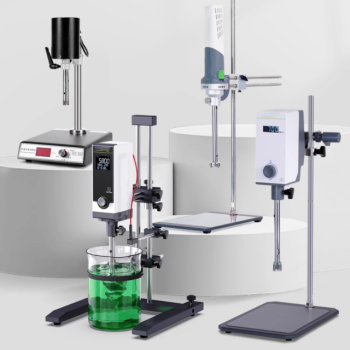
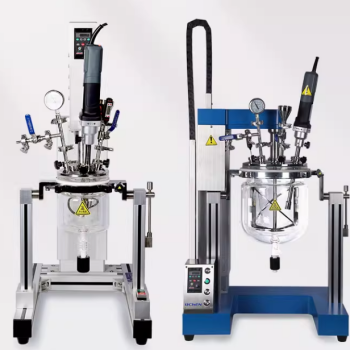
Precision in nanosheet morphology starts with superior dispersion. KINTEK provides advanced laboratory ultrasonic cleaners, high-energy homogenizers, and high-temperature reactors specifically designed for researchers seeking to master BWO/BMO synthesis. From crushing and milling systems to high-pressure autoclaves, our comprehensive portfolio ensures your lab achieves maximum surface exposure and uniform ion exchange.
Ready to optimize your material performance? Contact KINTEK experts today for a tailored solution
References
- David Collu, Andrea Salis. Aurivillius Oxides Nanosheets-Based Photocatalysts for Efficient Oxidation of Malachite Green Dye. DOI: 10.3390/ijms23105422
This article is also based on technical information from Kintek Solution Knowledge Base .
Related Products
- High Shear Homogenizer for Pharmaceutical and Cosmetic Applications
- High Performance Lab Homogenizer for Pharma Cosmetics and Food R&D
- Laboratory High Throughput Tissue Grinding Mill Grinder
- Lab Sterile Slapping Type Homogenizer for Tissue Mashing and Dispersing
- High-Energy Omnidirectional Planetary Ball Mill Machine for Laboratory
People Also Ask
- Why Use a High Shear Homogenizer for Cathode Slurries? Optimize Double-Layer Solid-State Battery Production
- What is the function of high-shear dispersion equipment in corona-resistant nanocomposites? Elevate Your Insulation
- What is the necessity of using an industrial-grade high-shear homogenizer for biomass washing? Ensure Process Efficiency
- What are the advantages of using a high-shear homogenizer for BED/GMA coatings? Achieve Superior Nano-Dispersion
- What role does a high-shear homogenizer play in ODC catalyst suspensions? Unlock Superior Electrochemical Efficiency