The combination of a nickel-chromium alloy heating element and a thermal insulation layer is strictly required to achieve the precise thermal environment needed for the staged reduction of metal oxides. This setup allows you to lock in specific temperatures—such as 340°C and 600°C—which is critical for controlling reaction rates and ensuring product purity.
The core challenge in staged reduction is managing chemisorption kinetics without triggering unwanted side reactions. A nickel-chromium system addresses this by providing exact temperature regulation, while the insulation layer guarantees the thermal uniformity required to prevent the formation of metal silicides.
The Necessity of Precise Temperature Control
Facilitating Staged Reactions
The reduction process is not linear; it requires distinct thermal phases to be effective. A nickel-chromium alloy resistance wire is the primary heat source because it allows for rapid and accurate adjustments between these phases.
For example, the system must maintain a stable 340°C during the first stage of the reaction.
Subsequently, it must ramp up and hold at 600°C for the second stage. Without a heating element capable of this specific modulation, the staged process becomes volatile and inefficient.
Managing Chemisorption Kinetics
Temperature is the throttle for chemical interactions in this process. The nickel-chromium wire ensures the heat input is consistent enough to manage the chemisorption kinetics of silicon-hydrogen reagents.
If the temperature fluctuates, the rate at which these reagents adsorb and react changes unpredictably. Precise control ensures the reaction proceeds at the intended speed for each stage.
The Role of Thermal Insulation
Ensuring Thermal Uniformity
Generating heat is only half the battle; distributing it evenly is equally important. The thermal insulation layer surrounds the high-temperature reaction zone to eliminate cold spots.
This ensures that the entire batch of metal oxides undergoes reduction simultaneously under identical conditions.
Minimizing Heat Loss
Insulation creates a closed thermal loop, significantly reducing energy dissipation into the surrounding environment. This stability prevents external temperature variations from impacting the sensitive reaction taking place inside the chamber.
Consequences of Inadequate Thermal Regulation
The Risk of Metal Silicides
The primary risk in this process is not just a failed reaction, but the creation of the wrong material. If the temperature is not strictly controlled or if uniformity is lost, the system may produce undesired metal silicides.
Disruption of Reaction Purity
These silicides form when thermal conditions favor alternative chemical pathways over the intended reduction.
By utilizing a nickel-chromium system with proper insulation, you effectively block these pathways. This ensures the final output is the target reduced metal oxide rather than an impure compound.
Optimizing Your Reduction Process
To ensure the success of your staged reduction, you must prioritize the integrity of your thermal control system.
- If your primary focus is Product Purity: Ensure your heating profile is calibrated to avoid the specific temperature ranges where metal silicides form.
- If your primary focus is Process Efficiency: Verify that your thermal insulation layer is sufficient to maintain uniformity, preventing energy waste and uneven reaction rates.
Precision in heating is not just a variable; it is the defining factor in successful oxide reduction.
Summary Table:
| Feature | Function in Staged Reduction | Key Benefit |
|---|---|---|
| Ni-Cr Heating Element | Precise modulation between 340°C and 600°C | Controls chemisorption kinetics and reaction rates |
| Thermal Insulation | Maintains high-temperature zone uniformity | Eliminates cold spots and prevents energy dissipation |
| Staged Control | Provides stable thermal phases | Blocks alternative pathways for metal silicide formation |
| System Stability | Minimizes external thermal interference | Ensures product purity and consistent batch results |
Elevate Your Material Research with KINTEK Precision
Achieving perfect staged reduction requires absolute thermal control. KINTEK specializes in advanced laboratory equipment, including high-temperature muffle and vacuum furnaces, alongside specialized CVD and PECVD systems designed to master complex reduction processes.
Whether you are managing chemisorption kinetics or preventing silicide formation, our range of high-temperature high-pressure reactors, crushing and milling systems, and precision consumables provides the reliability your lab demands.
Ready to optimize your thermal processing? Contact KINTEK today to discover how our customized heating solutions can enhance your product purity and process efficiency.
References
- L. A. Yachmenova, V R Kabirov. Features of obtaining surface-modified metals with minimal carbon footprint. DOI: 10.17580/nfm.2023.02.06
This article is also based on technical information from Kintek Solution Knowledge Base .
Related Products
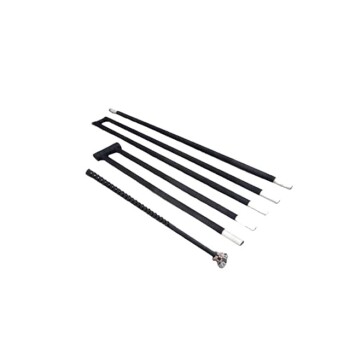
- Silicon Carbide SiC Thermal Heating Elements for Electric Furnace
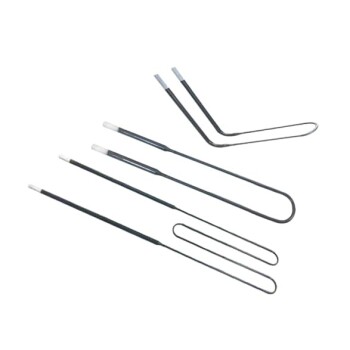
- Molybdenum Disilicide (MoSi2) Thermal Elements Electric Furnace Heating Element
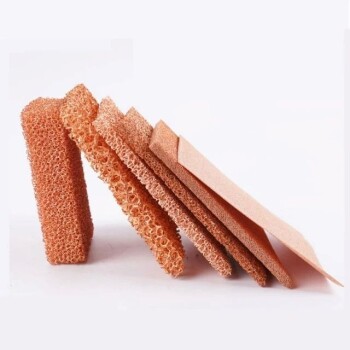
- Copper Foam
- Laboratory Scientific Electric Heating Blast Drying Oven
- Engineering Advanced Fine Ceramics Aluminum Oxide Al2O3 Heat Sink for Insulation
People Also Ask
- What is the function of the heating element in a furnace? The Engine of Your Thermal Process
- What is the best heating element for a furnace? A Guide to Selecting the Right Material for Your Temperature Needs
- What is SiC elements? The Ultimate High-Temperature Heating Solution
- How long does a heating element last on the furnace? Understand Lifespan & Safety for Your System
- What are silicon carbide heating elements used for? Reliable High-Temp Heating for Industrial Processes