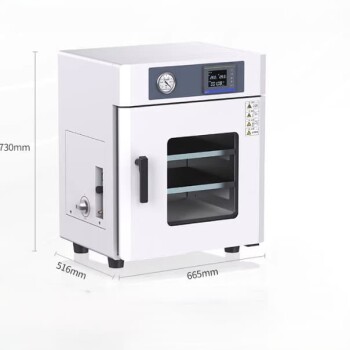
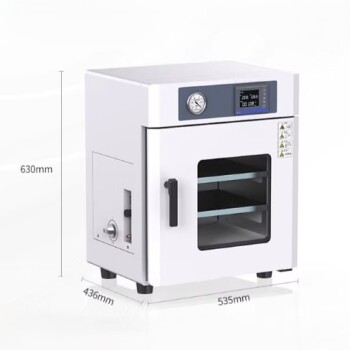
The primary function of a vacuum oven in this context is to remove adsorbed water from hydrated ruthenium chloride. By maintaining a controlled temperature (typically around 120°C) under negative pressure, this pre-treatment ensures the accuracy of the precursor's chemical composition and protects the physical integrity of the catalyst during later processing stages.
The vacuum oven serves a dual purpose: it eliminates variable moisture to guarantee precise stoichiometric ratios, and it prevents structural collapse caused by rapid steam expansion during high-temperature calcination.
Ensuring Chemical Precision
The Challenge of Hydrated Precursors
Ruthenium chloride is often hydrated, meaning it naturally absorbs moisture from the environment. This adsorbed water adds variable weight to the powder, making it difficult to determine the exact amount of Ruthenium present.
Achieving Accurate Stoichiometry
Without pre-treatment, weighing the powder would result in an incorrect ratio of Ruthenium to Silicon in the final Si-RuO2 catalyst.
The vacuum oven removes this variable moisture completely. This allows for an accurate calculation of the precursor's mass, ensuring the final product meets the precise stoichiometric design required for optimal catalytic performance.
Preserving Microscopic Morphology
Preventing Thermal Shock
The preparation of Si-RuO2 catalysts eventually requires high-temperature calcination. If the precursor still contains moisture during this phase, the water will vaporize instantly.
Avoiding Rapid Expansion Damage
When trapped moisture turns to steam rapidly, it expands with significant force. The primary reference notes that this rapid vaporization can destroy the catalyst's microscopic morphology.
By removing the water gently in a vacuum oven beforehand, you eliminate the risk of these internal "micro-explosions," preserving the delicate structural integrity of the material.
Maintaining Porous Structures
Vacuum drying is particularly effective for porous materials. It lowers the boiling point of solvents and water, allowing them to evaporate from deep within the pores at lower thermal stress.
This gentle evacuation prevents the collapse of the pore structure, ensuring the final catalyst retains the high surface area necessary for chemical reactivity.
Understanding the Trade-offs
Process Time vs. Material Safety
While vacuum drying is safer for the material, it is often a slower process compared to high-heat atmospheric drying. It requires an "extended period" to ensure total moisture removal. Rushing this stage defeats the purpose of the treatment.
Complexity of Equipment
Vacuum ovens require precise maintenance of seals and pumps. A failure in the vacuum seal can lead to inconsistent drying or the re-introduction of moisture and oxygen, potentially leading to surface oxidation which the vacuum environment is meant to mitigate.
Making the Right Choice for Your Goal
To maximize the effectiveness of your Si-RuO2 catalyst preparation, consider your specific priorities:
- If your primary focus is Compositional Accuracy: Ensure the drying cycle is sufficiently long to reach a constant weight, guaranteeing that all adsorbed water is removed for precise stoichiometry.
- If your primary focus is Structural Integrity: Prioritize a gradual ramp-up in temperature within the vacuum to gently evacuate deep-pore moisture without stressing the framework.
Pre-treating ruthenium chloride is not just a drying step; it is a critical control measure that defines the structural and chemical success of the final catalyst.
Summary Table:
| Feature | Function in Catalyst Pre-treatment | Benefit |
|---|---|---|
| Negative Pressure | Lowers boiling point of adsorbed water | Gentle moisture removal from deep pores |
| Temperature Control | Maintains constant ~120°C heat | Prevents thermal shock and structural collapse |
| Moisture Removal | Eliminates variable hydration | Ensures precise Ru:Si stoichiometric ratios |
| Vacuum Environment | Prevents rapid steam expansion | Protects microscopic morphology and surface area |
Elevate Your Material Research with KINTEK Precision
Precise pre-treatment is the foundation of high-performance catalyst synthesis. KINTEK specializes in advanced laboratory solutions designed to meet the rigorous demands of chemical research and material science.
Whether you are preparing Si-RuO2 catalysts or conducting complex battery research, our high-performance vacuum ovens and high-temperature furnaces provide the thermal stability and atmospheric control you need. Our comprehensive portfolio includes:
- Thermal Solutions: Muffle, tube, and vacuum ovens for precise calcination and drying.
- Sample Prep: Crushing, milling systems, and hydraulic pellet presses for consistent precursor forms.
- Specialized Glassware & Tools: High-quality PTFE products, ceramics, and crucibles.
Ready to optimize your lab's workflow and ensure the integrity of your microscopic structures? Contact KINTEK today to discover how our expertise in laboratory equipment and consumables can drive your next breakthrough.
References
- Xinyu Ping, Zidong Wei. Locking the lattice oxygen in RuO2 to stabilize highly active Ru sites in acidic water oxidation. DOI: 10.1038/s41467-024-46815-6
This article is also based on technical information from Kintek Solution Knowledge Base .
Related Products
- 56L Vertical Laboratory Vacuum Drying Oven
- 23L Laboratory Vacuum Drying Oven
- Vacuum Heat Treat Sintering Brazing Furnace
- 2200 ℃ Graphite Vacuum Heat Treat Furnace
- Dental Porcelain Zirconia Sintering Ceramic Vacuum Press Furnace
People Also Ask
- Why is a laboratory vacuum drying oven recommended for rice straw residues? Protect Your Biomass Integrity
- What role does a laboratory vacuum drying oven play in the preparation of modified multi-walled carbon nanotubes?
- What is the importance of using a laboratory vacuum drying oven? Preserving Slow-Release Microcapsule Integrity
- Why is a Laboratory Vacuum Drying Oven recommended for PBAT microspheres? Protect Sensitive Polymer Integrity
- What role does a laboratory vacuum drying oven play in processing nanoparticle powder samples? Protect Sample Integrity