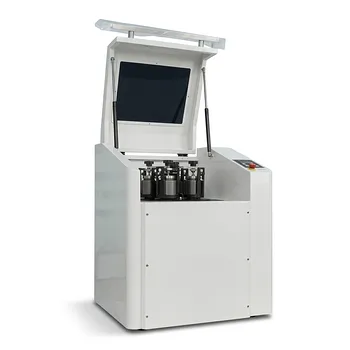
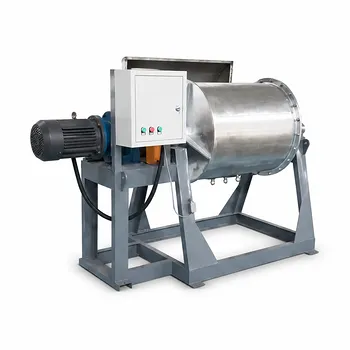
The primary function of ball milling equipment in this context is to mechanically refine and mix precursor powders—LiFePO4, polymer binders, and carbon—to ensure a completely homogeneous distribution. This step is essential not just for mixing, but for modifying the particle surfaces to ensure they can be uniformly wetted by transient solvents in later processing stages.
The core objective of this pretreatment is to facilitate the Cold Sintering Process. By refining the powder to allow uniform solvent wetting, ball milling enables the dissolution-precipitation mechanism required to form high-density, highly conductive electrode structures under pressure.
The Mechanics of Composite Pretreatment
Achieving Homogeneity Across Phases
LiFePO4 (active material), carbon (conductive additive), and polymers (binders) have vastly different densities and physical properties.
Without mechanical intervention, these materials tend to segregate. Ball milling utilizes high-energy collisions to force these distinct phases into intimate, uniform contact.
This ensures that the insulating polymer and active materials are thoroughly integrated with the conductive carbon, creating a consistent baseline for the electrode structure.
Enabling Uniform Solvent Wetting
A critical, often overlooked aspect of this process is the preparation of particle surfaces for "wetting."
According to the primary technical protocols, the refinement process ensures that the transient solvent can uniformly cover the particle surfaces.
If the powder is not sufficiently refined, the solvent distribution will be uneven, leading to structural defects during the subsequent densification phases.
Facilitating the Dissolution-Precipitation Mechanism
The ultimate goal of this specific mixture is to undergo the Cold Sintering Process.
This process relies on a specific mechanism called dissolution-precipitation, which occurs under pressure.
This mechanism acts as the "glue" that densifies the composite. It is only possible if the precursors have been sufficiently refined and wetted during the ball milling stage.
Constructing Percolation Networks
Beyond simple mixing, ball milling creates the necessary physical infrastructure for battery performance.
By forcing conductive carbon into tight contact with LiFePO4 and polymer particles, the process establishes continuous electron conduction networks.
Simultaneously, it preserves ion transport channels, ensuring the material meets the percolation requirements necessary for efficient energy storage.
Understanding the Trade-offs
While ball milling is essential for homogeneity, it introduces specific risks that must be managed.
Thermal Degradation of Polymers
The high-energy collisions involved in ball milling generate significant friction and heat.
Polymers are highly sensitive to temperature; excessive heat can degrade the polymer binder before the electrode is even formed.
Systems must often employ temperature controls or specific protocols (like cryogenic milling temperatures below -50°C) to prevent the polymer from losing its binding integrity or chemical stability.
Over-Refinement and Dispersion
While dispersion is the goal, the process must be tuned to the specific fluidity and density of the materials.
In some contexts, such as with high-entropy alloys or specific ceramics, the milling duration is critical to matching the dispersion of reinforcement phases.
Incorrect timing can lead to anisotropic mechanical properties or uneven microstructures, defeating the purpose of the treatment.
Making the Right Choice for Your Goal
When configuring your ball milling parameters for electrode preparation, your specific outcome dictates your approach.
- If your primary focus is Electrode Density: Prioritize the refinement of particle size to ensure maximum surface area for uniform solvent wetting, which drives the dissolution-precipitation mechanism.
- If your primary focus is Conductivity: Focus on the intensity of the mixing to ensure the conductive carbon phase creates a continuous, unbroken network around the active LiFePO4 particles.
- If your primary focus is Material Integrity: Monitor process temperatures closely to prevent the thermal degradation of the polymer binder during high-energy collisions.
Ball milling is not merely a mixing step; it is the structural enabler that allows the Cold Sintering Process to function.
Summary Table:
| Factor | Role in Pretreatment | Benefit to Electrode |
|---|---|---|
| Homogeneity | Forces intimate contact between disparate phases | Ensures consistent structural baseline |
| Solvent Wetting | Refines particle surfaces for transient solvents | Prevents defects during densification |
| Mechanism | Enables dissolution-precipitation under pressure | Facilitates high-density cold sintering |
| Conductivity | Integrates carbon into active material networks | Establishes continuous electron pathways |
| Temperature | Managed via protocols (e.g., cryo-milling) | Protects polymer binders from degradation |
Precision milling is the foundation of high-performance battery research. KINTEK provides industry-leading crushing and milling systems tailored for sensitive electrode composites like LiFePO4 and polymers. Whether you require cryogenic controls to prevent thermal degradation or high-energy refinement for cold sintering, our expertise ensures your powders meet strict percolation requirements. Elevate your material synthesis with our laboratory-grade solutions—contact KINTEK today for a consultation!
Related Products
- Laboratory Planetary Ball Mill Rotating Ball Milling Machine
- Mini Planetary Ball Mill Machine for Laboratory Milling
- Laboratory Planetary Ball Mill Cabinet Planetary Ball Milling Machine
- High-Energy Omnidirectional Planetary Ball Mill Milling Machine for Laboratory
- High Energy Planetary Ball Mill Milling Machine for Laboratory
People Also Ask
- In what way does a laboratory ball mill affect material properties when modifying PHBV/pulp fiber composites?
- Why is a laboratory ball mill required for ultra-fine fly ash? Unlock Nano-Scale Adsorption Power
- Why is a laboratory ball mill used in Co-Ni catalyst research? Optimize CO2 Conversion with Precise Milling
- How does a laboratory ball mill ensure the mixing quality of Mn3Zn0.8Sn0.2N and Ti? Achieve Perfect Homogeneity
- What is the function of a laboratory ball mill in the preparation of AMMCs? Optimize Dispersion & Grain Refinement