Boron Nitride (BN) release agents and graphite paper serve as critical isolation and lubrication barriers. In the high-temperature, high-pressure environment of hot-press sintering, these materials prevent the composite powder from chemically reacting with or mechanically adhering to the graphite mold. They are the defining factor in whether you can successfully eject a sintered sample without damaging the part or the expensive tooling.
Core Takeaway These agents act as a sacrificial interface preventing the formation of a "chemical weld" or mechanical lock between the metal and the mold. By blocking melt penetration and chemical diffusion, they ensure clean demolding and significantly extend the service life of graphite components.
The Mechanics of Isolation and Protection
Preventing Chemical Reactions
At sintering temperatures, many metals (such as Titanium and Nickel alloys) become highly reactive. Without a barrier, these metals diffuse into the graphite walls to form brittle compounds like carbides or nitrides.
Boron Nitride (BN) creates an inert chemical shield. This stops the powder from bonding with the carbon in the mold, preserving the alloy's intended properties and preventing the sample from fusing to the wall.
Blocking Mechanical Infiltration
Graphite is naturally porous. Under high pressure, molten phases of materials (especially Aluminum alloys) can be forced into these microscopic pores.
Once the material cools and solidifies inside the pores, it creates a mechanical lock. Release agents seal these pores, keeping the melt contained within the cavity and preventing physical adhesion.
Ensuring Smooth Demolding
Friction is a major enemy during the ejection phase. If the sample sticks, the force required to remove it can crack the ceramic or deform the metal composite.
Both BN and graphite paper act as high-temperature lubricants. They lower the coefficient of friction between the sample and the wall, allowing the finished part to slide out smoothly with a high-quality surface finish.
Extending Mold Longevity
Reducing Tool Wear and Erosion
Graphite molds are expensive consumables. Direct contact with abrasive powders and reactive melts accelerates erosion and surface degradation.
By acting as a buffer, graphite paper and BN coatings take the brunt of the thermal and mechanical stress. This sacrificial layer prevents the sample from "eating" into the mold wall, significantly increasing the number of cycles a mold can endure.
Compensating for Surface Irregularities
Graphite paper, in particular, offers a unique mechanical benefit. It is slightly compressible, allowing it to conform to minor roughness or imperfections in the mold wall.
This ensures uniform transmission of mechanical pressure (and electrical current in processes like SPS). It prevents localized stress points that could lead to mold cracking or uneven sintering density.
Common Pitfalls and Trade-offs
Application Uniformity is Critical
For Boron Nitride sprays or paints, the application must be perfectly uniform. A thin or missed spot creates a point of failure where the metal will stick, potentially ruining the entire batch.
Geometric Tolerance
While graphite paper is an excellent buffer, it adds thickness to the assembly. You must account for the thickness of the paper when designing close-tolerance tooling to ensure the final sintered part meets dimensional specifications.
Handling Fragility
Graphite paper is brittle and can tear during loading. A tear negates the isolation benefit, leading to localized welding of the sample to the mold.
Making the Right Choice for Your Goal
- If your primary focus is intricate geometries or liquid-phase sintering: Use Boron Nitride (BN) spray, as it penetrates pores deeply and does not add significant thickness or wrinkle on complex surfaces.
- If your primary focus is preventing reaction in large, flat surfaces: Use Graphite Paper, as it provides a robust, continuous physical barrier that compensates for minor mold roughness.
- If your primary focus is processing highly reactive metals (like Titanium): Ensure a thick, verified layer of BN, as chemical reactivity is the primary failure mode rather than simple mechanical sticking.
Success in hot pressing lies in the interface; protecting that boundary protects your project.
Summary Table:
| Feature | Boron Nitride (BN) Spray | Graphite Paper |
|---|---|---|
| Primary Function | Inert chemical barrier & lubrication | Physical separation & pressure buffer |
| Best For | Complex geometries & liquid-phase sintering | Large flat surfaces & surface irregularities |
| Advantage | Deep pore penetration; zero thickness change | Robust barrier; compensates for mold roughness |
| Key Limitation | Requires perfectly uniform application | Can tear during loading; adds thickness |
Maximize Your Lab’s Efficiency with KINTEK
Don't let sample adhesion ruin your expensive graphite tooling or compromise your material research. KINTEK specializes in high-performance laboratory equipment, including advanced hot-press sintering systems, vacuum furnaces, and hydraulic presses.
Whether you are working with reactive titanium alloys or complex ceramics, our team provides the precision tools and high-quality consumables—from graphite molds and BN coatings to PTFE products and crucibles—needed to ensure successful sintering every time.
Ready to upgrade your sintering process? Contact KINTEK today to discover how our comprehensive range of thermal and mechanical solutions can enhance your lab's productivity!
Related Products
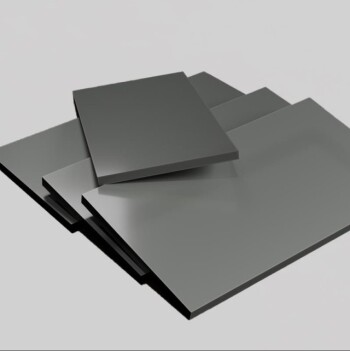
- Carbon Graphite Plate Manufactured by Isostatic Pressing Method
- High Purity Pure Graphite Crucible for Evaporation
- Graphite Disc Rod and Sheet Electrode Electrochemical Graphite Electrode
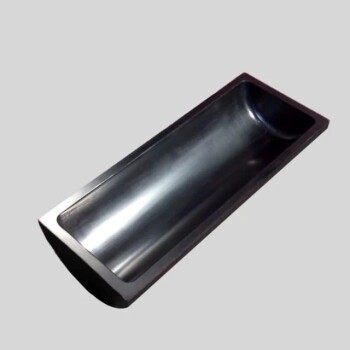
- Carbon Graphite Boat -Laboratory Tube Furnace with Cover
- High Purity Pure Graphite Crucible for Electron Beam Evaporation
People Also Ask
- What is the process of isostatic graphite manufacturing? Achieve Unmatched Material Uniformity and Performance
- What is isostatic graphite? The Ultimate Material for High-Tech and High-Temperature Applications
- What is the density of isostatic graphite? Unlock Superior Performance for Demanding Applications
- How big is the isostatic pressing market? A Deep Dive into the $1.2B+ Advanced Manufacturing Enabler
- Why Use an Isostatic or High-Precision Hydraulic Press for Li/LLZO/Li Batteries? Master Solid-State Interfaces