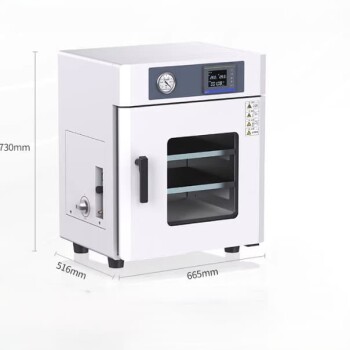
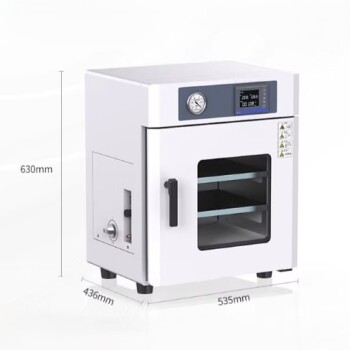
The primary necessity of using a vacuum drying oven prior to sputtering is to eliminate volatile contaminants that compromise the coating environment. Specifically, this step effectively removes residual cleaning solvents and moisture trapped within the surface and micropores of substrates, such as M42 high-speed steel. Without this pretreatment, these trapped volatiles will outgas during the coating process, destroying the integrity of the film.
Core Takeaway Pre-drying is a critical quality control step that prevents the release of water vapor during deposition. This ensures the sputtering chamber reaches its ultimate vacuum level quickly and guarantees the resulting film is dense, pure, and free from oxidation or porosity.
The Critical Role of Substrate Preparation
Eliminating Deep-Seated Contaminants
Surface cleanliness is not just about visible debris; it is about microscopic purity. Cleaning solvents and atmospheric moisture often penetrate the pores of materials like M42 high-speed steel.
Standard air drying is often insufficient to remove these trapped fluids. A vacuum drying oven lowers the boiling point of these liquids, forcing them to evaporate out of the deep pores and surface irregularities before the sample ever enters the coating chamber.
Protecting the Sputtering Chamber
The efficiency of your sputtering equipment relies heavily on maintaining a pristine vacuum. If samples are not pre-dried, they become a source of contamination inside the chamber.
By removing contaminants beforehand, you significantly shorten the time required for the sputtering chamber to pump down to its "ultimate vacuum" level. This increases overall process efficiency and throughput.
Ensuring Film Purity and Density
The presence of water vapor during deposition is chemically destructive. As the film is being deposited, released water vapor can react with the target material.
This reaction leads to film oxidation, which fundamentally alters the chemical properties of the coating. Furthermore, the escaping gas creates physical defects, resulting in the formation of pores rather than a continuous, dense layer.
The Risks of Inadequate Pre-treatment
Common Pitfalls to Avoid
Skipping the vacuum drying phase is a false economy that saves time upfront but costs significantly more in process stability and product quality.
The "Virtual Leak" Phenomenon
When moisture outgasses from a sample during sputtering, it mimics a vacuum leak. This prevents the chamber from maintaining the low air density required for optimal adhesion. As noted in vacuum principles, low air density is essential for high-quality adhesion and enhanced wear resistance; moisture contamination directly negates these benefits.
Compromised Mechanical Properties
If the film oxidizes or forms pores due to outgassing, the mechanical advantages of the coating are lost. You risk producing components with poor hardness and reduced wear resistance, leading to premature failure in the field.
Making the Right Choice for Your Goal
To ensure consistency in your sputtering process, apply the following guidelines:
- If your primary focus is process efficiency: Utilize vacuum drying to minimize the pump-down time of your main sputtering chamber, allowing for faster cycle times.
- If your primary focus is film quality: Prioritize vacuum drying to eliminate oxidation and porosity, ensuring the highest possible density and purity of the deposited layer.
A dry substrate is the only foundation upon which a durable, high-performance coating can be built.
Summary Table:
| Factor | Impact of Vacuum Pre-Drying | Impact of Skipping Pre-Drying |
|---|---|---|
| Substrate Purity | Removes deep-seated solvents & moisture | Trapped volatiles remain in micropores |
| Chamber Efficiency | Faster pump-down to ultimate vacuum | Delayed vacuum levels due to outgassing |
| Film Integrity | High density, pure, and defect-free | Porous, oxidized, and low adhesion |
| Mechanical Performance | Enhanced hardness and wear resistance | Premature failure and low durability |
Elevate Your Coating Quality with KINTEK Precision Solutions
Don't let trapped moisture compromise your thin-film deposition. KINTEK specializes in high-performance laboratory equipment designed to optimize every stage of your research and production. From specialized vacuum drying ovens for substrate preparation to advanced sputtering systems and high-temperature furnaces, we provide the tools necessary to ensure film purity, density, and superior adhesion.
Whether you are working with M42 high-speed steel or advanced battery research, our comprehensive range—including crushing systems, hydraulic presses, and ceramic consumables—is engineered to meet the most demanding scientific standards.
Ready to optimize your lab's workflow and achieve flawless coating results?
Contact KINTEK Experts Today to find the perfect equipment solution for your specific application.
References
- А. E. Litvinov, Etibar Balaev. Parameters of protective carbon films applied on high-speed steels M42 via magnetronic sputtering. DOI: 10.17580/cisisr.2023.01.17
This article is also based on technical information from Kintek Solution Knowledge Base .
Related Products
- 56L Vertical Laboratory Vacuum Drying Oven
- 23L Laboratory Vacuum Drying Oven
- Laboratory Scientific Electric Heating Blast Drying Oven
- Benchtop Laboratory Vacuum Freeze Dryer
- Vacuum Heat Treat Sintering Brazing Furnace
People Also Ask
- Why is a laboratory vacuum drying oven recommended for rice straw residues? Protect Your Biomass Integrity
- What role does a laboratory vacuum drying oven play in the preparation of modified multi-walled carbon nanotubes?
- What is the importance of using a laboratory vacuum drying oven? Preserving Slow-Release Microcapsule Integrity
- Why is a Laboratory Vacuum Drying Oven recommended for PBAT microspheres? Protect Sensitive Polymer Integrity
- What role does a laboratory vacuum drying oven play in processing nanoparticle powder samples? Protect Sample Integrity