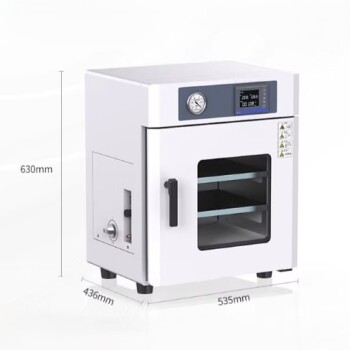
The necessity of industrial ovens lies in their ability to apply precise thermal control to the drying process, ensuring the structural integrity of the electrode. By utilizing specific temperature curves, these ovens manage the rate at which solvents evaporate from the electrode slurry, preventing the physical damage that occurs with uncontrolled drying.
The core objective of this process is not merely solvent removal, but the preservation of electrode coating quality. Controlled drying prevents cracking and peeling, ensuring the mechanical and electrical stability required for a functional battery.
The Mechanics of Controlled Evaporation
Managing Temperature Curves
Industrial ovens are designed to execute precisely controlled temperature curves. This regulation is essential to manage the evaporation rate of the solvents contained within the electrode slurry.
Preventing Rapid Drying Defects
If solvents evaporate too quickly, the coating undergoes significant stress. This rapid drying is the primary cause of microscopic cracks and peeling, which compromise the electrode's physical structure.
Ensuring Structural and Electrical Integrity
Achieving Mechanical Adhesion
A reliable battery depends on the coating sticking firmly to its base. The controlled drying process ensures strong mechanical adhesion between the active material and the current collector.
Guaranteeing Electrical Contact
Physical adhesion is directly linked to electrical performance. By preventing peeling, the oven ensures reliable electrical contact remains intact between the active material and the current collector.
Understanding the Risks of Improper Drying
The Cost of Inconsistency
Failing to use a controlled industrial oven introduces volatility into the manufacturing process. Without precise temperature management, the resulting electrodes often suffer from weak bonds and structural inconsistencies.
Compromised Battery Performance
Defects introduced during the drying phase, such as cracking, are often irreversible. These physical failures lead to poor conductivity and can significantly degrade the overall reliability of the final energy storage device.
Making the Right Choice for Your Goal
To optimize your electrode manufacturing process, consider the following:
- If your primary focus is Durability: Prioritize temperature curves that favor gradual evaporation to maximize mechanical adhesion and prevent peeling.
- If your primary focus is Electrical Performance: Ensure the drying process eliminates all solvent residues without causing cracking to maintain a pristine electrical contact path.
Controlled drying is the foundation of a reliable electrode; without it, the chemical potential of the materials cannot be fully realized.
Summary Table:
| Key Feature | Benefit for Electrode Sheets | Impact on Battery Quality |
|---|---|---|
| Precise Thermal Control | Manages solvent evaporation rates | Prevents microscopic cracking and peeling |
| Gradual Temp Curves | Maintains structural integrity | Ensures strong mechanical adhesion to collector |
| Uniform Heat Distribution | Eliminates all solvent residues | Guarantees consistent electrical contact |
| Controlled Environment | Reduces physical stress on coating | Enhances long-term durability and conductivity |
Elevate Your Battery Manufacturing Precision with KINTEK
Don't let improper drying compromise your energy storage performance. KINTEK specializes in advanced laboratory and industrial solutions, providing the high-precision thermal equipment needed for flawless electrode production. From our specialized high-temperature furnaces and vacuum ovens to our comprehensive range of battery research tools and consumables, we deliver the reliability your lab demands.
Whether you require high-temperature reactors, homogenizers, or custom PTFE and ceramic consumables, KINTEK is your partner in achieving mechanical and electrical excellence.
Ready to optimize your drying process? Contact our experts today to find the perfect industrial oven solution for your lab!
References
- Hernán Paz Penagos, Diego Arturo Coy Sarmiento. Graphene and coltan. DOI: 10.23850/2422068x.5835
This article is also based on technical information from Kintek Solution Knowledge Base .
Related Products
- Laboratory Scientific Electric Heating Blast Drying Oven
- 23L Laboratory Vacuum Drying Oven
- 56L Vertical Laboratory Vacuum Drying Oven
- High Temperature Muffle Oven Furnace for Laboratory Debinding and Pre Sintering
People Also Ask
- How does a laboratory electric drying oven contribute to the formation of the initial coating? Expert Insights
- What role does a precision laboratory drying oven play in the synthesis of GO-PANI nanocomposites? Protect Material Integrity
- What role does a laboratory drying oven play in the preparation of zinc oxide nanoparticle precursors?
- What is the necessity of using a laboratory drying oven when processing MoO3/GO composite nanopowders? Find out here.
- What is the role of a laboratory drying oven in cellulose citrate production? Ensure Material Stability & Purity