The integrity of liquid lead corrosion experiments depends heavily on the material selected for the crucible or container. If the container material lacks exceptional chemical stability, it will react with the liquid lead, introducing impurities that alter the melt's composition and directly compromise the accuracy of your corrosion data.
The Core Reality: The container is not a passive vessel; it is an active variable in your experiment. If the material reacts with the melt or suffers from erosion, it contaminates the liquid lead, rendering the experimental environment impure and the resulting data invalid.
The Mechanism of Contamination
Chemical Instability
The primary danger in these experiments is a chemical reaction between the container and the molten lead.
If the crucible material is not chemically stable at high temperatures, it will degrade and mix with the liquid metal.
Erosion by Liquid Metal
Beyond chemical reactions, liquid metals can physically erode container surfaces.
This physical degradation releases particles of the container material directly into the melt, acting as a contaminant source.
Consequences for Data Accuracy
Introduction of Impurities
When the container reacts or erodes, it introduces foreign elements (impurities) into the lead.
This fundamental alteration changes the chemical nature of the corrosive medium you are trying to study.
Loss of Experimental Control
Corrosion experiments rely on a controlled, known environment to produce valid results.
Once the purity of the lead melt is altered by the container, you are no longer testing the interaction between lead and your sample, but rather between a contaminated alloy and your sample.
Compromised Results
The presence of impurities creates experimental artifacts that obscure the true corrosion rate.
This makes it impossible to distinguish between the material's actual performance and the effects of the contamination.
Standard Solutions for Purity
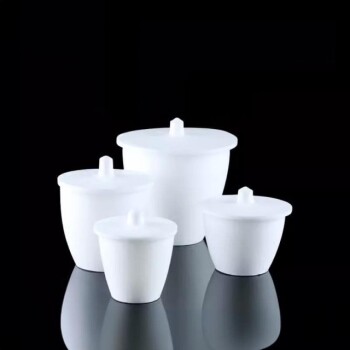
High-Purity Ceramics
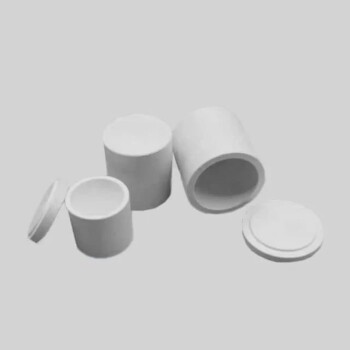
To prevent these issues, high-purity ceramic crucibles are the standard recommendation.
These materials are selected specifically for their ability to remain inert when in contact with liquid lead.
Inert Coatings
Alternatively, containers treated with specific inert coatings can be used.
These coatings act as a barrier, preventing the underlying container material from interacting with the melt.
Understanding the Trade-offs
The Necessity of Strict Selection
The trade-off in these experiments is often between convenience and validity.
While standard labware may be readily available, using anything less than specialized, high-purity materials guarantees data contamination.
Material Compatibility Risks
Not all "inert" materials are effective for every specific test condition.
You must verify that the specific ceramic or coating selected is truly resistant to erosion by liquid lead, as failing to do so negates the purpose of the experiment.
Ensuring Data Integrity in Your Experiments
To ensure your corrosion data is accurate and reproducible, you must prioritize the container's inertness above all other factors.
- If your primary focus is baseline accuracy: Prioritize high-purity ceramic crucibles to minimize any risk of chemical leaching into the lead melt.
- If your primary focus is preventing physical degradation: Ensure your container features specific inert coatings designed to resist the erosive nature of liquid metals.
Ultimately, a pure experimental environment is the only way to achieve accurate corrosion results.
Summary Table:
| Factor | Impact on Experiment | Recommended Solution |
|---|---|---|
| Chemical Stability | Prevents reactions that introduce impurities into the melt. | High-Purity Alumina/Zirconia Ceramics |
| Erosion Resistance | Stops physical degradation and particle shedding into lead. | Specific Inert Barrier Coatings |
| Data Accuracy | Ensures results reflect true corrosion, not alloy interference. | Certified Inert Labware |
| Thermal Resilience | Maintains structural integrity at high temperatures. | Specialized Refractory Materials |
Secure the Accuracy of Your Corrosion Research with KINTEK
Don't let container contamination compromise your experimental data. At KINTEK, we understand that high-temperature liquid lead experiments demand absolute purity. We specialize in providing the high-performance laboratory equipment and consumables necessary for advanced materials science, including high-purity ceramic crucibles, refractory containers, and high-temperature furnaces designed to maintain a controlled environment.
From our precision crushing and milling systems for sample preparation to our high-pressure reactors and autoclaves, KINTEK offers the comprehensive tools required to ensure your results are both reproducible and valid.
Ready to elevate your laboratory standards? Contact our technical experts today to find the perfect inert solutions for your lead corrosion studies.
References
- Dumitra Lucan, GHEORGHIŢA JINESCU. Corrosion of some candidate structural materials for lead fast reactors. DOI: 10.56958/jesi.2018.3.4.313
This article is also based on technical information from Kintek Solution Knowledge Base .
Related Products
- Engineering Advanced Fine Ceramics Alumina Al2O3 Crucible With Lid Cylindrical Laboratory Crucible
- Engineering Advanced Fine Alumina Al2O3 Ceramic Crucible for Laboratory Muffle Furnace
- Engineering Advanced Fine Ceramics Alumina Crucibles (Al2O3) for Thermal Analysis TGA DTA
- Alumina Al2O3 Ceramic Crucible Semicircle Boat with Lid for Engineering Advanced Fine Ceramics
- High Purity Pure Graphite Crucible for Evaporation
People Also Ask
- Why are high-purity alumina crucibles used for liquid lead corrosion experiments? Ensure Data Accuracy at 550°C
- Why are alumina crucibles and mother powder essential for LATP sintering? Optimize Your Solid Electrolyte Performance
- What is the primary purpose of using alumina crucibles for LLTO ceramics? Optimize Your High-Temperature Sintering
- Why Use Alumina Crucibles & Powder Burial for NaSICON? Ensure Phase Purity and Prevent Elemental Volatilization
- Why are alumina crucibles used as containers during the tungsten diffusion coating process on diamond surfaces?