Knowledge cvd machine Why is vacuum needed for thin film deposition? To Achieve Purity, Uniformity, and Control
Author avatar

Tech Team · Kintek Solution

Updated 2 months ago

Why is vacuum needed for thin film deposition? To Achieve Purity, Uniformity, and Control


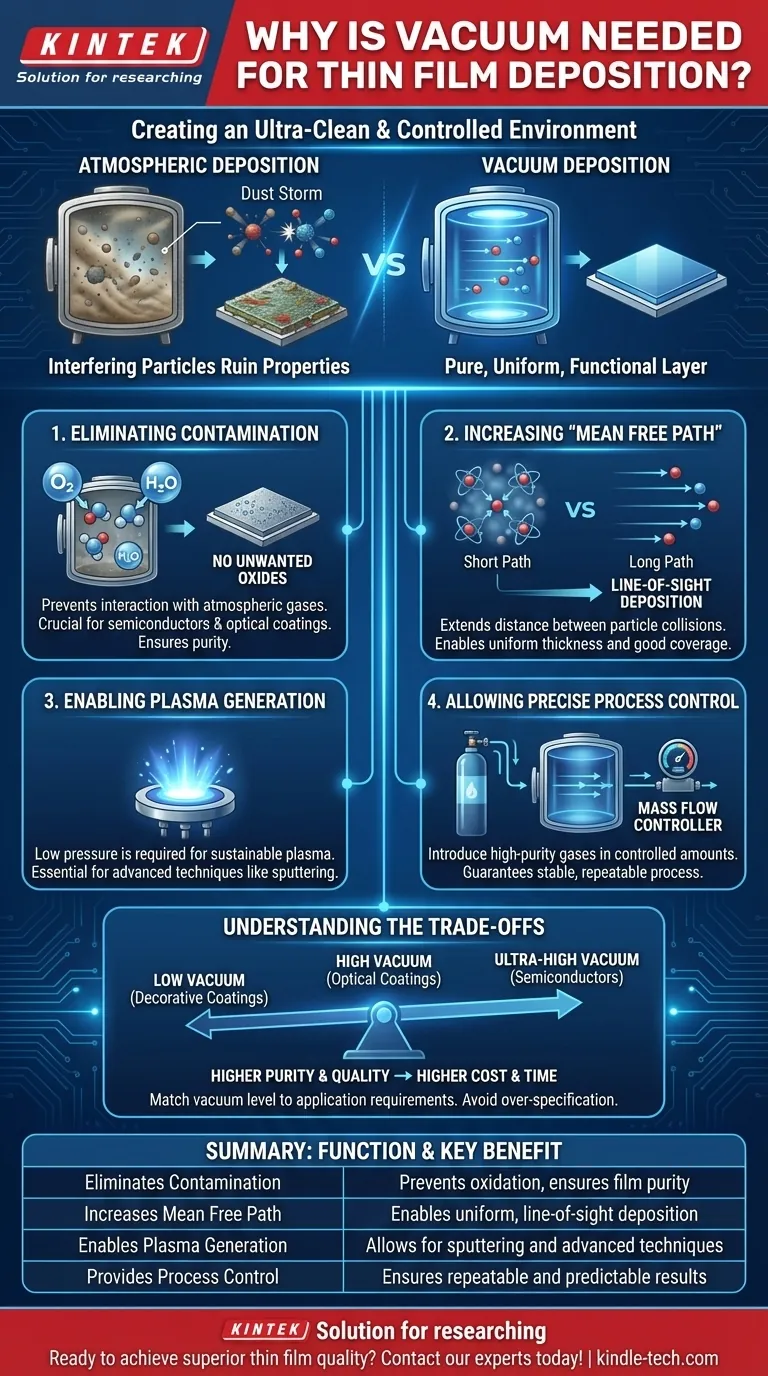
At its core, vacuum is required for thin film deposition to create an ultra-clean and controlled environment. This ensures that only the desired material is deposited onto the target surface (the substrate), preventing contamination from atmospheric gases like oxygen, nitrogen, and water vapor that would otherwise ruin the film's properties.

Creating a thin film without a vacuum is like trying to paint a microscopic circuit during a dust storm. The vacuum removes all the interfering "dust"—the atmospheric particles—so that the deposited material can form a pure, uniform, and functional layer.

Why is vacuum needed for thin film deposition? To Achieve Purity, Uniformity, and Control

The Core Functions of Vacuum in Deposition

The vacuum environment is not merely empty space; it is an active and essential component of the deposition process. It serves four primary functions that directly impact the quality, purity, and structure of the final film.

Function 1: Eliminating Contamination

Atmospheric air is dense with particles that are highly reactive. Gases like oxygen and water vapor will immediately interact with both the deposition material and the substrate surface.

This leads to the formation of unwanted oxides and other compounds within the film. For applications like semiconductors or optical coatings, even minuscule levels of contamination can completely alter the film's electrical or optical properties, rendering it useless.

Function 2: Increasing the "Mean Free Path"

Mean free path is the average distance a particle can travel before colliding with another particle. In the atmosphere, this distance is incredibly short—nanometers.

By creating a vacuum, we dramatically reduce the density of gas molecules, extending the mean free path to meters. This ensures that atoms from the deposition source travel in a straight, uninterrupted line to the substrate, a condition known as line-of-sight deposition. This is critical for achieving uniform film thickness and good coverage over complex surface topographies.

Function 3: Enabling Plasma Generation

Many advanced deposition techniques, particularly sputtering, rely on the creation of plasma. Plasma is a state of matter where gas atoms are ionized, and it can only be sustained at very low pressures.

Attempting to generate a stable plasma at atmospheric pressure is impossible for these processes. The vacuum chamber provides the low-pressure environment necessary to initiate and control the plasma that is used to eject material from a source target.

Function 4: Allowing Precise Process Control

Once unwanted atmospheric gases are removed, the vacuum chamber becomes a blank canvas. This allows engineers to introduce specific, high-purity process gases (like argon for sputtering) in precisely controlled amounts.

Using mass flow controllers, the composition and pressure of the chamber's environment can be managed with extreme accuracy. This guarantees that the deposition process is stable, predictable, and, most importantly, repeatable from one run to the next.

Understanding the Trade-offs

While vacuum is essential, the level of vacuum required presents a trade-off between cost, time, and the desired film quality. Achieving higher purity requires more significant investment.

Vacuum Levels Matter

Not all processes require the same vacuum level. A "low vacuum" might be sufficient for a simple decorative coating, while a semiconductor device requires an ultra-high vacuum (UHV) to achieve the necessary electronic purity.

The Cost of Purity

Reaching higher vacuum levels (High Vacuum and Ultra-High Vacuum) requires more sophisticated and expensive pumping systems and instrumentation. It also increases the "pump-down" time needed to evacuate the chamber before deposition can begin, which impacts manufacturing throughput and cost.

The key is to match the vacuum level to the specific requirements of the film's application, avoiding the unnecessary cost and time of over-specification.

How to Choose the Right Approach

Your choice of vacuum level is dictated entirely by the end-use of the thin film. There is no one-size-fits-all answer.

  • If your primary focus is semiconductor fabrication or quantum devices: Ultra-high vacuum (UHV) is non-negotiable to achieve extreme purity and perfect material composition.
  • If your primary focus is high-performance optical coatings: High vacuum (HV) is critical to minimize contamination that would otherwise absorb or scatter light.
  • If your primary focus is general protective or decorative coatings: A lower-grade industrial vacuum is often sufficient to prevent major oxidation and ensure basic adhesion, balancing performance with cost.

Ultimately, the vacuum is the invisible foundation upon which modern thin film technology is built, enabling the creation of materials that define our technological world.

Summary Table:

Function of Vacuum Key Benefit
Eliminates Contamination Prevents oxidation and ensures film purity
Increases Mean Free Path Enables uniform, line-of-sight deposition
Enables Plasma Generation Allows for sputtering and other advanced techniques
Provides Process Control Ensures repeatable and predictable results

Ready to achieve superior thin film quality in your lab? The right vacuum environment is the foundation of success. KINTEK specializes in lab equipment and consumables, providing the reliable vacuum solutions and expert support you need for semiconductor, optical, or protective coating applications. Contact our experts today to discuss how we can help you optimize your deposition process for purity and performance.

Visual Guide
Why is vacuum needed for thin film deposition? To Achieve Purity, Uniformity, and Control Visual Guide

Related Products

People Also Ask

Related Products

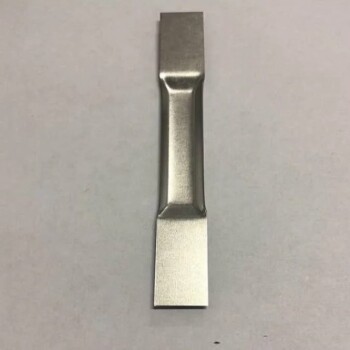
Molybdenum Tungsten Tantalum Evaporation Boat for High Temperature Applications

Molybdenum Tungsten Tantalum Evaporation Boat for High Temperature Applications

Evaporation boat sources are used in thermal evaporation systems and are suitable for depositing various metals, alloys and materials. Evaporation boat sources are available in different thicknesses of tungsten, tantalum and molybdenum to ensure compatibility with a variety of power sources. As a container, it is used for vacuum evaporation of materials. They can be used for thin film deposition of various materials, or designed to be compatible with techniques such as electron beam fabrication.

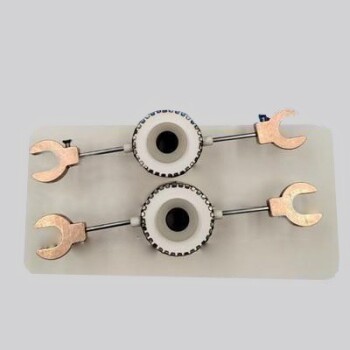
Aluminized Ceramic Evaporation Boat for Thin Film Deposition

Aluminized Ceramic Evaporation Boat for Thin Film Deposition

Vessel for depositing thin films; has an aluminum-coated ceramic body for improved thermal efficiency and chemical resistance. making it suitable for various applications.

Vacuum Hot Press Furnace Machine for Lamination and Heating

Vacuum Hot Press Furnace Machine for Lamination and Heating

Experience clean and precise lamination with Vacuum Lamination Press. Perfect for wafer bonding, thin-film transformations, and LCP lamination. Order now!

Split Chamber CVD Tube Furnace with Vacuum Station Chemical Vapor Deposition System Equipment Machine

Split Chamber CVD Tube Furnace with Vacuum Station Chemical Vapor Deposition System Equipment Machine

Efficient split chamber CVD furnace with vacuum station for intuitive sample checking and quick cooling. Up to 1200℃ max temperature with accurate MFC mass flowmeter control.

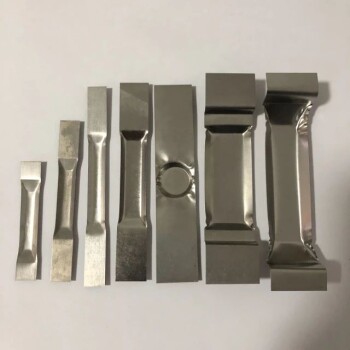
Tungsten Evaporation Boat for Thin Film Deposition

Tungsten Evaporation Boat for Thin Film Deposition

Learn about tungsten boats, also known as evaporated or coated tungsten boats. With a high tungsten content of 99.95%, these boats are ideal for high-temperature environments and widely used in various industries. Discover their properties and applications here.

HFCVD Machine System Equipment for Drawing Die Nano-Diamond Coating

HFCVD Machine System Equipment for Drawing Die Nano-Diamond Coating

The nano-diamond composite coating drawing die uses cemented carbide (WC-Co) as the substrate, and uses the chemical vapor phase method ( CVD method for short ) to coat the conventional diamond and nano-diamond composite coating on the surface of the inner hole of the mold.

Chemical Vapor Deposition CVD Equipment System Chamber Slide PECVD Tube Furnace with Liquid Gasifier PECVD Machine

Chemical Vapor Deposition CVD Equipment System Chamber Slide PECVD Tube Furnace with Liquid Gasifier PECVD Machine

KT-PE12 Slide PECVD System: Wide power range, programmable temp control, fast heating/cooling with sliding system, MFC mass flow control & vacuum pump.

Electron Beam Evaporation Coating Oxygen-Free Copper Crucible and Evaporation Boat

Electron Beam Evaporation Coating Oxygen-Free Copper Crucible and Evaporation Boat

Electron Beam Evaporation Coating Oxygen-Free Copper Crucible enables precise co-deposition of various materials. Its controlled temperature and water-cooled design ensure pure and efficient thin film deposition.

Custom CVD Diamond Coating for Lab Applications

Custom CVD Diamond Coating for Lab Applications

CVD Diamond Coating: Superior Thermal Conductivity, Crystal Quality, and Adhesion for Cutting Tools, Friction, and Acoustic Applications

915MHz MPCVD Diamond Machine Microwave Plasma Chemical Vapor Deposition System Reactor

915MHz MPCVD Diamond Machine Microwave Plasma Chemical Vapor Deposition System Reactor

915MHz MPCVD Diamond Machine and its multi-crystal effective growth, the maximum area can reach 8 inches, the maximum effective growth area of single crystal can reach 5 inches. This equipment is mainly used for the production of large-size polycrystalline diamond films, the growth of long single crystal diamonds, the low-temperature growth of high-quality graphene, and other materials that require energy provided by microwave plasma for growth.

Customer Made Versatile CVD Tube Furnace Chemical Vapor Deposition Chamber System Equipment

Customer Made Versatile CVD Tube Furnace Chemical Vapor Deposition Chamber System Equipment

Get your exclusive CVD furnace with KT-CTF16 Customer Made Versatile Furnace. Customizable sliding, rotating, and tilting functions for precise reactions. Order now!

Inclined Rotary Plasma Enhanced Chemical Vapor Deposition PECVD Equipment Tube Furnace Machine

Inclined Rotary Plasma Enhanced Chemical Vapor Deposition PECVD Equipment Tube Furnace Machine

Introducing our inclined rotary PECVD furnace for precise thin film deposition. Enjoy automatic matching source, PID programmable temperature control, and high accuracy MFC mass flowmeter control. Built-in safety features for peace of mind.

Microwave Plasma Chemical Vapor Deposition MPCVD Machine System Reactor for Lab and Diamond Growth

Microwave Plasma Chemical Vapor Deposition MPCVD Machine System Reactor for Lab and Diamond Growth

Get high-quality diamond films with our Bell-jar Resonator MPCVD machine designed for lab and diamond growth. Discover how Microwave Plasma Chemical Vapor Deposition works for growing diamonds using carbon gas and plasma.

RF PECVD System Radio Frequency Plasma-Enhanced Chemical Vapor Deposition RF PECVD

RF PECVD System Radio Frequency Plasma-Enhanced Chemical Vapor Deposition RF PECVD

RF-PECVD is an acronym for "Radio Frequency Plasma-Enhanced Chemical Vapor Deposition." It deposits DLC (Diamond-like carbon film) on germanium and silicon substrates. It is utilized in the 3-12um infrared wavelength range.

Multi Heating Zones CVD Tube Furnace Machine Chemical Vapor Deposition Chamber System Equipment

Multi Heating Zones CVD Tube Furnace Machine Chemical Vapor Deposition Chamber System Equipment

KT-CTF14 Multi Heating Zones CVD Furnace - Precise Temperature Control and Gas Flow for Advanced Applications. Max temp up to 1200℃, 4 channels MFC mass flow meter, and 7" TFT touch screen controller.

Inclined Rotary Plasma Enhanced Chemical Vapor Deposition PECVD Equipment Tube Furnace Machine

Inclined Rotary Plasma Enhanced Chemical Vapor Deposition PECVD Equipment Tube Furnace Machine

Upgrade your coating process with PECVD coating equipment. Ideal for LED, power semiconductors, MEMS and more. Deposits high-quality solid films at low temps.

Vacuum Cold Mounting Machine for Sample Preparation

Vacuum Cold Mounting Machine for Sample Preparation

Vacuum Cold Mounting Machine for precise sample prep. Handles porous, fragile materials with -0.08MPa vacuum. Ideal for electronics, metallurgy, and failure analysis.

Hemispherical Bottom Tungsten Molybdenum Evaporation Boat

Hemispherical Bottom Tungsten Molybdenum Evaporation Boat

Used for gold plating, silver plating, platinum, palladium, suitable for a small amount of thin film materials. Reduce the waste of film materials and reduce heat dissipation.

Vacuum Induction Melting Spinning System Arc Melting Furnace

Vacuum Induction Melting Spinning System Arc Melting Furnace

Develop metastable materials with ease using our Vacuum Melt Spinning System. Ideal for research and experimental work with amorphous and microcrystalline materials. Order now for effective results.


Leave Your Message