Processing plant-based coagulants into ultra-fine powder using precision crushing equipment is strictly necessary to maximize the material's specific surface area. This physical refinement is the catalyst that transforms raw biomass into a reactive chemical agent, ensuring high solubility and immediate dispersibility in water systems.
The effectiveness of a plant-based coagulant is limited by its physical accessibility; precision crushing overcomes this by exposing active sites that would otherwise remain trapped within larger particles.
The Physical Impact: Surface Area and Solubility
Maximizing Specific Surface Area
The primary objective of using precision crushing equipment is to drastically increase the specific surface area of the raw material.
By reducing the particle size to an ultra-fine state, you exponentially increase the amount of material exposed to the surrounding environment.
Enhancing Solubility and Dispersibility
Raw plant materials are often naturally resistant to dissolving.
Ultra-fine refinement overcomes this by ensuring the powder disperses rapidly and uniformly when introduced to water.
This eliminates the issue of "clumping" or uneven distribution, which is fatal to efficient water treatment processes.
The Chemical Impact: Activation and Binding
Releasing Active Functional Groups
Coagulation relies on chemical interactions, specifically the availability of active functional groups within the plant material.
Coarse grinding leaves these functional groups locked inside the particle matrix, rendering them useless.
Precision crushing acts as a release mechanism, exposing a higher density of these groups so they are chemically available to react.
Strengthening Bridging and Adsorption
Effective water treatment requires the coagulant to physically bridge particles together.
The increased surface area allows for comprehensive contact with colloidal particles and metal hydroxide flocs.
This comprehensive contact strengthens the adsorption effects, creating larger, more stable flocs that are easier to remove.
Understanding the Trade-offs
Equipment Complexity and Cost
Achieving ultra-fine particle sizes requires specialized "precision" equipment, not standard grinding mills.
This implies a higher initial capital investment and potentially higher energy consumption compared to coarse processing.
Handling and Reactivity
Because ultra-fine powders have such high surface areas, they are highly reactive.
While this is excellent for water treatment, it can make the powder more sensitive to moisture during storage, requiring careful handling protocols to prevent premature degradation.
Optimizing Your Coagulant Processing Strategy
To ensure you are getting the most out of your raw materials, consider your specific processing goals:
- If your primary focus is treatment speed: Prioritize the finest possible particle size to maximize immediate dispersibility and rapid floc formation.
- If your primary focus is efficiency of material use: Ensure your crushing equipment is calibrated to release the maximum density of active groups, preventing the waste of unreacted raw material.
Precision crushing is not merely a sizing step; it is an activation step that dictates the chemical potency of your final product.
Summary Table:
| Feature | Coarse Raw Material | Ultra-Fine Powder (Precision Crushed) |
|---|---|---|
| Specific Surface Area | Low | Extremely High |
| Solubility Speed | Slow / Prone to Clumping | Immediate / Uniform Dispersibility |
| Active Group Exposure | Mostly Internal (Locked) | Fully Exposed (Activated) |
| Flocculation Strength | Weak Adsorption | Strong Bridging & Stability |
| Process Efficiency | Low (Material Waste) | High (Maximum Potency) |
Elevate Your Processing Efficiency with KINTEK
Unlock the full potential of your raw materials with KINTEK’s industry-leading crushing and milling systems. Whether you are developing innovative plant-based coagulants or advanced battery materials, our precision equipment is designed to achieve the ultra-fine particle sizes necessary for maximum chemical reactivity.
Beyond milling, KINTEK offers a comprehensive suite of laboratory solutions, including high-temperature furnaces, hydraulic pellet presses, and high-pressure reactors, tailored for researchers and industrial manufacturers.
Ready to optimize your production and improve material performance? Contact our technical experts today to find the perfect precision system for your specific application!
References
- Amin Allah Zarei, Sajad Mazloomi. Enhancing Electrocoagulation Process Efficiency Using Astraglus Gossypinus Tragacanth in Turbidity Removal from Brackish Water Samples. DOI: 10.15244/pjoes/77960
This article is also based on technical information from Kintek Solution Knowledge Base .
Related Products
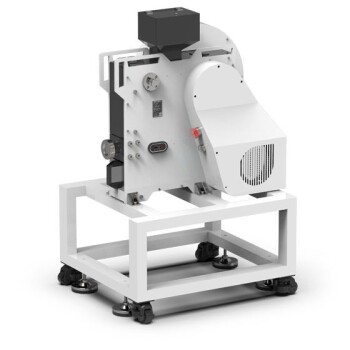
- Laboratory Jaw Crusher
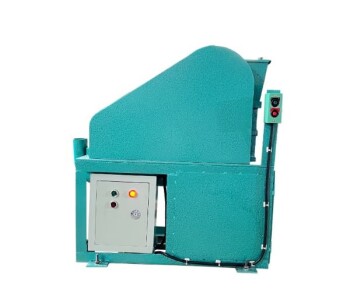
- Sealed Jaw Crusher High Efficiency Environmental Protection Safe and Reliable
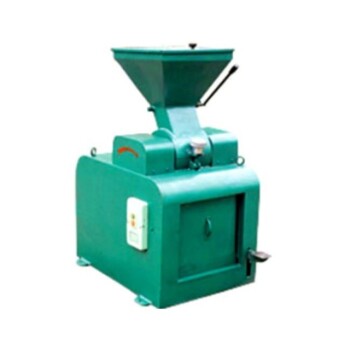
- Laboratory Sealed Hammer Crusher for Efficient Sample Preparation
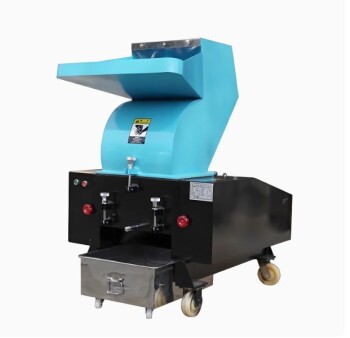
- Powerful Plastic Crusher Machine
- lab cryogenic grinding use liquid-nitrogen for pulverizing plastic raw materials and heat sensitive materials
People Also Ask
- What role do laboratory crushers and standard sieves play in Datura stramonium pretreatment? Optimize Your HTL Yield
- What is a laboratory crusher? The First Step to Accurate Sample Analysis
- What is the primary function of a laboratory crusher? Optimize Biomass & Coal Co-Gasification Efficiency
- What is a jaw crusher for labs? The Essential First Step for Accurate Sample Analysis
- How does a jaw crusher contribute to the primary processing of slate waste? Optimize Your Size Reduction Workflow