Within 8 hours on working days, 24 hours on holidays
Automatic Heated Lab Press
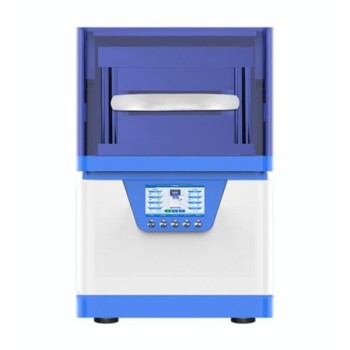
Automatic Heated Lab Presses are essential for laboratories requiring precise sample preparation under controlled temperature and pressure conditions. These presses are widely used in material research, pharmaceuticals, ceramics, and electronics industries. Our product range includes:
30T/40T Split Automatic Heated Hydraulic Press: Ideal for processing under vacuum with a compact design and heating up to 300°C.
25T/30T/50T Automatic Heated Hydraulic Press: Offers a wide pressure range for versatile applications.
Heated Hydraulic Press for Vacuum Box: Perfect for pressing pills and powders in a vacuum to reduce oxidation.
Automatic High Temperature Heat Press: Features sophisticated temperature control for quality processing.
Advanced Features and Benefits of Automatic Heated Lab Presses
KINTEK's Automatic Heated Lab Presses are designed to meet the rigorous demands of modern laboratories. These machines combine hydraulic pressure with precise temperature control to ensure optimal sample preparation. Here’s a detailed look at their features and advantages:
Precision and Control
Our lab presses offer digital pressure gauges and temperature controllers, allowing for exact adjustments to meet specific experimental requirements. The split design in some models facilitates easy handling and maintenance, while the vacuum environment capability ensures minimal oxidation, crucial for material integrity.
Versatility Across Industries
These presses are indispensable in various fields:
Material Research: For preparing composite materials with consistent quality.
Pharmaceuticals: Ensuring uniform tablet density and composition.
Ceramics: Achieving precise shapes and densities in ceramic samples.
Electronics: Fabricating components with exact thermal and pressure conditions.
Robust Construction and Safety
Built with high-quality materials, our presses withstand high pressures and temperatures up to 300°C. Safety features include over-pressure protection and automatic shut-off systems, ensuring safe operation even during prolonged use.
Customizable Solutions
Understanding that each lab has unique needs, we offer customizable options in pressure ranges, plate sizes, and temperature settings. Whether you need a 30T press for small samples or a 50T machine for larger applications, we can tailor the equipment to your specifications.
Why Choose KINTEK?
Expertise: Decades of experience in lab equipment manufacturing.
Reliability: Machines built for durability and long-term performance.
Support: Comprehensive after-sales service and technical assistance.
Call to Action
Upgrade your lab’s capabilities with KINTEK’s Automatic Heated Lab Presses. Contact us today to discuss your requirements or request a demo. Fill out our contact form and let our experts help you find the perfect solution for your laboratory needs.
FAQ
What Is A Lab Press?
A lab press, also known as a laboratory press, is a machine used to create compressed pellets from powdered material for various applications such as pharmaceutical development, spectroscopy, and bomb calorimetry. The powders are placed into a die and are pressed into shape by hydraulic action. Lab presses can have a wide range of pressures, from 15 to 200 metric tons, and can accommodate a wide range of different-sized or customized dies. They are commonly used in industries such as pharmaceutical, laminating, rubber and plastic molding, and for R&D work, testing, short runs, limited production, cell manufacturing, and lean manufacturing.
What Are The Advantages Of Using A Hydraulically Heated Laboratory Press?
Hydraulically heated laboratory presses offer several advantages in scientific research and material characterization. The hydraulic system provides precise and adjustable pressure control, allowing researchers to apply specific pressure levels to samples. The inclusion of a heating element enables precise temperature control, facilitating experiments that require elevated temperatures or thermal treatments. The presses are also versatile and can accommodate a wide range of sample sizes and shapes. They are commonly used for applications such as powder compaction, material synthesis, sample preparation for spectroscopic analysis, and polymer molding. The combination of pressure and heat in a single machine streamlines experimental processes and offers researchers greater control over their experimental conditions.
What Is The Purpose Of A Hydraulic Press In Lab?
A hydraulic press in the laboratory is used to test the strength and durability of materials, investigate the effects of high pressure on different substances, and create pellets for sample analysis. It is a machine that uses fluid pressure to generate a force, which can be used to compress or mold materials. Laboratory hydraulic presses are smaller versions of industrial machines that offer more precision and control. They are commonly used to create KBr pellets for FTIR and general sample pellets for XRF in order to study the elemental composition of materials.
What Are The Applications Of Pellet Presses?
Pellet presses have a wide range of applications across various industries. They are commonly used in the pharmaceutical industry to produce uniform and compacted pellets for drug formulations. In the food industry, pellet presses are used to create animal feed pellets, as well as pellets for snacks and breakfast cereals. Pellet presses are also used in the chemical industry for catalysts, fertilizers, and chemical additives. Additionally, they find application in the biomass industry for the production of wood pellets for fuel, as well as in the metallurgical industry for the production of metal pellets for further processing.
How Do Electric Laboratory Presses Work?
Electric laboratory presses typically consist of a motor-driven ram or piston that applies force to a sample through a platen or die. The electric motor is controlled by a control panel, allowing the user to set and adjust the desired force and speed. The sample is placed between the platens, and as the motor drives the ram, the force is applied, exerting pressure on the sample. This controlled pressure enables various processes such as compression testing, powder compaction, sample preparation, and material synthesis.
What Does A Hydraulic Lab Heat Press Do?
A hydraulic lab heat press is a machine that uses fluid pressure to generate force and heat to melt powdered material and compress it into the desired shape and size for lab applications. It is used to create a wide range of samples, pellets, and test specimens for materials such as polymers, composites, ceramics, and pharmaceuticals. The lab press can be a benchtop or floor unit and can generate from 15 to over 200 tons of compressive force. It has heated platens that can range from 50℃ to 500℃.
What Are Different Type Of Lab Presses?
Different types of laboratory presses include manual hydraulic presses, automated hydraulic presses. Manual hydraulic presses use hand-operated levers to apply pressure, while automated presses are equipped with programmable controls to press products more accurately and consistently. When selecting a hydraulic press, it is important to consider the amount of force needed for a specific sample, how much space is provided in the lab, and how much energy and strength is required to pump the press.
How Does A Pellet Press Work?
A pellet press works by feeding the material into a chamber where it is compressed by a rotating roller or extrusion plate. The pressure applied forces the material through a die with holes of a specific size and shape, which determines the size and shape of the pellets. The pellets are then cut to the desired length and collected for further processing or packaging. Some pellet presses may also include additional steps, such as drying or cooling the pellets, depending on the specific application.
What Is KBr Used For?
KBr, or potassium bromide, is commonly used in laboratories as a matrix for infrared spectroscopy. It is mixed with an organic sample and compressed into a pellet using a press like the benchtop KBr Pellet Press. The resulting pellets are used for analysis of the sample's molecular structure and composition. KBr is also used for briquetting inorganic samples for x-ray fluorescence spectroscopy and for pressing thin polymer films using heated platens for transmission sampling by IR spectroscopy. It is an important tool for researchers in the fields of pharmaceuticals, biology, nutrition and spectroscopy.
What Are The Advantages Of Using Electric Laboratory Presses?
Electric laboratory presses offer several advantages over manual or hydraulic presses. The electric motor provides precise control over the applied force, allowing for accurate and repeatable results. They offer adjustable speed and force settings, making them versatile for different applications and materials. Electric presses are generally quieter, cleaner, and more energy-efficient compared to hydraulic systems. Additionally, they eliminate the need for hydraulic fluid and associated maintenance. Electric presses also have a smaller footprint, making them suitable for laboratory environments with limited space.
What Types Of Samples Or Materials Can Be Processed In A Hydraulically Heated Laboratory Press?
Hydraulically heated laboratory presses can process a wide range of samples and materials. They are commonly used for powders, granules, pellets, and other solid forms. The presses are particularly useful for compacting powders into tablets or pellets for subsequent analysis or material characterization. They can also be used for synthesizing materials through processes such as hot pressing or sintering. In addition, the presses can handle materials such as polymers or composites, allowing for molding or shaping experiments. The versatility of hydraulically heated laboratory presses makes them suitable for various applications in materials science, chemistry, geology, and other scientific disciplines.
What Are The Benefits Of Using A Pellet Press?
A pellet press works by feeding the material into a chamber where it is compressed by a rotating roller or extrusion plate. The pressure applied forces the material through a die with holes of a specific size and shape, which determines the size and shape of the pellets. The pellets are then cut to the desired length and collected for further processing or packaging. Some pellet presses may also include additional steps, such as drying or cooling the pellets, depending on the specific application.
What Is The KBr Pellet Method?
The KBr pellet method is a technique used in spectroscopy to analyze solids. It involves compressing powdered materials into pellet form using a compact, hand-operated press called the KBr Pellet Press. The resulting pellets are cylindrical in shape and can be of any desired thickness. This method is particularly useful in pharmaceutical, biological, nutrition, and spectrographic operations, and provides advantages such as using less sample than ATR, higher signal-to-noise, and control over signal intensity by changing sample concentration or increasing pathlength. It also offers clear advantages in detecting trace contaminants.
What Are The Applications Of Electric Laboratory Presses?
Electric laboratory presses find applications in a wide range of scientific and industrial settings. They are commonly used for compression testing of materials, including polymers, metals, ceramics, and composites. These presses are also employed in powder compaction processes, such as tabletting in pharmaceutical manufacturing or the preparation of powdered samples for analysis. Electric presses are used for material synthesis, such as the formation of thin films or the fabrication of electrodes. Additionally, they are utilized in research and development for sample preparation, sample extrusion, and various other processes that require precise application of force and pressure.
How Does A Hydraulically Heated Laboratory Press Work?
A hydraulically heated laboratory press operates by combining hydraulic pressure and controlled heat to process samples. The press consists of a hydraulic system that applies pressure to the sample and a heating element that provides controlled temperature. The pressure is generated by a hydraulic pump, which pressurizes a liquid, typically oil or water, in a closed system. The pressurized liquid is then directed to a piston or platen that applies the pressure to the sample. The heating element, often in the form of heated platens or resistance heating, allows for controlled temperature application to the sample. The combination of pressure and heat allows for various processes, such as powder compaction, material synthesis, or polymer molding, depending on the specific experimental requirements.
What Factors Should Be Considered When Selecting A Pellet Press?
Several factors should be considered when selecting a pellet press. These include the desired pellet size and shape, the material properties, the required production capacity, and the available space and resources. The type and condition of the material being processed, such as its moisture content, particle size, and flowability, can also influence the selection of the pellet press. Additionally, factors such as the power requirements, ease of operation and maintenance, and the availability of spare parts and technical support should be considered. It is important to choose a pellet press that aligns with the specific requirements and objectives of the application to ensure optimal performance and cost-effectiveness.
Why KBr Is Used For Pellet?
KBr (potassium bromide) is used for pellet preparation because it is a stable, transparent, and inexpensive salt that is easy to obtain in high purity. When a sample is mixed with KBr powder and compressed into a pellet using a press, it forms a flat, uniform disc with a consistent thickness. KBr pellets are commonly used in spectroscopy applications to analyze solid samples because they provide a clear and reproducible path for infrared light to pass through, which allows for accurate measurements of the sample's chemical composition.
What Considerations Should Be Taken When Selecting An Electric Laboratory Press?
Several factors should be considered when selecting an electric laboratory press. The required force capacity should match the specific application and the maximum force expected. The platen size should accommodate the sample size and shape. The speed range and control options should align with the desired testing or processing requirements. It is important to ensure the press is constructed from durable materials and designed for long-term use. Safety features, such as emergency stop buttons and protective shields, should be evaluated. Additionally, the availability of accessories, such as different platens or heating options, can be crucial for specific applications.
How Can The Performance Of A Hydraulically Heated Laboratory Press Be Optimized?
The performance of a hydraulically heated laboratory press can be optimized through several means. Regular maintenance is crucial to ensure the machine operates smoothly and accurately. This includes checking and lubricating hydraulic components, inspecting heating elements for wear or damage, and calibrating pressure and temperature sensors as necessary. It is important to follow the manufacturer's guidelines for proper usage and maintenance. Calibration of the pressure and temperature controls should be conducted periodically to ensure accurate and reliable results. Selection of appropriate fixtures or molds for sample preparation is important to ensure uniform pressure application. Collaborating with manufacturers or experts in laboratory press technology can provide valuable guidance and recommendations for optimizing the performance of a hydraulically heated laboratory press.
How To Make KBr Pellets For FTIR?
To make KBr pellets for FTIR, a pellet press die set, pestle and mortar, and IR-transparent medium, such as KBr, are required. The KBr and sample are mixed in a mortar, and the resulting mixture is pressed into a disc using a die set and a hydraulic press. The pellet should be thin, transparent, and contain only a small amount of the sample. The typical ratio of KBr to sample is 100:1. KBr is hygroscopic, so it should be stored in a dry environment and prepared in a glovebox or with a vacuum die to avoid moisture absorption.
REQUEST A QUOTE
Our professional team will reply to you within one business day. Please feel free to contact us!