The Anxiety of the Invisible Flaw
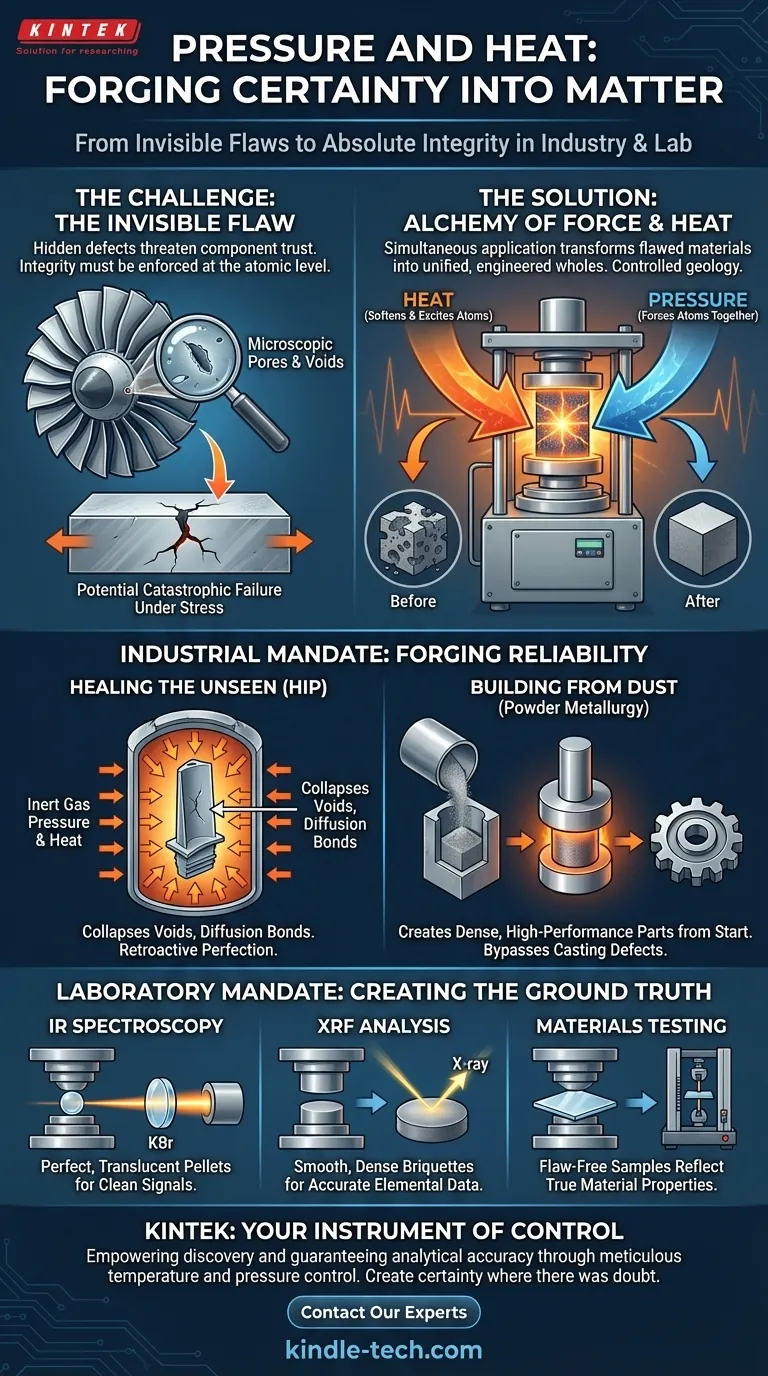
An aerospace engineer reviews the 3D model of a new turbine blade. It's a marvel of design, but her anxiety isn't about the shape. It’s about what can't be seen: a microscopic pore, a tiny void left deep inside the metal during casting.
This single, invisible flaw could, under immense stress and heat, propagate into a catastrophic failure.
This is the central challenge in advanced materials: our trust in a component is only as strong as its weakest, most hidden point. We don't just need to shape materials; we need to command their internal structure, to enforce integrity at an atomic level.
The Alchemy of Force and Heat
At its heart, a hot press is a simple concept. It applies two of the universe's most fundamental forces—heat and pressure—simultaneously.
Heat softens a material, exciting its atoms and making them mobile. Immense pressure then forces these atoms together, squeezing out voids and compelling them to form new, stronger bonds.
It’s not merely forming an object. It’s a controlled, accelerated form of geology; transforming loose powders or flawed solids into a unified, engineered whole. This principle is the foundation for creating materials you can truly bet your life on.
The Industrial Mandate: Forging Absolute Reliability
In high-stakes industries, "good enough" is a dangerous fallacy. Hot pressing provides a path to near-perfect material integrity.
Healing the Unseen
For critical components like that turbine blade, a process called Hot Isostatic Pressing (HIP) is used. The cast part is placed in a high-pressure vessel and heated. Inert gas at immense pressure pushes on the component from all directions, collapsing any internal voids and diffusion bonding the material back into a single, flawless piece.
It’s a way of retroactively perfecting the material, eliminating the anxiety of the unknown.
Building from Dust
Powder metallurgy uses hot pressing to create solid parts from metal or ceramic powders. This process bypasses the potential for casting defects entirely.
By pressing powders into a die at high temperatures, you can create fully dense, high-performance components like cutting tools and medical implants with superior mechanical properties from the start.
The Laboratory Mandate: Creating the Ground Truth
The quest for integrity isn't limited to industrial production. It begins much earlier, on the laboratory bench, where the pursuit is not of reliability, but of truth.
A materials scientist developing a new polymer composite gets inconsistent results from her spectrometer. She begins to doubt her formulation, her process, her data. But the real culprit might be simpler: her samples are not perfectly uniform.
In research and analysis, the sample is the source of truth. Any imperfection in the sample—uneven density, a trapped air bubble, inconsistent thickness—poisons the data and sends the researcher down a false path.
The Foundation of Good Data
This is where the laboratory hot press becomes indispensable.
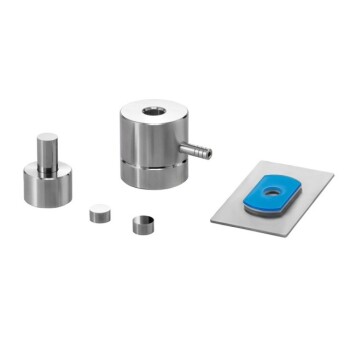
- For Infrared (IR) Spectroscopy: It presses a perfect, translucent KBr pellet, ensuring the light passes through uniformly for a clean signal.
- For X-ray Fluorescence (XRF): It forms a smooth, dense briquette, guaranteeing the X-ray beam interacts with a consistent surface for accurate elemental analysis.
- For Materials Testing: It creates perfectly flat, void-free polymer films or composite plaques, so mechanical or electrical tests reflect the material's true properties, not the flaws of its preparation.
A laboratory press is the instrument that ensures the integrity of the data itself.
From Idea to Object
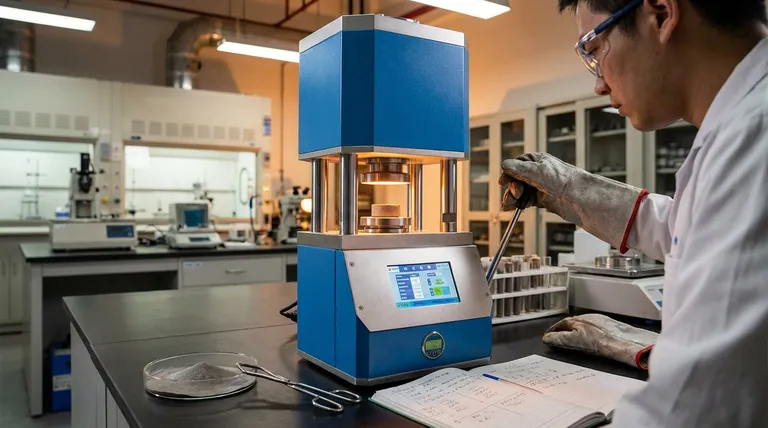
For R&D teams, a versatile lab press is a tool for rapid iteration. It allows engineers to quickly create and test new material formulations or bonding techniques on a small scale, validating concepts before committing to expensive, large-scale production. It bridges the gap between theory and a tangible, testable object.
Choosing Your Instrument of Control
The right tool depends on the scale of your objective. Industrial HIP units are massive investments for perfecting high-value components. Traditional uniaxial presses are limited to simpler geometries.
But for the foundational work of research, development, and quality control, a precise and reliable laboratory press is the essential starting point. This is the domain where KINTEK provides the specialized equipment to empower discovery and guarantee analytical accuracy. By providing researchers with meticulous control over temperature and pressure, we help create the uniform samples that lead to breakthrough insights.
Whether you are eliminating microscopic voids in an industrial part or ensuring the analytical purity of a lab sample, the goal is the same: to create certainty where there was once doubt. Contact Our Experts
Visual Guide
Related Products
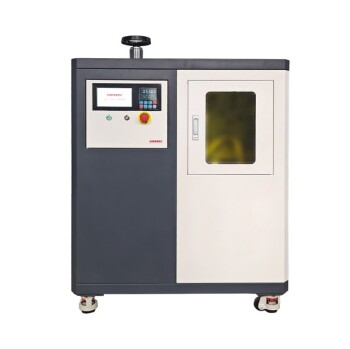
- Automatic Heated Hydraulic Press Machine with Heated Plates for Laboratory Hot Press 25T 30T 50T
- Manual High Temperature Heated Hydraulic Press Machine with Heated Plates for Lab
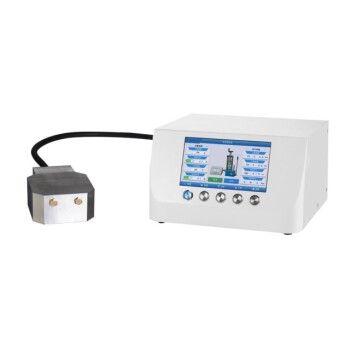
- Touchscreen Automatic Vacuum Heat Press
- 30T 40T Split Automatic Heated Hydraulic Press Machine with Heated Plates for Laboratory Hot Press
- Vacuum Hot Press Furnace Machine Heated Vacuum Press
Related Articles
- Why Your Composite and Polymer Parts Keep Failing: The Secret Is Simultaneous Heat and Pressure
- The Physics of Flawless Materials: Deconstructing the Hydraulic Hot Press
- Precision Under Pressure: The Physics and Psychology of the Hydraulic Hot Press
- Hydraulic Hot Press: Principles, Components, Features, Advantages, and Applications
- Comprehensive Guide to Hydraulic Hot Press: Function, Features and Applications