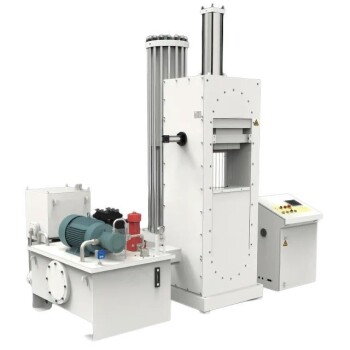
Thematics Lab Isostatic Press Machine

lab isostatic press machine

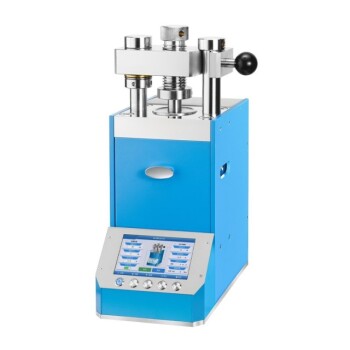
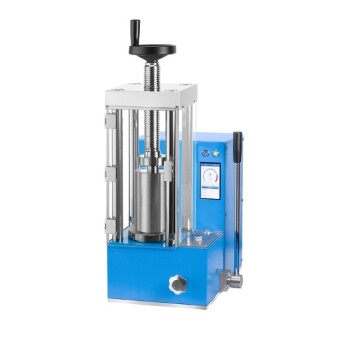
A LAB ISOSTATIC PRESS MACHINE is a type of machine used for isostatic pressing in laboratory environments. This machine applies equal pressure to a compacted powder to achieve optimal density and microstructure uniformity at either elevated or ambient temperatures. 

Heating or cooling accessories can be added to meet test requirements.

We have the best LAB ISOSTATIC PRESS MACHINE solutions to meet your laboratory equipment needs. Our machines utilize isostatic pressing technology, which applies equal pressure in all directions on a powder compact, achieving maximum uniformity of density and microstructure. Our portfolio offers standard solutions, and our bespoke design service allows us to meet unique customer requirements.


Furthermore, our LAB ISOSTATIC PRESS MACHINE offers a complete customisation service, catering to the specific requirements of each laboratory. This allows our clients to tailor the machine to their unique applications, ensuring optimal results and maximum efficiency.

Overall, our LAB ISOSTATIC PRESS MACHINE is a great investment for laboratories looking for a reliable and cost-effective solution, while also providing the flexibility of customisation to meet unique requirements.

Advantages of isostatic presses

The isostatic pressing machine is suitable for users who have strict requirements on the uniformity/density of sample molding. The powder can be directly molded through the isostatic pressing cavity, or the already molded sample can be subjected to secondary pressure molding to make the density more uniform. It has been widely used in scientific research, teaching, testing, pharmaceutical, catalysis, chemical and other laboratory industries.

  • Using isostatic pressing billet high density and uniform, firing shrinkage is small, not easy to deformation.
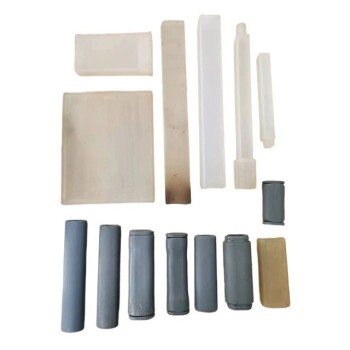
  • Can molding conventional molding process difficult to prepare slender rod or tubular billet compression.
  • The product has high strength and good processability, greatly reducing the internal stress.
  • The mold is easy to make, long life and relatively low cost.
  • Capable of forming large size press billets, and each cylinder can press multiple press billets.
  • It is possible to remove the isostatic cavity to replace the cold pressing mold, with the characteristics of a multi-purpose machine.
  • Standard with pointer type pressure gauge, pressure, pressure double scale display, use pressure without conversion, simple and clear.
  • Optional digital display pressure gauge 40.00Mpa/0.01Mpa, high precision, suitable for the need to control the pressure of the laboratory use.

Applications

  • Powder Metallurgy (PM) forming process
  • Compacting green parts
  • Fully consolidating parts
  • Eliminating residual porosity from a sintered PM part
  • Overcoming limitations of uniaxial pressing
  • Fabricating complex ceramic parts at very high quality
  • Automating the isostatic pressing process
  • Testing the physical limits of ceramics, composites, construction materials, resins, and more
  • Pharmaceutical, laminating, rubber and plastic molding industries
  • R&D work, testing, short runs, limited production, cell manufacturing, and lean manufacturing

FAQ

What Is Isostatic Pressing?

Isostatic pressing is a powder metallurgy process that uses equal pressure in all directions to produce uniform density and microstructure in a powder compact.

What Are The Benefits Of Isostatic Pressing?

Isostatic pressing provides uniform strength and density, shape flexibility, a wide range of component sizes, and low tooling cost. It also allows for larger parts, enhances alloying possibilities, reduces lead times, and minimizes material and machining costs.

What Are The Types Of Isostatic Pressing?

There are two main types of isostatic pressing:

  • Hot Isostatic Pressing (HIP): This type of isostatic pressing uses high temperature and high pressure to consolidate and strengthen the material. The material is heated in a sealed container and then subjected to equal pressure from all directions.
  • Cold Isostatic Pressing (CIP): In this type of isostatic pressing, the material is compacted at room temperature using hydraulic pressure. This method is commonly used to form ceramic and metal powders into complex shapes and structures.

What Type Of Isostatic Pressing Equipment Do You Have?

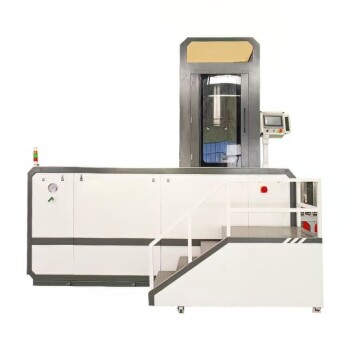
Our primary focus is the production of cold isostatic pressing equipment for both laboratory and industrial use.

What Are The Wet Bag Process And The Dry Bag Process?

The CIP molding process is divided into two methods: the wet bag process and the dry bag process.

Wet bag process:

In this method, the powder material is placed in a flexible mold bag and placed in a pressure vessel filled with high-pressure liquid. This process is ideal for producing multi-shaped products and is suitable for small to large quantities, including large-sized parts.

Dry bag process:

In the dry bag process, a flexible membrane is integrated into the pressure vessel and is used throughout the pressing process. This membrane separates the pressure fluid from the mold, creating a "dry bag." This method is more hygienic as the flexible mold does not get contaminated with wet powder and requires less cleaning of the vessel. It also features fast cycles, making it ideal for mass producing powder products in an automated process.

How Long Is Your Delivery Time? If I Want To Customize The Instrument, How Long Does It Take?

If the items are available in stock, the delivery time is 6-12 days. We also offer customization services for our customers. The lead time for customized products varies depending on the specifications and can take between 25-55 days.

REQUEST A QUOTE

Our professional team will reply to you within one business day. Please feel free to contact us!

Related Articles

Pressure and Heat: Forging Certainty into Matter

Pressure and Heat: Forging Certainty into Matter

A hot press doesn't just shape materials; it eliminates hidden flaws and forges atomic-level trust. Learn the physics of material integrity.

Read more
The Geometry of Pressure: Why Your Part's Shape Dictates Its Sintering Method

The Geometry of Pressure: Why Your Part's Shape Dictates Its Sintering Method

Explore the critical difference between uniaxial hot pressing and isostatic HIP. Learn how pressure geometry impacts density, performance, and cost.

Read more
The Quiet Force: Forging Superior Metal Components with Controlled Pressure

The Quiet Force: Forging Superior Metal Components with Controlled Pressure

Discover how hot press forging uses slow, continuous pressure to refine a metal's grain structure, creating parts with unparalleled strength and reliability.

Read more
When Failure is Not an Option: The Physics of Hot Press Forging

When Failure is Not an Option: The Physics of Hot Press Forging

Hot press forging trades dimensional precision for superior strength, creating complex, failure-resistant metal parts for critical applications.

Read more
Beyond Brute Force: The Quiet Strength of Uniform Density

Beyond Brute Force: The Quiet Strength of Uniform Density

Discover why Cold Isostatic Pressing overcomes hidden material flaws by applying uniform pressure, a key for advanced ceramics and complex metals.

Read more
Why Your Lab Press Results are Warped, Bubbled, and Inconsistent—And How to Fix It for Good

Why Your Lab Press Results are Warped, Bubbled, and Inconsistent—And How to Fix It for Good

Stop wasting materials. Learn why inconsistent heat and pressure ruin lab press results and how the right equipment ensures flawless bonding and molding.

Read more
Forging Perfection: The Hidden Battle Against Material Flaws with CIP and HIP

Forging Perfection: The Hidden Battle Against Material Flaws with CIP and HIP

Explore the difference between Cold (CIP) and Hot (HIP) Isostatic Pressing, two critical processes for forming and perfecting materials.

Read more
The Architecture of Certainty: Why Three Electrodes Are Better Than Two

The Architecture of Certainty: Why Three Electrodes Are Better Than Two

Discover why the three-electrode system is the standard for electrochemical precision, separating current flow from voltage measurement for true analytical clarity.

Read more
The Pressure-Temperature Dialogue: Mastering Material Consolidation

The Pressure-Temperature Dialogue: Mastering Material Consolidation

Learn why hot pressing isn't about fixed values, but a precise dialogue between temperature, pressure, and your material's unique properties.

Read more
Engineered Certainty: Why Your Lab Bench Isn't Made of Solid Oak

Engineered Certainty: Why Your Lab Bench Isn't Made of Solid Oak

Explore the engineering of hot pressed boards like MDF and HDF, and why their stability and consistency often trump solid wood in precision environments.

Read more
The Invisible Valve: Why Electrode Polarity Dictates Chemical Destiny

The Invisible Valve: Why Electrode Polarity Dictates Chemical Destiny

Electrode polarity isn't just a label; it determines where oxidation and reduction occur. Master the physics of the electrolytic cell to prevent failure.

Read more
Beyond Sintering: How Vacuum Hot Pressing Forges Perfect Solids from Powder

Beyond Sintering: How Vacuum Hot Pressing Forges Perfect Solids from Powder

Explore how vacuum hot pressing uses heat, pressure, and vacuum to transform powder into fully dense solids with superior properties.

Read more
From Powder to Perfection: The Critical Choice Between Uniaxial and Isostatic Pressing

From Powder to Perfection: The Critical Choice Between Uniaxial and Isostatic Pressing

Uniaxial hot pressing shapes materials, but isostatic pressing (HIP) perfects them by eliminating hidden internal flaws. Understand the crucial difference.

Read more
Beyond Brute Force: Why the Strongest Materials Fail and How Your Lab Can Predict It

Beyond Brute Force: Why the Strongest Materials Fail and How Your Lab Can Predict It

Learn why focusing on brute force is a mistake. Discover how understanding material microstructure—not just specs—prevents failure and how to fix it.

Read more
Beyond Brute Force: The Engineering Logic of Uniform Pressure

Beyond Brute Force: The Engineering Logic of Uniform Pressure

Discover how Cold Isostatic Pressing (CIP) uses hydrostatic force to create flawless components with uniform density, solving complex manufacturing challenges.

Read more
The Architecture of Silence: Why Quartz Defines Electrochemical Precision

The Architecture of Silence: Why Quartz Defines Electrochemical Precision

In electrochemistry, the vessel is as critical as the catalyst. Discover why quartz's unique properties make it the unseen hero of precise experimentation.

Read more
The Physics of Permanence: Why a T-Shirt Press and a Circuit Bonder Are the Same, Yet Worlds Apart

The Physics of Permanence: Why a T-Shirt Press and a Circuit Bonder Are the Same, Yet Worlds Apart

Hot press machines use controlled heat and pressure, but the psychology of risk dictates their design—from simple transfers to mission-critical electronics.

Read more
The Physics of Perfection: Why a Vacuum Is the Material Scientist's Most Powerful Tool

The Physics of Perfection: Why a Vacuum Is the Material Scientist's Most Powerful Tool

Vacuum hot pressing achieves near-perfect material density by using a vacuum to eliminate microscopic gas voids, a critical step for high-performance components.

Read more
The Thermodynamics of Restraint: Precision, Entropy, and the Art of the Five-Port Cell

The Thermodynamics of Restraint: Precision, Entropy, and the Art of the Five-Port Cell

The line between routine maintenance and catastrophic failure is often defined by ego. Learn when to clean, when to stop, and when to call a professional.

Read more
The War Against Voids: Mastering Material Density with Heat and Pressure

The War Against Voids: Mastering Material Density with Heat and Pressure

Hot pressing uses graphite tooling to apply extreme heat and pressure, eliminating microscopic voids to forge ultra-dense, high-performance materials.

Read more