A Rotary Tube Furnace is a circular furnace that rotates during heat treatment. It is used in a wide range of industries and is designed to heat loose materials for physiochemical processing. These furnaces feature a metal drum lined with refractory and are classified depending on their method of heat exchange and energy transfer method. Rotary Tube Furnaces can be made of ceramic, quartz, or a high-temperature alloy and can be built with a wide temperature range. They are suitable for manufacturing materials such as alumina, vermiculite, iron ore pellets, and cement clinker, as well as for oxidation and calcination processes.
Toggle Categories
Get Instant Support
Choose your preferred way to connect with our team
-
Get Free Quote Fill out form for detailed pricing
-
Send Email Detailed inquiry support
-
WhatsApp Quick mobile chat
Response Time
Within 8 hours on working days, 24 hours on holidays
rotary tube furnace

Vacuum Hot Press Furnace Heated Vacuum Press Machine Tube Furnace
Item Number: KT-VTP
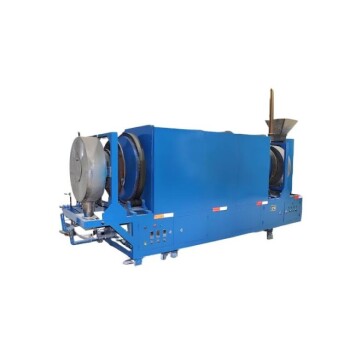
Electric Rotary Kiln Continuous Working Small Rotary Furnace Heating Pyrolysis Plant
Item Number: KT-RFTF

Rotary Tube Furnace Split Multi Heating Zone Rotating Tube Furnace
Item Number: KT-MRTF

Vacuum Sealed Continuous Working Rotary Tube Furnace Rotating Tube Furnace
Item Number: KT-CRTF

Electric Rotary Kiln Small Rotary Furnace Biomass Pyrolysis Plant
Item Number: RBPF
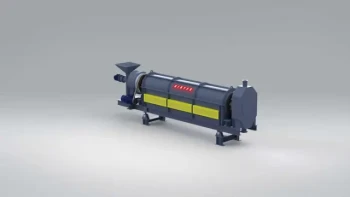
Electric Rotary Kiln Small Rotary Furnace for Activated Carbon Regeneration
Item Number: KT-CRF

1400℃ Laboratory High Temperature Tube Furnace with Alumina Tube
Item Number: KT-TF14

1700℃ Laboratory High Temperature Tube Furnace with Alumina Tube
Item Number: KT-TF17

Vertical Laboratory Tube Furnace
Item Number: KT-VTF

Laboratory Vacuum Tilt Rotary Tube Furnace Rotating Tube Furnace
Item Number: KT-RTF
We have the best Rotary Tube Furnace solutions for a wide range of applications. Our furnaces are designed to withstand high temperatures and offer complete process control, resulting in high-quality products. With customized rotation speeds and gradients, fully programmable operation, and options for processing in air, oxygen, and inert atmospheres, you can trust that our Rotary Tube Furnaces will exceed your expectations. At KINTEK, we offer a bespoke design service that allows us to meet almost any customer requirement.
Applications of Rotary Tube Furnace
- Manufacturing of materials such as alumina and iron ore pellets.
- Calcination of materials that require continuous throughput and loose materials.
- Oxidation of materials.
- Powder processing to minimize material handling.
- Drying of materials.
- Calcination of materials while maintaining their individual grain characteristics.
- Heat treatment of materials to improve their properties.
- Sintering of materials to form a solid mass from a powdery substance.
- Annealing of materials to reduce their hardness and increase their ductility.
- Reduction of metal oxides to produce metals.
Rotary tube furnaces offer complete process control resulting in high-quality products. They can withstand high temperatures and provide efficient heat transfer over a short time. Rotary tube furnaces can be customized to suit individual requirements, such as temperature control, work-space size, residence time, tube rotation rate, tube inclination angle, temperature profile, atmosphere flow rate, powder bed depth, and feed rate.
Advantages of Rotary Tube Furnace
- Improved gas diffusion and reduced gas consumption
- Increased heat treatment efficiency
- Consistent temperature profile for improved product homogeneity
- Efficient way to transfer heat over a short time and continuously run batches of materials
- Minimizes material handling, especially in powder processing
- Custom designed to fit specific requirements such as temperature control, workspace size, residence time, tube rotation rate, tube inclination angle, temperature profile, atmosphere flow rate, powder bed depth, and feed rate
- Versatile tool for a wide range of physicochemical processing applications in the laboratory
- Allows materials to be heated and mixed simultaneously in a controlled atmosphere
- Equipped with additional features such as feeders and inert gas packages to optimize processing conditions
- Adjustable rotation speed, tilt, and heating zones for fine-tuning furnace performance
- Suitable for applications in research and development, including material science, geology, gaseous reduction of ores, synthesis of catalysts and pigments, calcination of oil shale, and doping ceramics with rare earth metals
- Provides excellent temperature uniformity for high-quality and consistent materials processing.
Our Rotary Tube Furnace is an excellent solution for manufacturing various materials and applications such as calcining and oxidation. With sustained operating temperatures up to 1700°C, it is heated with silicon carbide or molydisilicide heating elements, providing complete process control and high-quality products. Our furnace has a fully programmable operation with a fully integrated control panel, customized rotation speeds, and gradients. It can process in air, oxygen, and inert atmospheres. Additionally, we offer custom design services for specific requirements, which makes our furnace both advantageous in terms of price and customizable.
FAQ
What Is A Rotary Tube Furnace?
A rotary tube furnace is a circular furnace that rotates during heat-treatment. It is designed to heat loose materials for physiochemical processing and is used for continuous materials processing. These furnaces feature a metal drum lined with refractory, which is mounted at an angle and can burn pulverized, solid, gaseous or liquid fuel into its working section. Rotary tube furnaces have a wide range of applications, including the manufacturing of materials such as alumina, vermiculite, iron ore pellets and cement clinker, as well as for oxidation and calcination processes.
How Does A Rotary Tube Furnace Work?
A rotary tube furnace is a circular furnace that rotates during heat-treatment. It burns fuel and the heating gases created flow towards the sample. The furnace features a metal drum lined with refractory, mounted at an angle. Loose materials are heated for physiochemical processing and the heat is transferred from a heat source to a rotating tube which holds the sample. Rotary tube furnaces are designed for continuous materials processing and have multiple thermal control zones. They have a wide range of applications, including the manufacture of alumina, vermiculite, iron ore pellets, and cement clinker.
What Are The Advantages Of A Rotary Tube Furnace?
The advantages of a rotary tube furnace include improved gas diffusion, reduced gas consumption, increased heat treatment efficiency, and improved product homogeneity. These furnaces provide an efficient way to transfer heat over a short time and continuously run batches of materials. Rotary tube furnaces can be custom designed for specific requirements, including temperature control, workspace size, residence time, tube rotation rate, and atmosphere flow rate. When choosing a tube for a rotary tube furnace, key points to consider include rotational speed, amount of material, tube diameter, suspended length, and tube thickness.
What Is The Function Of Rotary Tube Furnace?
The function of a rotary tube furnace is to heat loose materials for physiochemical processing. The furnace features a rotating tube that holds the sample and applies heat in multiple thermal control zones. Heating gases created by burning fuel flow towards the sample through the furnace. Rotary tube furnaces are used for manufacturing materials such as alumina, vermiculite, iron ore pellets, and cement clinker, as well as for oxidation and calcination processes. These furnaces can be made of ceramic, quartz, or high-temperature alloy and can be built with a wide temperature range for various applications.
What Are The Advantages Of Rotary Tube Furnace?
Rotary tube furnaces offer efficient heat transfer over a short period, continuously processing batches of material while minimizing material handling. The furnace's continuous movement exposes the entire sample surface to the atmosphere, improving gas diffusion and reducing gas consumption to increase heat treatment efficiency.
REQUEST A QUOTE
Our professional team will reply to you within one business day. Please feel free to contact us!
Related Articles

The Symphony of Heat: Deconstructing the Limits of Vacuum Tube Furnaces
The maximum temperature of a vacuum furnace isn't just a number on a datasheet—it's a fragile balance of materials. Discover the engineering reality behind thermal limits.
Read more
Beyond Temperature: The Critical Question of Atmosphere in Your Lab Furnace
Choosing between a tube and muffle furnace is less about heat and more about atmospheric control. This single factor dictates experimental success.
Read more
Gravity as an Ally: The Engineering Logic Behind Vertical Tube Furnaces
Discover why orientation matters in thermal processing. How vertical tube furnaces leverage gravity for superior CVD, quenching, and uniformity.
Read more
The Architecture of Heat: Choosing Between Control and Capacity
Deciding between a tube furnace and a muffle furnace isn't about temperature—it's about atmosphere. Discover the engineering trade-offs between vacuum precision and volume.
Read more
The Architecture of Heat: Why Vacuum Furnace Temperature is a Design Choice, Not Just a Number
Vacuum furnaces operate from 500°C to over 2200°C. Discover how hot zone materials and process requirements dictate the thermal range you actually need.
Read more
The Anatomy of Control: Engineering a Perfect Thermal Universe in a Tube Furnace
A deep dive into the tube furnace's layered design, exploring how its physical anatomy creates a perfectly controlled environment for high-temperature work.
Read more
The Architecture of Heat: Why Vacuum Furnace Temperature is a Design Choice
Vacuum furnace temperature isn't a single metric—it's a design constraint. From 1315°C annealing to 2400°C sintering, discover how process dictates equipment.
Read more
An Anatomy of Control: The Interconnected Systems of a Vacuum Furnace
A vacuum furnace isn't a box, but an ecosystem. Discover how its interconnected systems create the perfect environment for material transformation.
Read more
The Physics of Free Fall: Simulating Industrial Chaos in the Lab
Industrial reactors are chaotic black boxes. The drop tube furnace is the scientific scalpel that dissects combustion and kinetics, one particle at a time.
Read more
Density Without Destruction: The Quiet Power of Hot Press Sintering
Hot press sintering uses simultaneous heat and pressure to achieve near-perfect material density while inhibiting the grain growth that weakens components.
Read more
The Thermal Ceiling: Why Vacuum Furnace Limits Are Defined by Physics, Not Specs
Maximum vacuum furnace temperature isn't just a number; it's a material limit. Explore how heating elements like Tungsten and Graphite define performance and purity.
Read more
The Quiet Force: Forging Superior Metal Components with Controlled Pressure
Discover how hot press forging uses slow, continuous pressure to refine a metal's grain structure, creating parts with unparalleled strength and reliability.
Read more
The Physics of Limits: Understanding Tube Furnace Temperatures
Tube furnace temperature isn't just a number—it's defined by heating element materials. Discover how to match HRE, SiC, and MoSi2 elements to your research needs.
Read more
The Heart of the Void: Why Your Vacuum Furnace's Heating Element Defines Your Results
A guide to choosing between graphite, molybdenum, and CFC heating elements for vacuum furnaces, balancing purity, cost, and process speed.
Read more
The Invisible Variable: Selecting the Heart of Your Vacuum Furnace
The heating element isn't just a component; it dictates your furnace's chemistry. Explore the engineering trade-offs between Graphite, Molybdenum, and Composites.
Read more
Beyond the Gauge: The Systematic Hunt for Vacuum Furnace Leaks
Master vacuum furnace leak detection by choosing the right method for hot/cold and pressure states. A systematic guide to finding invisible faults.
Read more
The Art of Isolation: Why Drop Tube Furnaces Define Industrial Efficiency
Discover how Drop Tube Furnaces (DTF) bridge the gap between microscopic particle kinetics and massive industrial combustion systems.
Read more
When Failure is Not an Option: The Physics of Hot Press Forging
Hot press forging trades dimensional precision for superior strength, creating complex, failure-resistant metal parts for critical applications.
Read more
The Glass Ceiling: Why the Physics of Quartz Dictates Your Furnace Strategy
The true limit of a tube furnace isn't the heating element—it's the vessel. Discover why 1100°C is the critical threshold for quartz integrity.
Read more
The Red Line: Why the "Maximum Temperature" is a Myth
A furnace's temperature limit isn't just a number—it's a relationship between materials and safety margins. Here is how to engineer longevity into your lab choice.
Read more