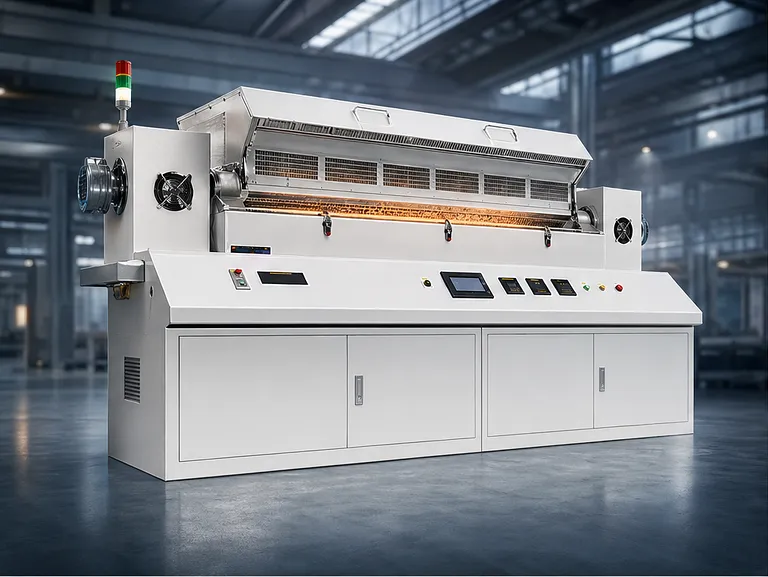
Does this scene feel familiar? You open your furnace after a long, high-temperature cycle, expecting a perfectly processed batch of valuable powder. Instead, you find a disappointing mix: some material is burnt, some is under-processed, and only a fraction is usable. You’ve just wasted hours of time and expensive materials, and you’re left wondering, “What went wrong? My temperature was perfect.”
This isn't a one-off accident; it's a chronic problem in labs and production facilities worldwide. If your work involves heat-treating powders, granules, or catalysts, you’ve likely experienced this frustrating inconsistency firsthand.
The Endless Cycle of 'Trial and Error'
When faced with failed batches, the common reaction is to tweak the most obvious variable: the temperature. Engineers and scientists find themselves trapped in a loop of adjustments that rarely solve the core issue:
- "Let's increase the temperature." This often makes things worse, burning the material in contact with the hottest surfaces while leaving the core of the powder pile untouched.
- "Let's extend the processing time." This wastes significant energy and time, yet still fails to deliver heat evenly throughout the material, leading to only marginal improvements.
- "Maybe we need a more powerful static furnace." Investing in a more expensive box furnace with more heating elements doesn't change the fundamental physics of the problem.
These failed attempts do more than just cause frustration. They have serious business consequences: valuable raw materials are discarded, project timelines are delayed, R&D efforts stall, and product quality becomes unreliable. You can't scale a process from the lab to production if you can't guarantee consistent results, batch after batch. The root of the problem isn't your recipe or your temperature controller; it's far more fundamental.
It’s Not the Heat, It’s the How: The Physics of a Failed Batch
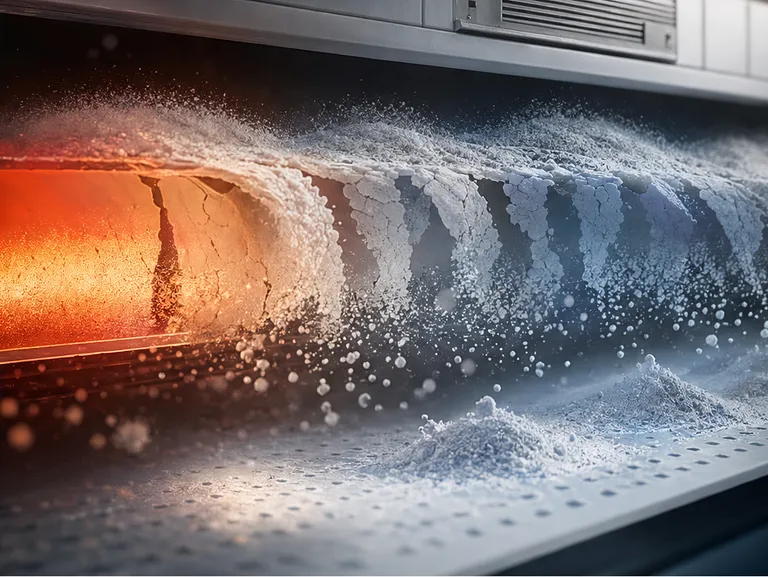
The core issue isn't the amount of heat you apply, but the method by which that heat is delivered.
Imagine trying to toast a pile of fine breadcrumbs in a hot, stationary skillet. No matter how precisely you control the burner, the crumbs at the bottom will inevitably burn while the crumbs on top remain pale and untoasted. This is precisely what happens inside a static box or tube furnace. Your powder sits in a stationary pile, and the heat struggles to penetrate it evenly.
This creates "hot spots" and "cold spots" throughout the material. The outer layers are over-exposed to thermal radiation, while the inner core remains insulated. The "solutions" mentioned earlier fail because they don't address this core problem:
- Cranking up the heat is like turning the skillet burner to high—it just burns the bottom crumbs faster.
- Extending the time doesn't magically make heat travel through the pile more effectively.
You aren't fighting a temperature problem; you're fighting a heat transfer problem. To get a perfect result, every single particle needs to experience the same thermal history.
The Solution: Moving Beyond Static Heat
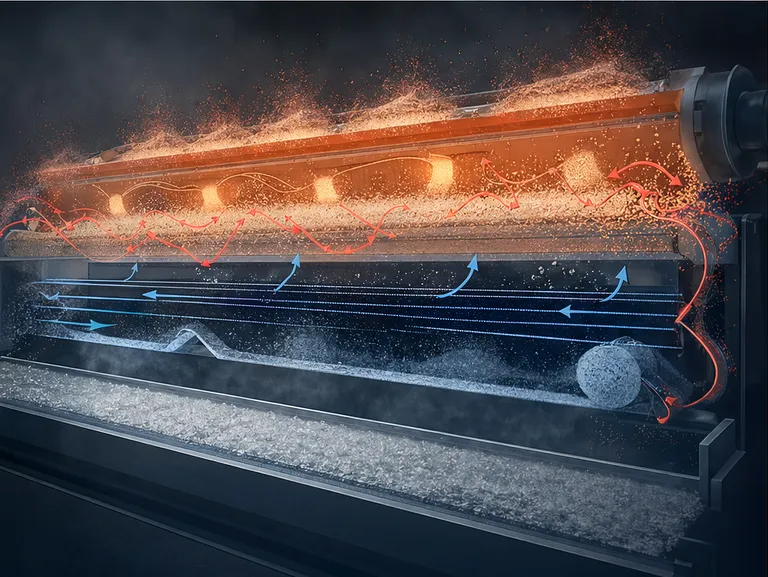
To solve the "toasted breadcrumb" problem, you wouldn't buy a hotter skillet. You would simply shake the pan.
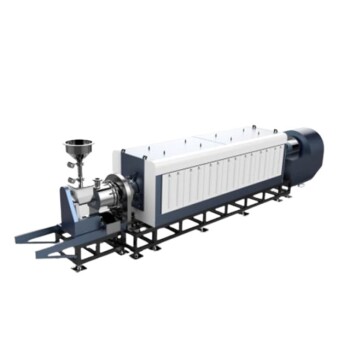
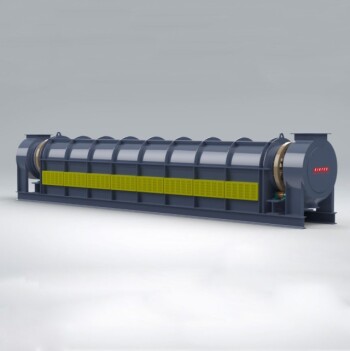
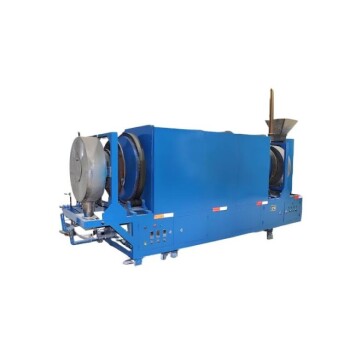
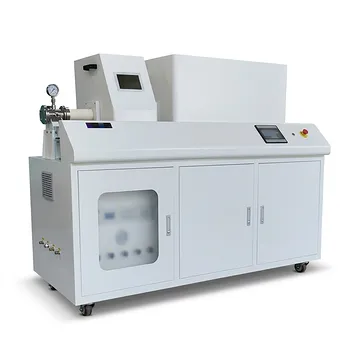
In thermal processing, the equivalent of shaking the pan is continuous, dynamic mixing. This is the foundational principle of a rotary tube furnace. It’s not just a furnace that happens to rotate; it is an engineered system designed specifically to deliver unparalleled heating uniformity.
How a KINTEK Rotary Furnace Delivers Consistency
At KINTEK, we understand that achieving your process goals depends on mastering heat transfer. Our rotary furnaces are designed not just to reach a target temperature, but to ensure that temperature is applied perfectly and evenly to every particle of your material.
- Eliminating Hot Spots: The furnace tube rotates slowly and continuously, causing the material inside to gently tumble and mix. This action constantly exposes new surfaces to the heat source, completely eliminating the hot and cold spots that plague static systems. The result is exceptional thermal uniformity.
- Precision Process Control: Our systems integrate precise temperature controllers with managed rotation speed. This gives you repeatable, reliable control over the entire process, ensuring that the results you achieve today can be perfectly replicated tomorrow.
- Controlled Atmosphere Integrity: Many advanced processes require inert gas or vacuum conditions. KINTEK rotary furnaces are built with robust, high-integrity seals that maintain a controlled atmosphere even during rotation, protecting your sensitive materials from oxidation and contamination.
A rotary furnace isn't just another piece of lab equipment; it's the embodiment of the correct solution to a fundamental physics problem. It's the tool designed for the job.
From Fixing Problems to Fueling Innovation
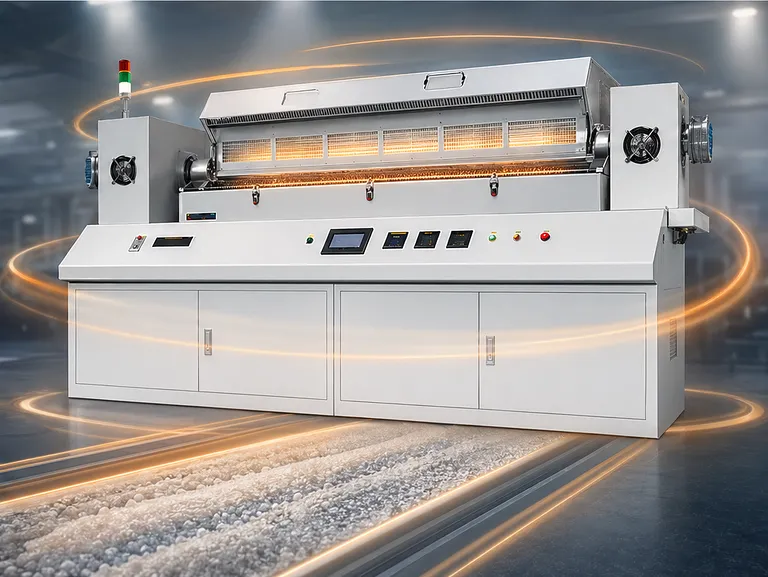
Once you eliminate batch inconsistency, you stop wasting time fixing problems and start creating new opportunities. With the reliable, uniform heating provided by a rotary furnace, you can:
- Accelerate R&D: Confidently test new material formulations, knowing that your results reflect the properties of the material, not the flaws of your process.
- Improve Product Quality: Manufacture battery materials with perfectly uniform coatings, catalysts with consistent activity, and advanced ceramics with predictable density and strength.
- Scale with Confidence: Develop a process in a lab-scale rotary furnace and scale it up to production, knowing the fundamental principles of uniform heating will deliver the same high-quality results.
- Unlock New Chemistries: Safely perform sensitive calcination or synthesis reactions that were previously impossible due to the risk of thermal degradation and side-reactions caused by hot spots.
Solving the fundamental challenge of heat uniformity is just the beginning. It opens the door to more ambitious projects, higher-quality products, and faster innovation. If you're ready to move beyond frustrating inconsistencies and unlock the true potential of your materials, our team can help you navigate the specifics of your application. Contact Our Experts to discuss how the right thermal processing strategy can transform your results.
Related Products
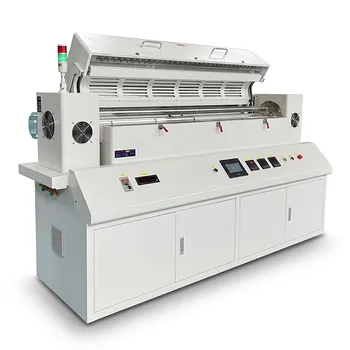
- Rotary Tube Furnace Split Multi Heating Zone Rotating Tube Furnace
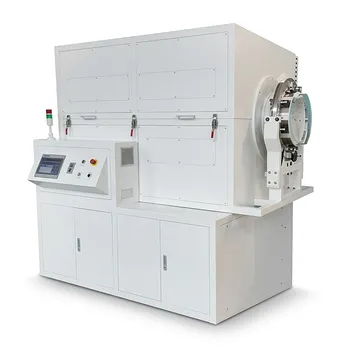
- Laboratory Vacuum Tilt Rotary Tube Furnace Rotating Tube Furnace
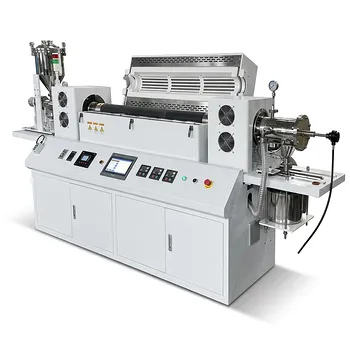
- Vacuum Sealed Continuous Working Rotary Tube Furnace Rotating Tube Furnace
- Electric Rotary Kiln Small Rotary Furnace for Activated Carbon Regeneration
- Electric Rotary Kiln Small Rotary Furnace Biomass Pyrolysis Plant
Related Articles
- The Geometry of Heat: Why Motion Matters in Material Synthesis
- The Geometry of Heat: Engineering the Perfect Thermal Environment
- Exploring the Functions and Advantages of Rotary Tube Furnaces
- Exploring Rotary Tube Furnaces: A Comprehensive Guide
- Exploring the Advantages of Rotary Tube Furnaces in Industrial and Laboratory Applications