Introduction:
PECVD (Plasma Enhanced Chemical Vapor Deposition) is a popular technique used in the semiconductor industry for depositing thin films on a substrate. This process takes place in a vacuum chamber, where a plasma is generated by applying electrical energy to a gas mixture. The plasma contains highly reactive species that react with the substrate's surface, leading to the deposition of a thin film. PECVD is a low-temperature and low-power solution, making it ideal for depositing thin films on soft matter. In this blog post, we will explore the advantages of PECVD and how it can be used for soft matter applications.
Table of Contents
PECVD:
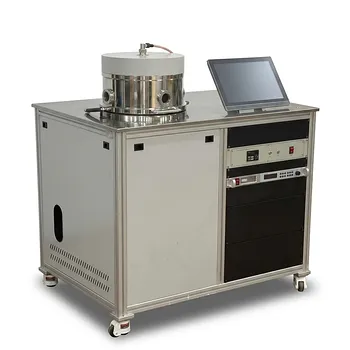
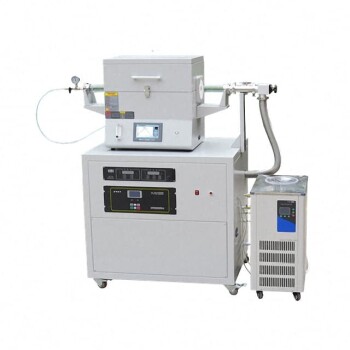
PECVD or Plasma-enhanced chemical vapor deposition is a process used for depositing thin films of various materials on a substrate. PECVD furnaces are a low-power and low-temperature solution for soft matter deposition in laboratory equipment.
The Need for PECVD
PECVD is a variant of LPCVD in which a plasma is used to reduce the substrate temperature to less than 300 °C. This was developed to meet the needs of the complementary MOS (CMOS) manufacturing process in which high-quality dielectrics were required as insulation layers between the metal interconnect traces, but the LPCVD temperature was too high for integrated circuits in their later stages of manufacture.
The PECVD Process
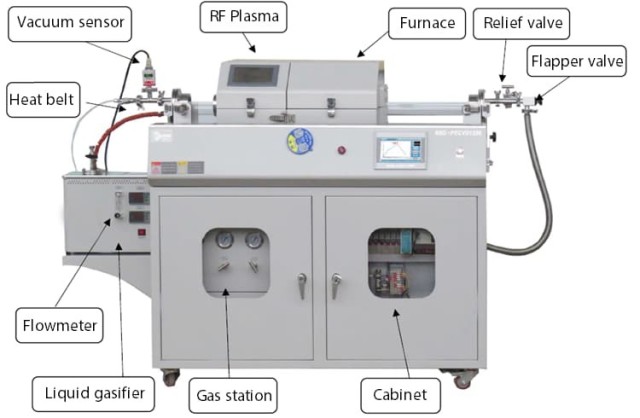
In PECVD processes, glow-discharge plasmas are sustained within chambers where simultaneous vapor-phase chemical reactions and film deposition occur. The PECVD process uses both thermal energy and RF-induced glow discharge to control the chemical reactions. The glow discharge creates free electrons to collide with reactant gases and dissociate them to generate the reaction and deposit the solid film on the substrate.
Advantages of PECVD
PECVD has many advantages over other deposition techniques. It is a low-temperature process, which makes it suitable for the deposition of soft materials that cannot withstand high temperatures. The low-power requirements of PECVD make it an economical option, as it consumes less energy than other deposition techniques. PECVD also allows for the deposition of films with controlled thickness and composition, making it ideal for applications where precise control is required.
The thin films being deposited also have good dielectric properties, low mechanical stress, and good conformal step coverage and excellent uniformity provided by the PECVD process.
PECVD vs CVD
PECVD is similar to CVD or Chemical Vapor Deposition, but it does not require a plasma to be created. Instead, a gas or vapor mixture is introduced into a vacuum chamber, and then heated to a high temperature to initiate the chemical reaction that deposits the desired material on the substrate. PECVD is commonly used in semiconductor and solar cell manufacturing.
Challenges of PECVD
Even though the plasma system creates a low temperature environment for deposition, it has its own disadvantages to the fabrication process. The plasma system ionized the gases and drive it to a certain direction to deposit the material. The plasma gases will collide with the surface and the plasma could damage the films. Therefore, the devices may deteriorate during the process.
The other problem is that the plasma gas always contains hydrogen in plasma nitrides. The hydrogen inside the plasma gas can react with silicon or nitrogen to form Si-H and SiNH. This can affect many properties of the devices including UV absorption, stability, mechanical stress, electrical conductivity, etc.
Applications
PECVD is a versatile technique and can be used for the deposition of a wide range of materials, including polymers, metals, and ceramics. PECVD has a wide range of applications, including electronics, optics, and biomedical engineering.
In conclusion, PECVD furnaces are an ideal solution for soft matter deposition in laboratory equipment. The PECVD process is versatile, energy-efficient, and allows for precise control over film thickness and composition. However, the process has its limitations and challenges.
Advantages of PECVD:
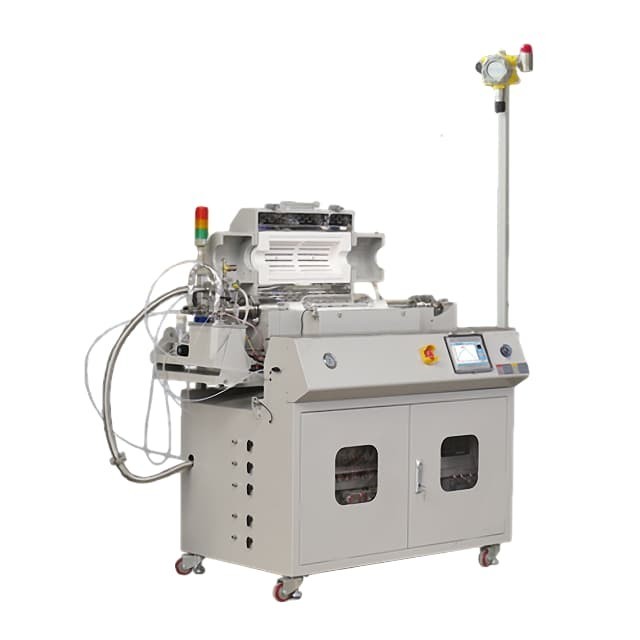
PECVD (Plasma Enhanced Chemical Vapor Deposition) is a highly versatile technology that offers significant advantages over other deposition techniques. Here are some of the key advantages of PECVD:
Low deposition temperature
PECVD operates at low temperatures, typically between 100 and 400 degrees Celsius. This means that soft materials, such as polymers, can be coated without the risk of damage from high temperatures. Additionally, low-temperature deposition leads to a reduction in stress between the thin film layers, which allows for stronger bonding.
High deposition efficiency
PECVD has a high deposition efficiency compared to other deposition techniques. The plasma generated by the electric field ionizes the gas molecules, creating a plasma. The energetic particles in the plasma exhibit high activity in the discharge electric field, with fast chemical reaction speed and high deposition efficiency. The energetic particles always exhibit high activity in the cathode drop zone, which is the concentration domain for chemical reactions. The reactions mainly take place on the cathode surface, which is beneficial to increase the deposition rate and reduce the loss of reactants on the wall of the deposition chamber.
Controllable parameters
PECVD has several controllable parameters, including discharge methods, discharge voltage, current density, ventilation method, etc. By optimizing these parameters, it is possible to obtain more excellent compound thin-film materials. This makes PECVD a highly customizable deposition technique that can be tailored to specific material and substrate requirements.
Electromagnetic field
In the polyatomic gas discharge, the electric field, magnetic field, and electromagnetic field can still be used to constrain the movement of charged particles in the plasma and control the energy, electronic density, and movement direction of the charged particles. Up till now, various PECVD technologies have been developed.
Wide range of materials and substrates
PECVD has the advantage of being able to deposit a wide range of materials, including metals, oxides, and nitrides, onto a variety of substrates, including glass, silicon, and polymers. This flexibility makes it an ideal choice for a wide range of applications, including microelectronics, optoelectronics, and sensors.
High deposition rates
PECVD can provide higher deposition rates compared to other deposition techniques. For example, deposition rates for silicon nitride (Si3N4) are: P5000 PECVD @400C = 130Å/sec vs. LPCVD @800C = 48Å/min (~160x faster).
In conclusion, PECVD is a highly versatile and customizable deposition technique that offers many advantages over other deposition techniques. Its low-temperature and low-power requirements, high deposition efficiency, controllable parameters, and ability to deposit a wide range of materials onto a variety of substrates make it an ideal choice for various applications.
PECVD for Soft Matter
PECVD (Plasma Enhanced Chemical Vapor Deposition) furnaces have become a popular solution for the deposition of thin films on soft matter surfaces. Soft matter is a class of materials that includes polymers, gels, and biological materials, which are sensitive to high temperatures and harsh chemical treatments. Unlike traditional deposition techniques, PECVD furnaces operate at low power and low temperature, making them suitable for soft matter applications.
Advantages of PECVD for Soft Matter
PECVD is particularly useful for biomedical applications as it can be used to create surfaces that are biocompatible, antimicrobial, or capable of controlled drug release. With its low-power and low-temperature operation, PECVD is gentle on soft matter surfaces, which minimizes the risk of damage and preserves the integrity of the material. This makes it an ideal method for depositing thin films on soft matter substrates, which are commonly used in biomedical applications.
PECVD for Biomedical Applications
PECVD has been used to deposit thin films on a wide range of soft matter substrates, including polymers, gels, and biological materials. These thin films can be engineered to possess specific properties, such as biocompatibility or antimicrobial activity, which are essential for many biomedical applications. PECVD has been used to create thin films for drug delivery, wound healing, and tissue engineering applications.
Conclusion
In conclusion, PECVD furnaces are a low-power and low-temperature solution for soft matter surface modification, offering a versatile and effective method for the deposition of thin films in a variety of applications. PECVD has proven to be particularly useful for biomedical applications, where it has been used to create biocompatible surfaces, antimicrobial coatings, and drug delivery systems. With its ability to deposit a wide range of materials, PECVD is well-suited for creating multifunctional coatings that can be tailored to meet the specific needs of a given application.
Conclusion:
PECVD furnaces are ideal for the low-power and low-temperature processing of soft matter. They offer numerous advantages such as high deposition rates, low substrate temperatures, and good film uniformity. They are highly versatile and can be used for a wide range of applications such as the deposition of thin films, surface modification, and the creation of micro and nanostructures. Plasma generators for PECVD furnaces are available in a variety of sizes and configurations, making it possible to find a system that's suitable for your specific needs. With their many advantages and versatility, PECVD furnaces are an excellent choice for those in need of a low-power and low-temperature solution for soft matter.
Related Products
- Inclined Rotary Plasma Enhanced Chemical Vapor Deposition PECVD Equipment Tube Furnace Machine
- Chemical Vapor Deposition CVD Equipment System Chamber Slide PECVD Tube Furnace with Liquid Gasifier PECVD Machine
- Inclined Rotary Plasma Enhanced Chemical Vapor Deposition PECVD Equipment Tube Furnace Machine
- Split Chamber CVD Tube Furnace with Vacuum Station Chemical Vapor Deposition System Equipment Machine
- Multi Heating Zones CVD Tube Furnace Machine Chemical Vapor Deposition Chamber System Equipment