The Illusion of a Simple Box
In a laboratory, we are surrounded by instruments that appear simple. A centrifuge spins. A microscope magnifies. A furnace heats.
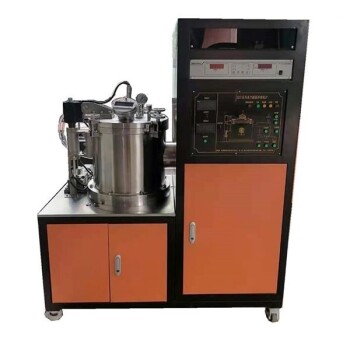
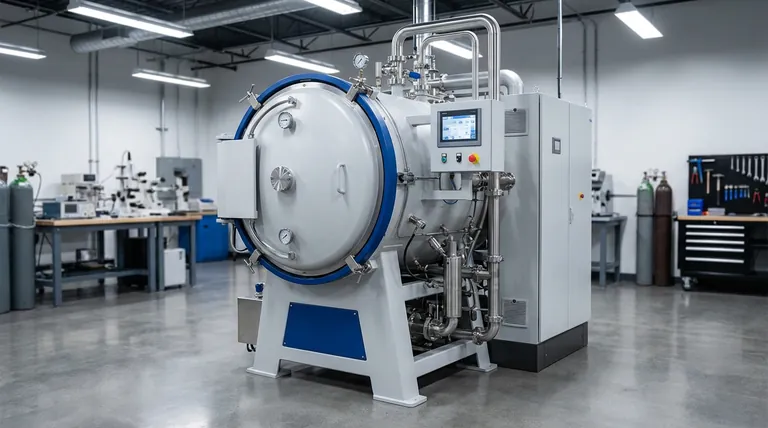
But this perception is a cognitive shortcut. The most powerful tools are rarely just one thing; they are integrated systems. A vacuum furnace is a prime example. To the untrained eye, it’s a reinforced steel box that gets very hot. To an engineer or a materials scientist, it’s a miniature, controllable universe.
The goal isn't just to heat a material. The goal is to fundamentally change it in an environment completely free from the reactive, corrupting influence of the air we breathe. This requires not a box, but a fortress.
The Five Pillars of a Controlled Universe
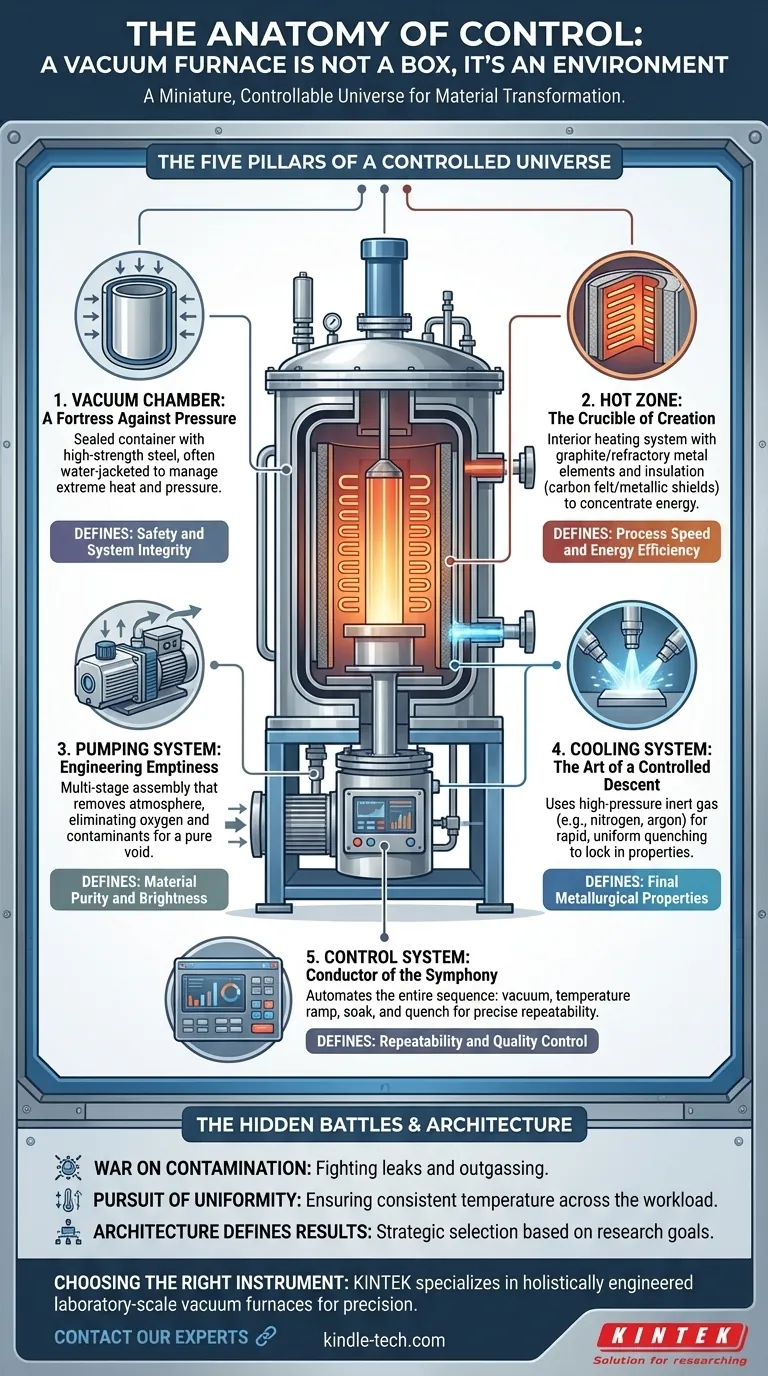
Every vacuum furnace, regardless of its size or specific application, is built upon five interconnected systems. The failure of one pillar compromises the entire structure. Understanding this architecture is the first step from simply operating the machine to mastering the process.
1. The Vacuum Chamber: A Fortress Against 14.7 PSI
The outer shell is a vessel under constant siege. When a deep vacuum is pulled inside, every square inch of its surface is fighting against the crushing force of atmospheric pressure.
This is why chambers are built from high-strength steel, often with a double-wall, water-jacketed design. The continuously circulating water is not just a safety feature; it's the chamber's life support system, preventing the shell from overheating while the interior rages at thousands of degrees. It’s a quiet, constant battle between extreme heat and controlled cold.
2. The Hot Zone: The Crucible of Creation
Inside the fortress lies the sanctuary: the hot zone. This is where the transformation happens. It consists of two key parts:
- Heating Elements: Typically made of graphite or refractory metals, these are the engines of the furnace, generating immense, focused energy.
- Insulation: A package of carbon felt or metallic heat shields acts as a mirror, reflecting thermal energy inward. This ensures that heat is concentrated on the workload, not wasted on the chamber walls, maximizing efficiency and control.
3. The Pumping System: Engineering Emptiness
The heart of the furnace is its ability to create a void. The vacuum pumping system is a multi-stage assembly designed to perform a single, elegant task: remove the atmosphere.
This isn't just about sucking out air. It's about methodically eliminating the oxygen, nitrogen, and water vapor that would instantly contaminate and ruin sensitive materials at high temperatures. The quality of the vacuum—the purity of the emptiness—directly dictates the quality of the final product.
4. The Cooling System: The Art of a Controlled Descent
Heating is only half the story. The rate at which a material cools locks in its final properties. This is where the quenching system comes in.
After the heating cycle, a high-pressure blast of inert gas like nitrogen or argon is often used to rapidly and uniformly cool the workload. This is not a gentle cooldown; it's a precisely calculated thermal shock designed to achieve a specific crystalline structure. It’s a process as critical as the heating itself.
5. The Control System: Conductor of the Symphony
The control system is the brain, the central nervous system that integrates every other component. It automates the entire delicate sequence: pulling the vacuum, ramping the temperature, soaking for a precise duration, and executing the quench.
Modern control systems provide repeatability that is humanly impossible. They ensure that the process run on Tuesday is identical to the one run six months later, providing the data logging and traceability essential for quality control and scientific discovery.
The Hidden Battles Within the System
A perfectly designed system is one that anticipates its own inherent conflicts. Operating a vacuum furnace means managing a few crucial trade-offs.
- The War on Contamination: The primary enemy is leaks. A microscopic flaw in a seal can allow the atmosphere to rush in, poisoning the environment. Another subtle foe is outgassing—the release of trapped gases from the material itself as it heats up. The pumping system must be powerful enough to overcome both.
- The Pursuit of Uniformity: Getting the furnace to 1200°C is easy. Getting every single point on your workload to exactly 1200°C is an immense engineering challenge. The design of the hot zone and gas quenching nozzles is critical to preventing thermal gradients that lead to inconsistent results.
How Architecture Defines Your Results
The specific design of these five pillars determines what a furnace can achieve. This turns the selection of lab equipment from a simple purchase into a strategic decision about your research or production goals.
| Component | Primary Function | What It Defines... |
|---|---|---|
| Vacuum Chamber | Sealed container that withstands pressure; often water-cooled. | Safety and System Integrity |
| Hot Zone | Interior heating system with elements and insulation. | Process Speed and Energy Efficiency |
| Vacuum Pumping System | Removes air and gases to create a controlled, non-reactive environment. | Material Purity and Brightness |
| Cooling & Quenching | Protects furnace and rapidly cools parts with gas. | Final Metallurgical Properties |
| Control System | Automates and manages the entire heat treatment cycle. | Repeatability and Quality Control |
Choosing the right furnace means selecting an architecture that aligns with your primary objective. For labs where process integrity and reliable outcomes are non-negotiable, a balanced system is key. KINTEK specializes in laboratory-scale vacuum furnaces where these systems are not just assembled, but holistically engineered for precision and durability.
Understanding this architecture is the difference between fighting your equipment and having it be a seamless extension of your will. True mastery over material properties begins with choosing the right instrument. If you're ready to bring this level of precision and control to your work, Contact Our Experts.
Visual Guide
Related Products
- Vacuum Hot Press Furnace Heated Vacuum Press Machine Tube Furnace
- 600T Vacuum Induction Hot Press Furnace for Heat Treat and Sintering
- Vacuum Hot Press Furnace Machine Heated Vacuum Press
- Vacuum Heat Treat Furnace and Levitation Induction Melting Furnace
- Vacuum Heat Treat and Pressure Sintering Furnace for High Temperature Applications
Related Articles
- The Purity Paradox: Choosing the Heart of Your Vacuum Hot Press Furnace
- Comprehensive Guide to Vacuum Hot Press Furnace Application
- Vacuum Hot Press Furnace: A Comprehensive Guide
- Forging Perfection in a Void: The Physics of Ultra-Dense Materials
- Defeating the Void: The Quiet Power of Vacuum Hot Pressing