A laboratory hydraulic press paired with alumina molds ensures structural integrity by applying high uniaxial cold pressure to densify the battery's powder components. This process creates a unified, void-free stack from the electrolyte, anode, and cathode layers, which is essential for mechanical stability.
Core Takeaway The fundamental challenge in all-solid-state batteries is getting solid materials to touch perfectly enough to conduct ions. High-pressure densification solves this by eliminating microscopic voids and forcing layers into intimate interfacial contact, drastically reducing resistance and creating a robust, monolithic structure.
The Mechanics of Densification
Applying Extreme Pressure
To assemble an all-solid-state battery (ASSB), a laboratory hydraulic press applies immense force, typically up to 330 MPa. This is a "cold pressure" process, meaning it relies on mechanical force rather than heat to bind materials.
Eliminating Voids
Raw battery materials usually start as powders, which naturally contain air gaps and voids. High-pressure densification crushes these voids, rearranging the particles into a tightly packed configuration.
Layer-by-Layer Assembly
The assembly is often conducted in a specific sequence: the electrolyte layer, the Li–Si anode layer, and the sulfur composite cathode layer. By pressing these layer-by-layer, the system ensures that each component is chemically distinct yet mechanically fused.
Achieving Interfacial Contact
Creating Solid-Solid Interfaces
Unlike liquid batteries, where the electrolyte flows into pores, solid-state batteries require solids to touch solids. The hydraulic press forces these layers together to establish intimate solid-solid interfacial contact.
Minimizing Resistance
Without sufficient pressure, gaps between layers act as insulators, impeding ion flow. The densification process minimizes this interfacial resistance, allowing the battery to function efficiently.
Establishing Mechanical Stability
The result of this pressing is a battery cell that holds its shape without external containment. The layers are physically bonded, preventing delamination or structural collapse during operation.
The Role of Molds and Constraints
Defining Geometry with Alumina Molds
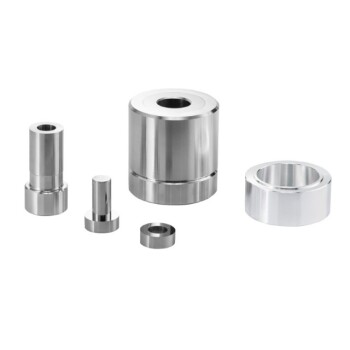
Alumina molds provide the rigid confinement necessary to direct the pressure. They ensure the resulting "green body" (the compacted powder) achieves consistent geometric dimensions and uniform density.
Degassing and Particle Rearrangement
As pressure is applied, air trapped between particles is expelled (degassing). The mold constraints force the particles to rearrange and bond tightly, rather than just sliding apart.
Understanding the Trade-offs
Managing Demolding Risks
While high pressure creates a strong structure, removing the compacted pellet from the mold presents risks. If not handled correctly, or if lubrication is insufficient, the demolding process can introduce micro-cracks on the surface, undermining the integrity gained during pressing.
Balancing Pressure and Material Limits
The pressure must be high enough to densify (e.g., 330 MPa for ASSBs) but must be applied precisely. Inconsistent pressure application can lead to density gradients, where some parts of the battery are highly conductive and others are porous.
Making the Right Choice for Your Goal
To ensure the success of your all-solid-state battery assembly, consider your specific manufacturing objectives:
- If your primary focus is electrochemical performance: Prioritize maximizing pressure (up to 330 MPa) to minimize void space and reduce interfacial resistance.
- If your primary focus is manufacturing yield: Focus on the quality of the alumina mold and lubrication to prevent micro-cracks during the critical demolding phase.
By controlling the pressure and confinement of your materials, you transform loose powders into a high-performance, integrated energy storage device.
Summary Table:
| Feature | Specification/Role | Impact on Battery Integrity |
|---|---|---|
| Pressure Level | Up to 330 MPa (Uniaxial) | Eliminates voids & creates a void-free, monolithic stack. |
| Mold Material | Alumina (Rigid Confinement) | Ensures uniform density and precise geometric dimensions. |
| Assembly Method | Cold Pressure Layer-by-Layer | Fuses electrolyte/anode/cathode without thermal degradation. |
| Interface Quality | Solid-Solid Intimate Contact | Minimizes resistance and prevents layer delamination. |
| Process Goal | Particle Rearrangement | Expels trapped air (degassing) for mechanical stability. |
Elevate Your Battery Research with KINTEK Precision
Maximize the performance of your all-solid-state batteries with KINTEK’s industry-leading laboratory solutions. We specialize in providing the high-precision tools necessary for advanced material research, including:
- High-Pressure Hydraulic Presses: Achieve the exact 330 MPa force required for void-free densification.
- Precision Alumina Molds: Ensure perfectly defined geometries and uniform particle distribution.
- Comprehensive Lab Range: From high-temperature furnaces and crushing systems to high-pressure reactors and battery research consumables.
Don't let interfacial resistance or micro-cracks stall your innovation. Partner with KINTEK for durable, reliable equipment designed for the rigors of modern energy storage development.
Contact our technical experts today to find the perfect fit for your lab!
Related Products
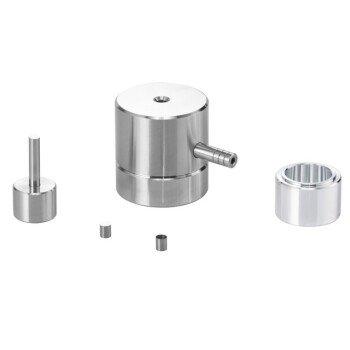
- Laboratory Hydraulic Press Lab Pellet Press for Button Battery
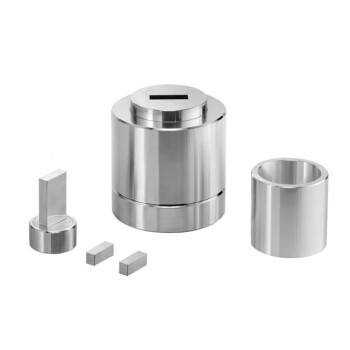
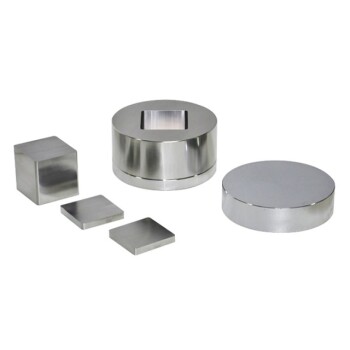
- Assemble Square Lab Press Mold for Laboratory Applications
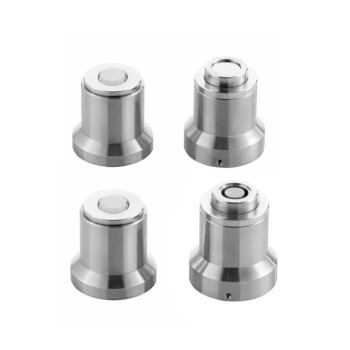
- Button Battery Disassembly and Sealing Mold for Lab Use
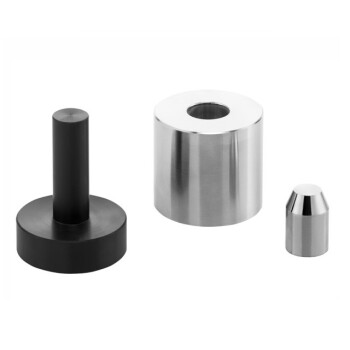
- Ball Press Mold for Lab
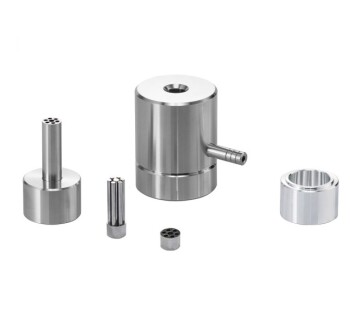
- Special Shape Press Mold for Lab
People Also Ask
- Why use a lab hydraulic press for 380 MPa Ti-Al alloy compaction? Unlock superior density and structural integrity.
- Why is a high-precision laboratory hydraulic press necessary for radiation-shielding? Ensure Data Accuracy & Density
- What is the function of a laboratory hydraulic press in preparing La2FeCrO6? Ensure High-Density Ceramic Pellets
- Why is a laboratory hydraulic press required during the preparation of Ti3AlC2 precursor pellets?
- How does the laboratory hydraulic press contribute to the preparation of solid targets for laser ablation?