Heating jackets ensure experimental precision by facilitating rapid temperature elevation and maintaining strict thermal stability throughout the biomass separation process. By providing exact control over reaction parameters, these jackets allow researchers to adhere to tight temporal windows—such as specific heating durations and isothermal holding times—which are critical for successful extraction.
Core Takeaway Processing lignocellulose is a delicate balancing act between extraction and degradation. Precision heating jackets are essential tools that prevent released monosaccharides from breaking down into harmful fermentation inhibitors by ensuring the biomass is exposed to harsh experimental conditions only for the exact duration required.
The Mechanics of Thermal Control
Rapid Temperature Elevation
The primary function of a high-quality heating jacket is to raise the reactor's temperature quickly. This minimizes the time the biomass spends in the indeterminate "ramp-up" phase, allowing the reaction to reach its target state efficiently.
Exact Target Maintenance
Once the desired temperature is reached, the jacket maintains it with minimal fluctuation. This capability is vital for executing precise isothermal holding times, such as a standard 30-minute plateau, ensuring consistent experimental conditions.
Strict Duration Management
The heating jacket allows for the rigorous control of total heating duration. In lignocellulose processing, this window is often narrow—typically ranging from 12 to 27 minutes—requiring equipment that can respond instantly to timing commands.
Preventing Chemical Degradation
Protecting Monosaccharides
The ultimate goal of biomass separation is to release valuable sugars known as monosaccharides. However, these sugars are chemically fragile when exposed to high heat for extended periods.
Avoiding Fermentation Inhibitors
If the heating duration extends beyond the optimal window, the released monosaccharides will further degrade. This degradation produces fermentation inhibitors, which contaminate the sample and compromise the viability of downstream applications.
Understanding the Operational Risks
The Consequence of Thermal Lag
If a heating system lacks the power for rapid elevation, the biomass stays in a transitional temperature zone for too long. This creates a "gray zone" of data where reaction kinetics are difficult to predict or replicate.
The Sensitivity of Time Windows
The margin for error in these experiments is incredibly small. A deviation of just a few minutes in heating duration—pushing past the recommended 27-minute upper limit—can shift the result from a high-yield extraction to a degraded, inhibitor-rich failure.
Optimizing Your Experimental Setup
To maximize the efficacy of your biomass separation, align your heating strategy with your specific experimental goals:
- If your primary focus is Monosaccharide Yield: Prioritize a system capable of rapid temperature elevation to reach the target reaction phase immediately without wasting thermal energy on a slow ramp-up.
- If your primary focus is Sample Purity: Strictly calibrate your equipment to adhere to the 12 to 27-minute heating window to effectively prevent the formation of fermentation inhibitors.
Precision in heating is not just about temperature; it is the primary safeguard for the chemical integrity of your biomass.
Summary Table:
| Feature | Function in Biomass Separation | Impact on Experimental Outcome |
|---|---|---|
| Rapid Ramp-up | Minimizes time in indeterminate temperature zones | Reduces unpredictable reaction kinetics |
| Thermal Stability | Maintains exact target temperature (Isothermal) | Ensures consistent results across samples |
| Duration Control | Adheres to strict 12-27 minute heating windows | Prevents monosaccharide degradation |
| Inhibitor Prevention | Stops the formation of fermentation inhibitors | Guarantees high-purity, high-yield extractions |
Maximize Your Lab’s Yield with KINTEK Precision Solutions
Precision in biomass research starts with superior thermal control. KINTEK specializes in high-performance laboratory equipment, including high-temperature high-pressure reactors and autoclaves equipped with advanced heating jackets designed for the most demanding separation processes.
Whether you are focusing on monosaccharide extraction or developing complex battery research tools, our comprehensive portfolio—ranging from muffle and vacuum furnaces to crushing systems and hydraulic presses—ensures your research is backed by industrial-grade accuracy and durability.
Don't let thermal lag compromise your results. Contact our technical experts today to discover how KINTEK can enhance your lab's efficiency and sample purity.
References
- Arielle Muniz Kubota, Tim W. Overton. A biorefinery approach for fractionation of Miscanthus lignocellulose using subcritical water extraction and a modified organosolv process. DOI: 10.1016/j.biombioe.2018.01.019
This article is also based on technical information from Kintek Solution Knowledge Base .
Related Products
- Electric Rotary Kiln Small Rotary Furnace Biomass Pyrolysis Plant
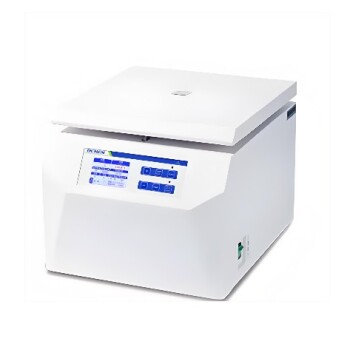
- Benchtop High Speed Small Lab Centrifuge for Serum Separation and Low Temperature Dehydration
- Customizable Laboratory High Temperature High Pressure Reactors for Diverse Scientific Applications
People Also Ask
- What is the temperature of a rotating kiln? It Depends on Your Material and Process Goal
- What are the different types of calciners? A Guide to Selecting the Right Thermal Processing Equipment
- What are the principles of a rotary kiln? Master the Mechanics of High-Temperature Processing
- How are rotary kilns heated? Direct vs. Indirect Heating Methods Explained
- Is rotary kiln a furnace? Discover the Key Differences for Industrial Processing