Knowledge How do high-precision molds contribute to Li6PS5Cl electrolyte membrane formation? Achieve Perfect Density and Thickness
Author avatar

Tech Team · Kintek Solution

Updated 16 hours ago

How do high-precision molds contribute to Li6PS5Cl electrolyte membrane formation? Achieve Perfect Density and Thickness


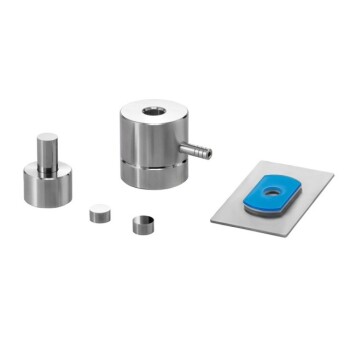
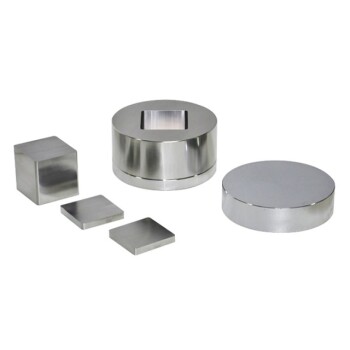
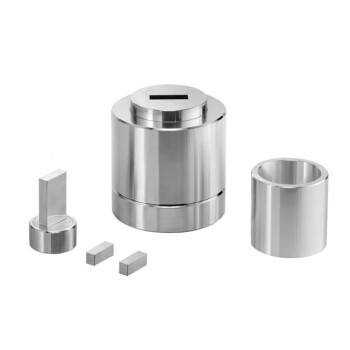
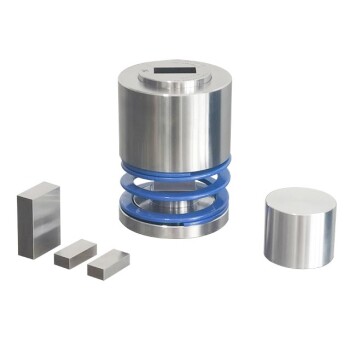
High-precision molds serve as the critical geometric constraint during the pressing of Li6PS5Cl-CuF2-LiNO3 electrolyte membranes. By physically restricting the lateral displacement of the loose powder, these molds force the applied hydraulic pressure to work exclusively on densification, resulting in a thin sheet with exacting dimensions and uniform density.

While the hydraulic press provides the necessary force, the high-precision mold provides the control required to transform loose sulfide powder into a viable electrolyte layer. This precision is what guarantees the uniform thickness and density required to prevent short circuits and sustain long-term battery cycling.

Controlling the Physical Formation

Restricting Lateral Displacement

When pressure is applied to loose powder, the natural tendency of the material is to spread outward. High-precision molds prevent this lateral movement completely.

By confining the material, the mold forces the powder particles to rearrange and bond closer together. This ensures that the energy from the press is utilized efficiently to reduce void space rather than changing the sheet's area.

Achieving Uniform Density

The use of precision molds is the primary factor in achieving a consistent density profile across the entire membrane.

When displacement is restricted, the powder compresses evenly into a high-density pellet. This densification is vital for eliminating internal pores that would otherwise impede ion flow or act as initiation points for structural failure.

Controlling Thickness and Flatness

Precision molds, often used in conjunction with spacers or limiters, dictate the final thickness of the membrane with micrometer-level accuracy.

This ensures the resulting sheet is perfectly flat and meets specific geometric requirements. Variations in thickness can lead to skewed data when calculating ionic conductivity, making the mold essential for accurate research and quality control.

The Link to Electrochemical Performance

Preventing Mechanical Failure

The physical uniformity provided by the mold directly influences the mechanical strength of the electrolyte layer.

A layer formed with uneven density is prone to uneven stress distribution. This often leads to cracks during the expansion and contraction associated with battery cycling, which can permanently damage the cell.

Ensuring Uniform Current Distribution

A membrane with uniform thickness and density ensures a consistent lithium-ion transport path throughout the material.

This uniformity allows for even current distribution within the assembled battery. By preventing "hot spots" of high current density, the mold contributes to preventing the formation of lithium dendrites and subsequent short circuits.

Common Pitfalls to Avoid

The Risk of Uneven Stress

The most significant risk in this process is relying on pressure without adequate geometric confinement.

If a mold allows even slight lateral movement or lacks surface precision, the resulting membrane will suffer from uneven stress points. As noted in the primary reference, these stress concentrations are often the root cause of cracks and short circuits that appear later during battery operation.

Making the Right Choice for Your Goal

To maximize the effectiveness of your electrolyte formation process, consider your specific objectives:

  • If your primary focus is Long-Term Cycle Life: Prioritize molds with the tightest lateral tolerances to ensure maximum density uniformity, as this directly prevents stress-induced cracking.
  • If your primary focus is Accurate Material Characterization: Ensure your mold setup includes precision spacers to guarantee perfect flatness, which is a prerequisite for calculating accurate ionic conductivity values.

Precision in the molding stage is the prerequisite for performance in the cycling stage.

Summary Table:

Feature Impact on Electrolyte Membrane Benefit to Battery Performance
Lateral Constraint Prevents powder spreading; forces densification Eliminates internal voids and structural defects
Uniform Compression Ensures consistent density across the sheet Prevents "hot spots" and lithium dendrite growth
Micrometer Control Achieves precise thickness and flatness Accurate ionic conductivity measurement and data
Stress Distribution Reduces mechanical stress concentrations Extends cycle life by preventing membrane cracking

Elevate Your Battery Research with KINTEK Precision Solutions

Superior battery performance starts with the physical integrity of your electrolyte membranes. At KINTEK, we specialize in the high-precision laboratory equipment necessary to transform advanced materials into high-performance components.

Our comprehensive range of hydraulic presses (pellet, hot, isostatic) and custom high-precision molds are engineered specifically for the rigorous demands of sulfide-based solid-state battery research. Whether you are working with Li6PS5Cl composites or other sensitive materials, our tools ensure the uniform thickness, density, and flatness required to prevent mechanical failure and maximize ionic conductivity.

Ready to optimize your formation process? Contact KINTEK today to discuss your laboratory needs and explore our full portfolio of high-temperature furnaces, battery research consumables, and material processing systems.

Related Products

People Also Ask

Related Products

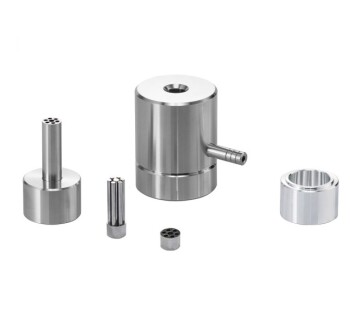
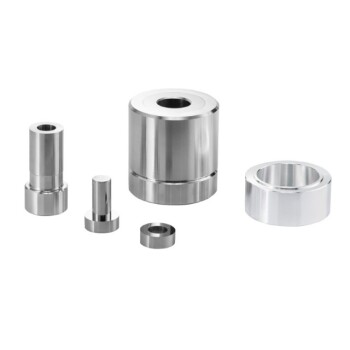
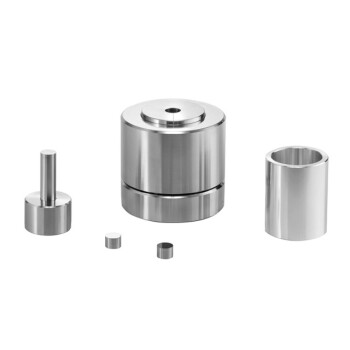
Cylindrical Press Mold with Scale for Lab

Cylindrical Press Mold with Scale for Lab

Discover precision with our Cylindrical Press Mold. Ideal for high-pressure applications, it molds various shapes and sizes, ensuring stability and uniformity. Perfect for lab use.

Isostatic Molding Pressing Molds for Lab

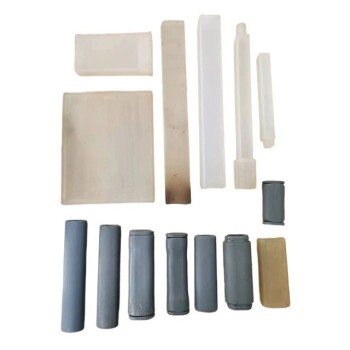
Isostatic Molding Pressing Molds for Lab

Explore high-performance isostatic pressing molds for advanced material processing. Ideal for achieving uniform density and strength in manufacturing.

Laboratory manual slicer

Laboratory manual slicer

Manual microtome is a high-precision cutting device designed for laboratories, industry and medical fields. It is suitable for the preparation of thin slices of various materials such as paraffin samples, biological tissues, battery materials, food, etc.

Cold Isostatic Pressing Machine CIP for Small Workpiece Production 400Mpa

Cold Isostatic Pressing Machine CIP for Small Workpiece Production 400Mpa

Produce uniformly high-density materials with our Cold Isostatic Press. Ideal for compacting small workpieces in production settings. Widely used in powder metallurgy, ceramics, and biopharmaceutical fields for high-pressure sterilization and protein activation.

Molybdenum Disilicide (MoSi2) Thermal Elements Electric Furnace Heating Element

Molybdenum Disilicide (MoSi2) Thermal Elements Electric Furnace Heating Element

Discover the power of Molybdenum Disilicide (MoSi2) Heating Element for high-temperature resistance. Unique oxidation resistance with stable resistance value. Learn more about its benefits now!

Automatic Lab Cold Isostatic Press CIP Machine Cold Isostatic Pressing

Automatic Lab Cold Isostatic Press CIP Machine Cold Isostatic Pressing

Efficiently prepare samples with our Automatic Lab Cold Isostatic Press. Widely used in material research, pharmacy, and electronic industries. Provides greater flexibility and control compared to electric CIPs.

Hexagonal Boron Nitride HBN Thermocouple Protection Tube

Hexagonal Boron Nitride HBN Thermocouple Protection Tube

Hexagonal boron nitride ceramics is an emerging industrial material. Because of its similar structure to graphite and many similarities in performance, it is also called "white graphite".

Custom PTFE Teflon Parts Manufacturer for PTFE Bottle Oil Fume Sampling Tube

Custom PTFE Teflon Parts Manufacturer for PTFE Bottle Oil Fume Sampling Tube

PTFE products are generally called "non-stick coating", which is a synthetic polymer material that replaces all hydrogen atoms in polyethylene with fluorine.

Hemispherical Bottom Tungsten Molybdenum Evaporation Boat

Hemispherical Bottom Tungsten Molybdenum Evaporation Boat

Used for gold plating, silver plating, platinum, palladium, suitable for a small amount of thin film materials. Reduce the waste of film materials and reduce heat dissipation.

Touchscreen Automatic Vacuum Heat Press

Touchscreen Automatic Vacuum Heat Press

Precision vacuum heat press for labs: 800°C, 5-ton pressure, 0.1MPa vacuum. Ideal for composites, solar cells, aerospace.

Electrode Polishing Material for Electrochemical Experiments

Electrode Polishing Material for Electrochemical Experiments

Looking for a way to polish your electrodes for electrochemical experiments? Our polishing materials are here to help! Follow our easy instructions for best results.

Twin Screw Extruder Plastic Granulation Machine

Twin Screw Extruder Plastic Granulation Machine

Twin screw extruder plastic granulation machine is designed for the mixing and processing experiments of engineering plastics, modified plastics, waste plastics and masterbatches.

Lab Scale Rotary Single Punch Tablet Press Machine TDP Tablet Punching Machine

Lab Scale Rotary Single Punch Tablet Press Machine TDP Tablet Punching Machine

This machine is a single-pressure automatic rotating, continuous tableting machine that compresses granular raw materials into various tablets. It is mainly used for tablet production in the pharmaceutical industry, and is also suitable for chemical, food, electronics and other industrial sectors.

lab cryogenic grinding use liquid-nitrogen for pulverizing plastic raw materials and heat sensitive materials

lab cryogenic grinding use liquid-nitrogen for pulverizing plastic raw materials and heat sensitive materials

Discover the KT-CG01 Liquid Nitrogen Cryogenic Pulverizer, Ideal for Plastic and Heat-Sensitive Material Pulverization, Preserving Material Integrity and Delivering Ultra-Fine Results.

High Temperature Alumina (Al2O3) Furnace Tube for Engineering Advanced Fine Ceramics

High Temperature Alumina (Al2O3) Furnace Tube for Engineering Advanced Fine Ceramics

High temperature alumina furnace tube combines the advantages of high hardness of alumina, good chemical inertness and steel, and has excellent wear resistance, thermal shock resistance and mechanical shock resistance.

Custom CVD Diamond Coating for Lab Applications

Custom CVD Diamond Coating for Lab Applications

CVD Diamond Coating: Superior Thermal Conductivity, Crystal Quality, and Adhesion for Cutting Tools, Friction, and Acoustic Applications

Laboratory Sealed Hammer Crusher for Efficient Sample Preparation

Laboratory Sealed Hammer Crusher for Efficient Sample Preparation

Discover the Laboratory Sealed Hammer Crusher for efficient sample preparation. Ideal for coal, metallurgy, and research, this crusher ensures high production efficiency and environmental friendliness.

Custom PTFE Teflon Parts Manufacturer for Culture Dish and Evaporation Dish

Custom PTFE Teflon Parts Manufacturer for Culture Dish and Evaporation Dish

The PTFE culture dish evaporating dish is a versatile laboratory tool known for its chemical resistance and high-temperature stability. PTFE, a fluoropolymer, offers exceptional non-stick properties and durability, making it ideal for various applications in research and industry, including filtration, pyrolysis, and membrane technology.

Electrode Fixture for Electrochemical Experiments

Electrode Fixture for Electrochemical Experiments

Upgrade your experiments with our customizable Electrode Fixtures. High-quality materials, acid and alkali resistant, and safe and durable. Discover our complete models today.

Customizable Fuel Cell Stack Components for Diverse Applications

Customizable Fuel Cell Stack Components for Diverse Applications

Introducing the FS Fuel Cell Stack Components. This modular assembly is designed for ease of use and offers reliable performance for various electrochemical applications, particularly in hydrogen fuel cell research and development, and educational settings.


Leave Your Message