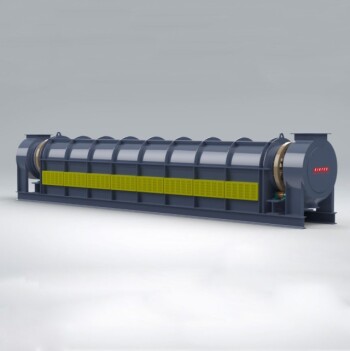
The continuous belt firing furnace facilitates metal contact formation by applying rapid, high-temperature thermal pulses to screen-printed silicon wafers. This specific heat profile allows metal pastes to penetrate the non-conductive passivation layers, establishing the essential electrical (ohmic) connections and the aluminum back surface field (Al-BSF) required for solar energy conversion.
The furnace serves as a high-throughput thermal reactor that balances the aggressive chemistry needed to "bite" through protective coatings with the delicate temperature control required to preserve the silicon wafer's internal efficiency.
The Mechanics of Rapid Thermal Processing
Continuous Transport and High Throughput
The furnace utilizes a long metal mesh belt that moves in a continuous cycle through multiple heating and cooling zones. This configuration allows for a steady stream of wafers to be processed, which is vital for the high-volume requirements of modern solar cell manufacturing.
Precise Control of Thermal History
The belt speed is finely adjustable, allowing engineers to dictate exactly how long a wafer remains in the "hot zone." A short thermal history is critical; the goal is to provide enough energy to trigger metallurgical reactions without allowing excessive heat to damage the silicon's crystal structure.
Establishing the Temperature Gradient
Internal heating elements create a steep temperature gradient, rapidly spiking the wafer's temperature for a few seconds. This rapid-fire approach ensures that the metal paste reaches its reaction temperature while the bulk of the silicon remains relatively protected from prolonged heat exposure.
Achieving Electrical Connectivity
Penetrating Passivation Layers
Solar cells are coated with a passivation layer (typically silicon nitride) that prevents energy loss but acts as an electrical insulator. The furnace heat causes the glass frit in the silver paste to melt and etch through this layer, allowing the silver to reach the silicon substrate.
Formation of Ohmic Contacts
Once the passivation layer is breached, the silver forms an ohmic contact with the silicon. This contact is the bridge that allows the electrons generated by sunlight to flow out of the cell and into the external electrical circuit.
Creating the Aluminum Back Surface Field (Al-BSF)
On the rear of the cell, the heat facilitates the alloying of aluminum with silicon to create the Back Surface Field. This layer reflects electrons away from the rear surface, significantly improving the cell's overall efficiency by reducing recombination losses.
Managing Critical Trade-offs
Bulk Lifetime vs. Contact Quality
The primary challenge in firing is the potential degradation of the bulk lifetime of the silicon wafer. Excessive heat or prolonged exposure can introduce impurities or defects that trap electrons, lowering the cell’s performance even if the contacts are perfect.
Shunting and Over-Firing
If the temperature is too high or the belt speed too slow, the metal may penetrate too deeply into the silicon. This "over-firing" can lead to shunting, where the electrical current bypasses the intended circuit, effectively ruining the cell.
Maintaining Surface Passivation
While the metal must bite through the passivation layer at the contact points, the rest of the layer must remain intact and effective. The firing process must be precise enough to achieve localized penetration without compromising the integrity of the surrounding protective coating.
Optimizing Your Firing Process
Strategic Recommendations for Production
Achieving the perfect fire requires balancing the chemical composition of the pastes with the mechanical settings of the furnace.
- If your primary focus is maximizing electrical efficiency: Prioritize the precision of the temperature gradient control to ensure deep ohmic contact without bulk degradation.
- If your primary focus is increasing manufacturing throughput: Optimize the belt speed and cooling zone efficiency to reduce cycle times while maintaining a consistent thermal profile.
- If your primary focus is reducing material waste: Focus on the alignment and uniformity of the heat zones to minimize the number of "shunted" or under-fired cells.
Precise thermal management is the bridge between a non-functional stack of materials and a high-efficiency semiconductor device.
Summary Table:
| Feature | Function in Solar Production | Key Benefit |
|---|---|---|
| Continuous Mesh Belt | Steady transport through heating zones | High throughput for mass manufacturing |
| Rapid Thermal Spikes | Melts glass frit in metal pastes | Penetrates passivation without damaging silicon |
| Temperature Gradients | Precise control of 'hot zone' time | Prevents shunting and preserves bulk lifetime |
| Controlled Cooling | Stabilizes metallurgical reactions | Ensures durable ohmic contacts and Al-BSF formation |
Elevate Your Solar & Semiconductor Research with KINTEK
Precision thermal management is the key to high-efficiency energy devices. KINTEK specializes in advanced laboratory equipment designed for the most demanding thermal processing requirements. Whether you are optimizing metal contact formation or developing next-generation materials, our comprehensive portfolio has you covered:
- Advanced Furnaces: From high-throughput continuous systems to muffle, tube, vacuum, CVD, and PECVD furnaces.
- Material Processing: Precision crushing, milling, and hydraulic presses (pellet, hot, isostatic) for consistent sample preparation.
- Energy Research Tools: Specialized battery research consumables, electrolytic cells, and high-temperature high-pressure reactors.
- Thermal Control: Reliable cooling solutions, including ULT freezers and freeze dryers, alongside high-purity ceramics and crucibles.
Ready to optimize your production efficiency? Contact our experts today to discuss our OEM/ODM support and find the perfect equipment tailored to your laboratory's needs.
References
- Matthew Wright, Ruy S. Bonilla. Design considerations for the bottom cell in perovskite/silicon tandems: a terawatt scalability perspective. DOI: 10.1039/d3ee00952a
This article is also based on technical information from Kintek Solution Knowledge Base .
Related Products
- Mesh belt controlled atmosphere furnace
- Vacuum Sealed Continuous Working Rotary Tube Furnace Rotating Tube Furnace
- Electric Rotary Kiln Continuous Working Small Rotary Furnace Heating Pyrolysis Plant
- Graphite Vacuum Continuous Graphitization Furnace
- Multi Heating Zones CVD Tube Furnace Machine Chemical Vapor Deposition Chamber System Equipment
People Also Ask
- Why is a furnace equipped with a controlled atmosphere necessary for the preparation of active metal catalysts?
- What role does a controlled atmosphere furnace with argon gas flow play in the production of reduced graphene oxide (rGO)?
- What are some of the reasons why a controlled atmosphere furnace is desirable in sintering? Achieve Superior Sintering Results
- What is the process of a mesh belt furnace? Achieve Consistent, High-Volume Heat Treatment
- How does a mesh belt furnace work? Achieve High-Volume, Repeatable Heat Treatment