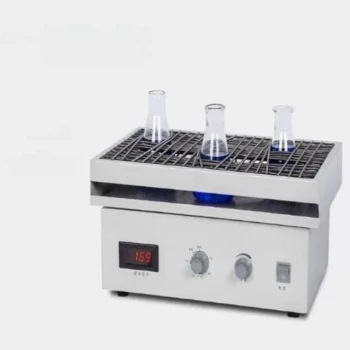
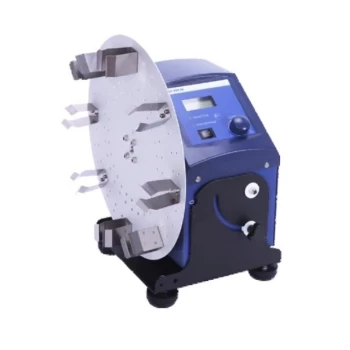
A laboratory magnetic stirrer functions as a critical mechanical dispersion tool. During the preparation of polyurethane, bentonite, and chitosan composite coatings, it operates by generating uniform force through high-speed rotation. This action forcibly disperses the chitosan and bentonite nano-fillers into the polyurethane matrix to create a unified mixture.
The device provides the continuous mechanical energy required to break van der Waals forces between nanoparticles, preventing agglomeration and ensuring the compositional homogeneity necessary for a high-performance coating.
The Mechanics of Dispersion
Generating Uniform Force
The core function of the stirrer is the generation of uniform force throughout the liquid medium. By utilizing high-speed rotation, the device creates a consistent kinetic environment within the container.
This ensures that mechanical energy is distributed interactionally, rather than being concentrated in a single zone.
Forcible Integration of Nano-Fillers
Chitosan and bentonite are introduced into the process as nano-fillers. These particles do not naturally dissolve into the polyurethane matrix on their own.
The stirrer uses its rotational energy to forcibly integrate these solid particles into the viscous polyurethane. This transitions the materials from separate components into a potentially cohesive composite fluid.
Overcoming Particle Interactions
Breaking Van der Waals Forces
At the nanoscale, particles are heavily influenced by van der Waals forces, which cause them to attract one another.
The magnetic stirrer provides the specific mechanical shear necessary to break these physical attractive forces. This separation is the fundamental prerequisite for creating a true composite rather than a mixture of clumps.
Preventing Agglomeration
Without continuous mechanical intervention, nanoparticles will naturally cluster together, a process known as agglomeration.
The stirrer's continuous action keeps the particles in a state of suspension and separation. By inhibiting the formation of clusters, the device protects the structural integrity of the final coating.
Achieving Structural Integrity
Microscale Homogeneity
The ultimate objective of using the stirrer is to achieve compositional homogeneity.
This means that at the microscale, the distribution of bentonite and chitosan is even throughout the polyurethane. This uniformity is vital for the consistent performance of the final coating application.
Understanding the Trade-offs
The Necessity of High Speed
The primary reference emphasizes that high-speed rotation is required. Low-speed agitation is often insufficient to generate the force needed to overcome van der Waals interactions.
If the speed is too low, the fillers may technically mix but will remain agglomerated at the microscopic level, compromising the coating's properties.
Reliance on Continuous Action
The dispersion relies on continuous mechanical action.
Because the particles are prone to re-agglomeration or settling once energy is removed, the stirring process must be maintained until the mixture is stabilized or cured. Stopping the process prematurely risks the immediate segregation of the nano-fillers.
Making the Right Choice for Your Goal
To ensure the success of your composite coating preparation, consider your specific objectives:
- If your primary focus is material strength: Prioritize high-speed rotation to ensure sufficient force is generated to fracture particle clusters and break van der Waals forces.
- If your primary focus is surface consistency: Maintain continuous agitation to prevent agglomeration and guarantee microscale homogeneity across the entire coating area.
Success lies in using the stirrer not just to mix, but to actively engineer the microscopic structure of your composite.
Summary Table:
| Function | Mechanism | Impact on Coating |
|---|---|---|
| Force Generation | High-speed rotation | Distributes mechanical energy uniformly |
| Nano-filler Integration | Forcible dispersion | Blends bentonite/chitosan into polyurethane |
| Particle Control | Breaking Van der Waals forces | Prevents clustering and agglomeration |
| Homogeneity | Continuous mechanical action | Ensures consistent microscale performance |
Elevate Your Material Research with KINTEK
Precision in composite coating preparation requires more than just mixing—it demands consistent, high-performance mechanical energy. KINTEK specializes in advanced laboratory equipment designed to meet the rigorous needs of material science and chemical engineering.
Whether you are preparing advanced polymer coatings or conducting complex battery research, our comprehensive range of laboratory magnetic stirrers, high-speed homogenizers, and precision crushing systems ensures perfect homogeneity every time. Beyond dispersion, we support your entire workflow with:
- High-temperature furnaces and reactors for material curing.
- Precision hydraulic presses for pellet and thin-film preparation.
- Specialized consumables including high-purity ceramics and PTFE products.
Don't let agglomeration compromise your coating's structural integrity. Contact KINTEK today to find the ideal equipment solutions for your lab and see how our expertise can accelerate your innovation.
References
- Teuku Rihayat, Tezara Cionita. Investigation of Polyurethane Primer Coating Paint Based on Local Palm Oil with Antimicrobial and Anticorrotion Agent Formula Bentonite-Chitosan. DOI: 10.61972/cetics.v1i2.15
This article is also based on technical information from Kintek Solution Knowledge Base .
Related Products
- Laboratory Small Constant Temperature Heated Magnetic Stirrer Heater and Stirrer
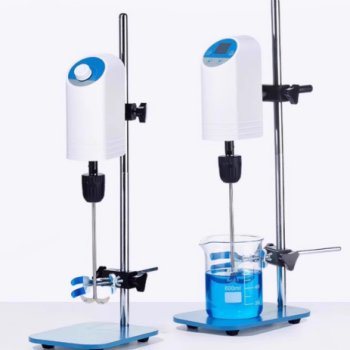
- High Performance Laboratory Stirrers for Diverse Applications
- Custom PTFE Teflon Parts Manufacturer for Magnetic Stirring Bar
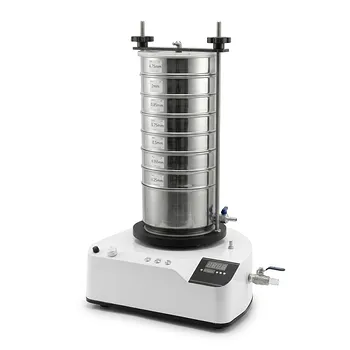
- Laboratory Vibratory Sieve Shaker Machine for Dry and Wet Three-Dimensional Sieving
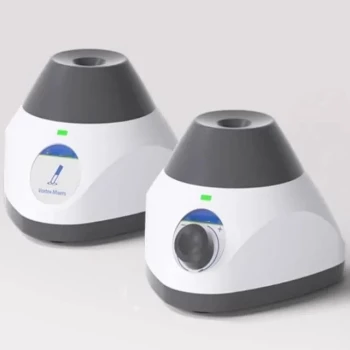
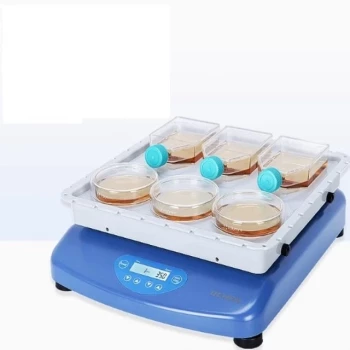
- Laboratory Vortex Mixer Orbital Shaker Multifunctional Rotation Oscillation Mixer
People Also Ask
- What role does a magnetic stirrer with heating play in ZnO nanoparticle synthesis? Precision Control for Quality Results
- What role does a constant temperature heating magnetic stirrer play in MFC-HAp synthesis? Achieve Material Homogeneity
- What is the function of a laboratory magnetic stirrer in Ni–Cr–P electrodeposition? Optimize Ion Transport & Coating
- Why is a laboratory magnetic stirrer required for benzoic acid esters? Boost Reaction Speed & Yield with High RPM
- What role does a laboratory magnetic stirrer play in TiO2 and TiO2-Ag sol preparation? Master Chemical Kinetics