
At its core, a plasma arc furnace uses a highly controlled jet of superheated, electrically charged gas—known as plasma—to melt materials. This process is conceptually similar to harnessing a continuous, stable lightning bolt. An electric arc heater, or plasmatron, ionizes a gas (like argon), creating a plasma stream with temperatures reaching thousands of degrees Celsius, which is then directed at the substance to be melted.
The fundamental difference from conventional heating is the use of electricity to create plasma as a medium for heat transfer. This provides an intensely hot, clean, and precisely controlled energy source, capable of melting materials that are resistant to traditional furnaces.
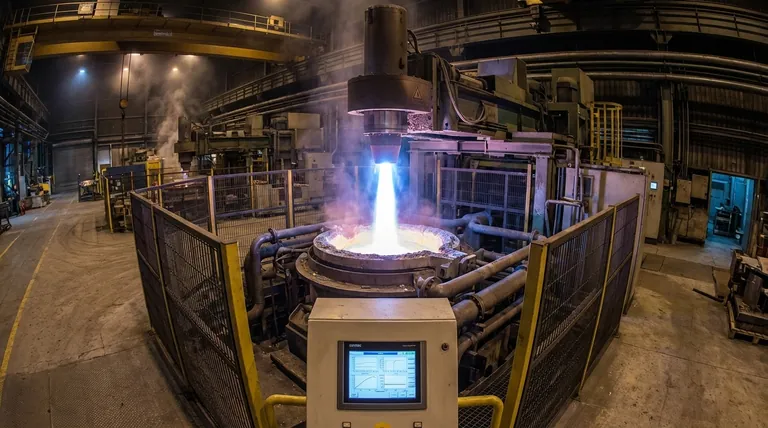
The Core Principle: From Electricity to Molten Material
Understanding how a plasma arc furnace operates involves breaking down the process into three key stages: generating the plasma, understanding its properties, and transferring its immense heat.
Generating the Plasma Arc
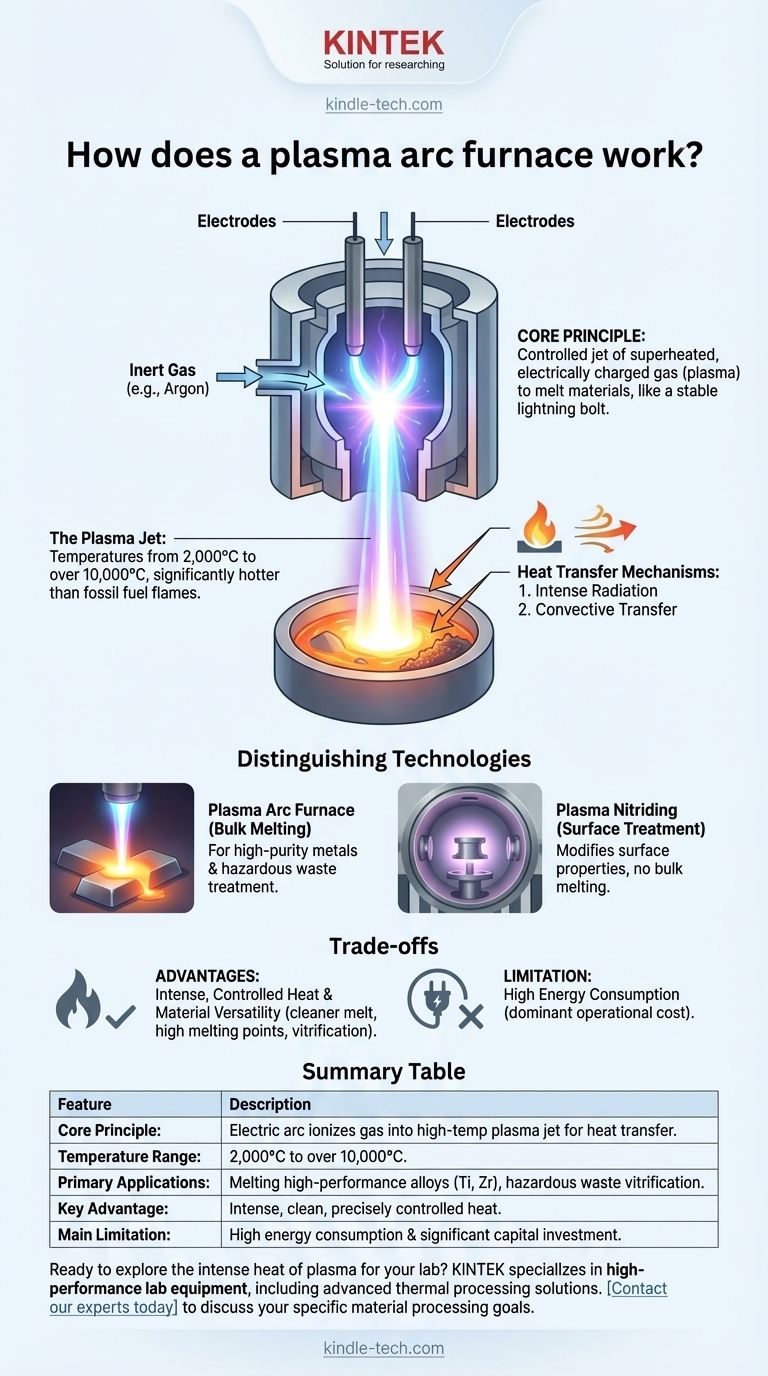
The heart of the furnace is the plasmatron, or electric arc heater. Within this device, a high-voltage electric arc is struck between two electrodes. An inert gas, such as argon, is forced to flow through or around this arc.
The intense energy of the arc strips electrons from the gas atoms, a process called ionization. This creates plasma—a mixture of free electrons and positive ions—which is then expelled from the plasmatron as a high-velocity, incredibly hot jet.
The Nature of Industrial Plasma
The term "low-temperature plasma" from technical literature can be misleading. It simply distinguishes it from the multi-million-degree plasma found in stars or fusion reactors.
For industrial purposes, this plasma is exceptionally hot, with typical operating temperatures ranging from 2,000°C to over 10,000°C. This is significantly hotter than the flames produced by burning fossil fuels.
Transferring the Heat
The plasma jet melts the target material through two primary mechanisms:
- Intense Radiation: The arc itself emits powerful thermal radiation.
- Convective Transfer: The superheated plasma gas directly contacts the material, transferring its thermal energy with high efficiency.
This dual-method heat transfer is what makes the process so rapid and effective.
Distinguishing Plasma Furnaces from Other Technologies
The term "plasma furnace" can be applied to different technologies with different goals. It's crucial to distinguish a plasma arc furnace used for melting from other systems.
Plasma Arc vs. Conventional Furnaces
Conventional laboratory or industrial furnaces rely on combustion or resistive heating elements. Heat is then distributed through convection—the natural or forced circulation of hot air.
This approach is slower and has a lower maximum temperature. A plasma arc furnace bypasses these limitations by creating a far more intense and direct heat source, enabling the melting of highly refractory materials like titanium and specialized alloys.
Melting vs. Surface Treatment (Nitriding)
A plasma nitriding furnace also uses plasma but for an entirely different purpose. It operates in a vacuum and uses a diffuse, low-energy plasma to cause a chemical reaction on the surface of a metal part, making it harder.
This process modifies the surface of a solid component; it does not melt the bulk material. A plasma arc furnace, in contrast, is designed specifically for bulk melting and refining.
Understanding the Trade-offs
While powerful, plasma arc technology is not a universal solution. Its selection depends on a clear understanding of its advantages and disadvantages.
Key Advantage: Intense and Controlled Heat
The primary benefit is the ability to achieve extremely high temperatures quickly and in a controlled manner. This allows for the processing of materials with very high melting points and produces a cleaner melt because there are no byproducts from fuel combustion.
Key Advantage: Material Versatility
The extreme heat can break down nearly any substance. This makes plasma arc furnaces highly effective not only for high-purity metals but also for the treatment of hazardous waste. The process, known as vitrification, can turn toxic materials into a stable, non-leachable glass.
The Main Limitation: Energy Consumption
The most significant drawback is the high electricity demand. Generating and sustaining a plasma arc requires a massive and consistent power supply, making energy the dominant operational cost. The specialized equipment, including the plasmatron and its power systems, also represents a substantial capital investment.
Making the Right Choice for Your Goal
Selecting the correct thermal processing technology requires aligning the tool with the specific material and desired outcome. A plasma arc furnace is a specialized instrument for demanding applications.
- If your primary focus is melting high-performance alloys: A plasma arc furnace provides the required high temperatures and clean operating environment for sensitive materials like titanium, zirconium, and specialty steels.
- If your primary focus is hazardous waste treatment: The extreme heat and complete molecular dissociation make plasma arc technology a superior choice for safely vitrifying toxic materials.
- If your primary focus is cost-effective bulk metal recycling: A traditional Electric Arc Furnace (EAF), which arcs directly to the metal scrap without a separate plasma jet, is often the more economical solution for standard steels.
Ultimately, choosing a plasma arc furnace is a decision to prioritize processing intensity and purity over operational energy cost.
Summary Table:
| Feature | Description |
|---|---|
| Core Principle | Uses an electric arc to ionize gas into a high-temperature plasma jet for heat transfer. |
| Temperature Range | 2,000°C to over 10,000°C. |
| Primary Applications | Melting high-performance alloys (titanium, zirconium), hazardous waste vitrification. |
| Key Advantage | Intense, clean, and precisely controlled heat source. |
| Main Limitation | High energy consumption and significant capital investment. |
Ready to explore the intense heat of plasma for your lab?
KINTEK specializes in high-performance lab equipment, including advanced thermal processing solutions. Whether you are developing new high-performance alloys or need a safe method for hazardous waste treatment, our expertise can help you achieve precise and reliable results.
Contact our experts today to discuss how a plasma arc furnace can meet your specific material processing goals.
Visual Guide
Related Products
- Spark Plasma Sintering Furnace SPS Furnace
- Vacuum Arc Induction Melting Furnace
- Non Consumable Vacuum Arc Induction Melting Furnace
- Chemical Vapor Deposition CVD Equipment System Chamber Slide PECVD Tube Furnace with Liquid Gasifier PECVD Machine
- Inclined Rotary Plasma Enhanced Chemical Vapor Deposition PECVD Equipment Tube Furnace Machine
People Also Ask
- What is the vapor phase material? Unlock Faster, Denser Sintering with SPS Technology
- What are the parameters for spark plasma sintering? Master Speed, Pressure & Temperature Control
- What is the SPS process of spark plasma sintering? A Guide to Rapid, Low-Temperature Densification
- What is electric current sintering? Achieve Rapid, High-Performance Material Densification
- What are the advantages of SPS? Achieve Superior Material Density and Performance



















