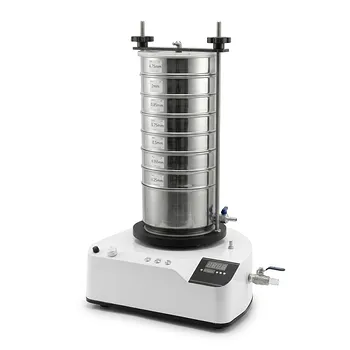
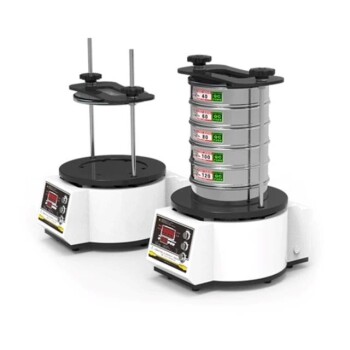
A standard sieving system is the primary mechanism for quality control in recycled concrete, specifically tasked with characterizing particle size distribution. It operates according to rigorous industry standards, such as ASTM C136, to ensure that recycled coarse aggregates meet the same precise grading criteria as natural fine and coarse aggregates.
The Core Takeaway
Sieving acts as the critical bridge between variable demolition waste and reliable construction material. By strictly enforcing grading curves, the system ensures recycled aggregates can replace natural resources without compromising the structural performance of the final concrete product.
The Role of Characterization in Quality Control
Defining Particle Size Distribution
The fundamental purpose of the sieving system is to analyze the physical makeup of the aggregate.
It separates the material into specific size fractions, allowing engineers to map the particle size distribution of both natural and recycled components. This data is the baseline for determining if a batch of recycled material is suitable for structural use.
Adherence to Industry Standards
Quality control is only effective when it is reproducible.
Standard sieving systems operate according to established protocols like ASTM C136. This compliance ensures that the characterization of recycled coarse aggregates is consistent, legally defensible, and comparable to the standards used for virgin mined materials.
Ensuring Structural Integrity
Controlling Grading Curves
Concrete strength relies heavily on how well particles pack together.
Sieving systems allow producers to precisely control the grading curves—the ratio of small to large particles. By managing this curve, the system ensures that the voids between coarse aggregates are adequately filled by finer particles, maintaining the density of the mix.
Preventing Performance Degradation
The biggest risk in using recycled materials is inconsistency.
If particle sizing is uneven, the concrete creates weak points, leading to structural failure. The sieving system mitigates this by identifying and excluding off-spec material, thereby preventing structural performance degradation often associated with poorly processed recycled concrete.
Understanding the Trade-offs
The Necessity of Precise replacement
While sieving ensures size consistency, the replacement of natural aggregates with recycled ones is not a simple 1:1 swap.
You must use the sieving data to ensure the grading of the recycled material matches or complements the natural aggregates it is replacing. Failure to align these distributions can result in segregation or poor workability in the wet concrete mix.
Dependence on Frequency
Recycled concrete sources are inherently more variable than natural quarries.
Therefore, a standard sieving system must be employed more frequently for recycled batches. Relying on periodic checks rather than continuous monitoring can lead to "drift" in the grading curve, reintroducing the risk of uneven particle sizing.
Making the Right Choice for Your Project
To maximize the utility of recycled concrete aggregates, apply the sieving data based on your specific project goals:
- If your primary focus is Regulatory Compliance: Strict adherence to ASTM C136 protocols during sieving is non-negotiable to validate the material for commercial use.
- If your primary focus is Structural Durability: Prioritize the analysis of grading curves to ensure the recycled aggregates pack densely and prevent void formation.
Effective quality control does not just measure the material; it shapes it into a reliable structural resource.
Summary Table:
| Key Aspect | Contribution to Quality Control | Impact on Final Product |
|---|---|---|
| Particle Size Distribution | Characterizes physical makeup of aggregates | Ensures suitability for structural use |
| ASTM C136 Compliance | Standardizes testing protocols | Guarantees consistent, reproducible results |
| Grading Curve Control | Manages the ratio of small to large particles | Maximizes density and structural integrity |
| Consistency Monitoring | Identifies and excludes off-spec materials | Prevents performance degradation and weak points |
Elevate Your Quality Control Standards with KINTEK
Consistency is the cornerstone of sustainable construction. At KINTEK, we understand that reliable recycled concrete starts with precision. We offer a comprehensive range of sieving equipment and laboratory crushing and milling systems designed to meet rigorous standards like ASTM C136.
Whether you are managing variable demolition waste or producing high-spec structural materials, our specialized tools—including shakers, sieves, and hydraulic presses—provide the accuracy you need to maintain perfect grading curves.
Ready to optimize your aggregate testing? Contact us today to discover how KINTEK’s precision laboratory solutions can enhance your material performance and ensure regulatory compliance.
References
- J.M. Mendivil-Escalante, Francisca Guadalupe Cabrera Covarrubias. Metamorphosis in the Porosity of Recycled Concretes Through the Use of a Recycled Polyethylene Terephthalate (PET) Additive. Correlations between the Porous Network and Concrete Properties. DOI: 10.3390/ma10020176
This article is also based on technical information from Kintek Solution Knowledge Base .
Related Products
- Three-dimensional electromagnetic sieving instrument
- Laboratory Vibratory Sieve Shaker Machine for Dry and Wet Three-Dimensional Sieving
- Laboratory Test Sieves and Sieving Machines
- Laboratory Wet Three-Dimensional Vibratory Sieve Shaker Machine
- Custom PTFE Teflon Parts Manufacturer for PTFE Mesh F4 Sieve
People Also Ask
- Why is sieving equipment essential for the classification of processed bio-activated carbon? Optimize Performance
- What are the limitations of sieving? Understanding the Constraints of Particle Size Analysis
- What are advantages and disadvantages of sieving method? A Guide to Reliable & Cost-Effective Particle Sizing
- How is sieving important? The Critical Role of Particle Size Analysis in Quality Control
- What is sieving and how does it work? A Guide to Accurate Particle Size Analysis