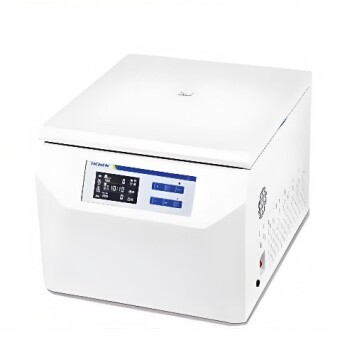
The precise regulation of temperature-controlled stirrers is the deciding factor in establishing the thermodynamic stability and uniform mass transfer required for high-quality green synthesis. By synchronizing the reduction rates of metal ions with consistent mixing, these devices ensure that the resulting nanoparticles—whether gold, silver, or iron—maintain structural stability and a narrow size distribution.
In green synthesis, the quality of the final product is dictated by the environment in which it grows. Precise temperature control activates biological reducing agents, while continuous stirring eliminates local inconsistencies, directly preventing the formation of unstable or polydisperse particles.
The Role of Thermodynamic Control
Optimizing Biological Activity
Green synthesis relies heavily on biological molecules, such as proteins and pigments, to act as reducing and capping agents. The activity of these molecules is highly sensitive to thermal conditions.
Precise temperature regulation ensures these biological agents operate at their optimal efficiency. This control is essential for initiating the reduction of metal ions at a consistent and predictable rate.
dictating Nucleation Kinetics
The size and shape of a nanoparticle are determined during the nucleation and growth phases. Temperature acts as the primary lever for controlling these nucleation kinetics.
By maintaining stable thermodynamic conditions, you ensure that nuclei form at a controlled pace rather than sporadically. This uniformity in the initial formation stage is a prerequisite for achieving monodispersity in the final product.
The Impact of Mass Transfer
Eliminating Concentration Gradients
Without adequate mixing, chemical reactions develop "hotspots" where concentrations of reactants are higher than in the rest of the solution. Continuous stirring mitigates this issue by ensuring uniform mass transfer throughout the vessel.
This mechanical consistency prevents local concentration gradients that would otherwise cause some particles to grow faster than others.
Ensuring High Monodispersity
When mass transfer is uniform, every metal ion experiences the exact same reaction environment. This leads to uniform growth processes across the entire batch.
The result is a colloid where particles—specifically gold, silver, or iron—possess high monodispersity. This means the particles are nearly identical in size, which is critical for their eventual application and effectiveness.
Common Pitfalls to Avoid
The Risk of Thermal Instability
If the temperature fluctuates, the reduction rate becomes inconsistent. This can lead to a mix of nucleation and growth phases occurring simultaneously, resulting in particles of vastly different sizes (polydispersity) and unpredictable physical properties.
Inadequate Mixing
Failing to maintain continuous stirring allows the reactants to settle or aggregate. This lack of homogeneity often leads to structural instability, where nanoparticles may agglomerate or fail to be properly capped by the biological agents, rendering them useless for sensitive applications.
Making the Right Choice for Your Synthesis
To achieve the best results in green nanoparticle synthesis, align your equipment settings with your specific chemical goals:
- If your primary focus is monodispersity: Prioritize continuous, vigorous stirring to eliminate all concentration gradients and force uniform particle growth.
- If your primary focus is reaction efficiency: Focus on precise temperature regulation to maximize the catalytic activity of your specific biological reducing agents (proteins or pigments).
Mastering these thermodynamic and kinetic variables transforms unpredictable biological reactions into a precise, reproducible engineering process.
Summary Table:
| Parameter | Influence on Synthesis | Benefit to Nanoparticles |
|---|---|---|
| Temperature Control | Optimizes biological reducing agents | Ensures consistent nucleation kinetics |
| Stirring Speed | Eliminates concentration gradients | Promotes high monodispersity (uniform size) |
| Mass Transfer | Uniform distribution of metal ions | Prevents aggregation and structural instability |
| Thermodynamics | Regulates reaction environment | Maintains long-term colloidal stability |
Elevate Your Nanotechnology Research with KINTEK
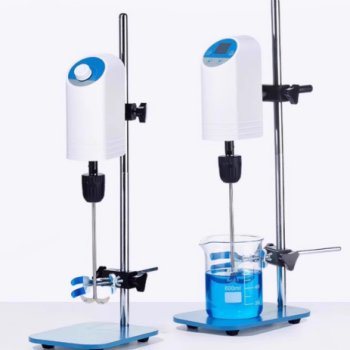
Precise control is the difference between a failed batch and a breakthrough. KINTEK specializes in providing high-performance laboratory equipment designed for the rigorous demands of green synthesis. From advanced temperature-controlled stirrers and homogenizers to our comprehensive range of high-temperature furnaces, crushing systems, and hydraulic presses, we offer the tools you need for absolute consistency.
Whether you are synthesizing silver, gold, or iron nanoparticles, our solutions ensure your biological agents perform at their peak while maintaining the monodispersity your applications require. Don't let thermal fluctuations compromise your results—contact KINTEK today to discover how our expertise and equipment can optimize your laboratory's efficiency.
References
- Fernanda Maria Policarpo Tonelli, Flávia Cristina Policarpo Tonelli. Algae-based green AgNPs, AuNPs, and FeNPs as potential nanoremediators. DOI: 10.1515/gps-2023-0008
This article is also based on technical information from Kintek Solution Knowledge Base .
Related Products
- Laboratory Small Constant Temperature Heated Magnetic Stirrer Heater and Stirrer
- High Performance Laboratory Stirrers for Diverse Applications
- Custom PTFE Teflon Parts Manufacturer for Magnetic Stirring Bar
- Low-Temperature Water-Cooled Touchscreen Vibratory Ultrafine Pulverizer
- Automatic High Temperature Heated Hydraulic Press Machine with Heated Plates for Lab
People Also Ask
- What role does a magnetic stirrer with heating play in ZnO nanoparticle synthesis? Precision Control for Quality Results
- What role does a constant temperature heating magnetic stirrer play in MFC-HAp synthesis? Achieve Material Homogeneity
- What is the function of a laboratory magnetic stirrer in Ni–Cr–P electrodeposition? Optimize Ion Transport & Coating
- Why is a laboratory magnetic stirrer required for benzoic acid esters? Boost Reaction Speed & Yield with High RPM
- What role does a laboratory magnetic stirrer play in TiO2 and TiO2-Ag sol preparation? Master Chemical Kinetics