Knowledge rotary furnace What are the advantages and disadvantages of rotary furnace? Maximize Uniformity & Efficiency in Thermal Processing
Author avatar

Tech Team · Kintek Solution

Updated 2 months ago

What are the advantages and disadvantages of rotary furnace? Maximize Uniformity & Efficiency in Thermal Processing


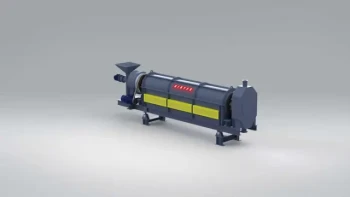
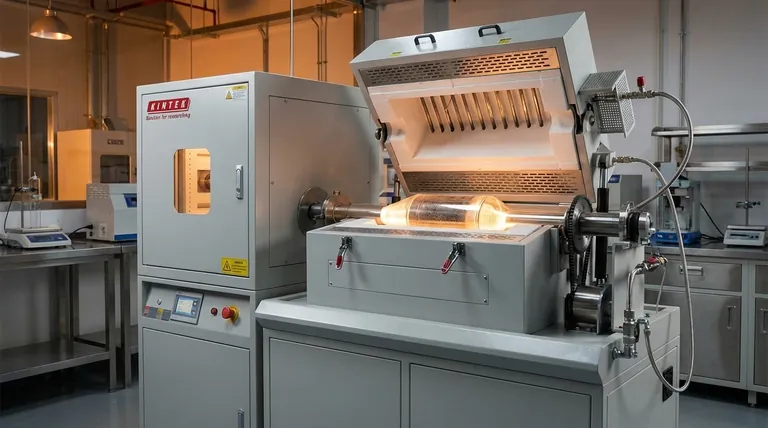
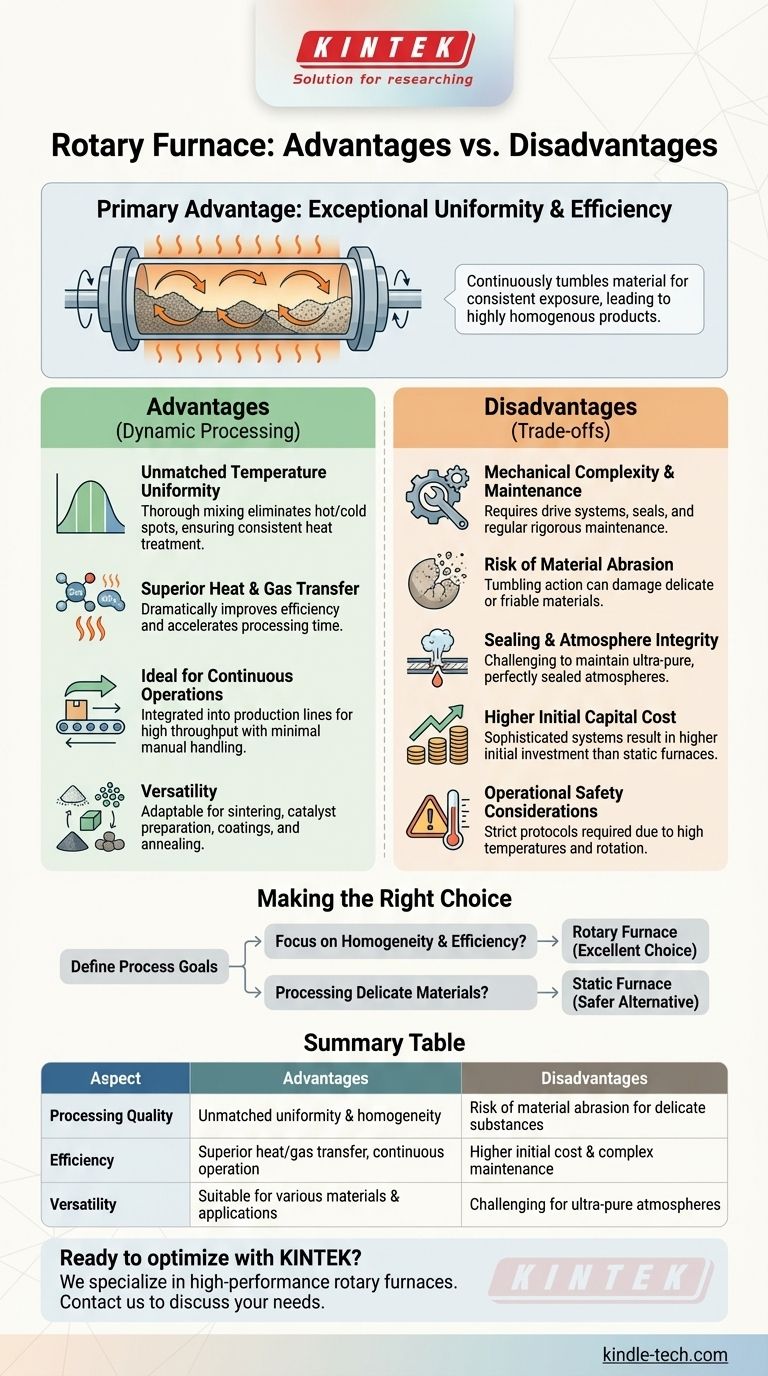
The primary advantage of a rotary furnace is its ability to process materials with exceptional uniformity and efficiency. By continuously tumbling the material in a heated, rotating tube, it ensures every particle is consistently exposed to the desired temperature and atmospheric conditions, leading to a highly homogenous end product.

A rotary furnace excels at producing consistent materials through dynamic mixing and efficient heat transfer. However, this operational advantage comes with the trade-off of greater mechanical complexity, potential for material abrasion, and more stringent sealing requirements compared to static furnace designs.
What are the advantages and disadvantages of rotary furnace? Maximize Uniformity & Efficiency in Thermal Processing

The Core Advantages of Dynamic Processing

The unique rotational design of these furnaces provides several distinct benefits over static alternatives. These advantages stem from the fundamental principle of keeping the material in constant, gentle motion during the thermal cycle.

Unmatched Temperature Uniformity

The continuous rotation and tumbling action forces the material to mix thoroughly. This eliminates localized hot or cold spots, preventing temperature gradients within the batch and ensuring a highly consistent heat treatment for every particle.

Superior Heat and Gas Transfer

By constantly exposing the entire surface area of the material, a rotary furnace dramatically improves efficiency. This enhances the diffusion of process gases into the material and accelerates heat transfer, often reducing overall processing time and gas consumption.

Ideal for Continuous Operations

Rotary furnaces are engineered for continuous material flow. They can be integrated into production lines where raw material is fed into one end and the processed product is discharged from the other, minimizing manual handling and improving throughput for large batches.

Versatility Across Materials and Applications

This technology is highly adaptable, capable of processing materials ranging from fine powders and granules to larger solids. It is widely used for applications like sintering ceramic and metal powders, preparing catalysts, creating surface coatings, and annealing metal components.

Understanding the Trade-offs and Disadvantages

While powerful, the rotary furnace design is not universally optimal. Its advantages come with inherent complexities and limitations that must be considered.

Mechanical Complexity and Maintenance

The rotational motion requires a drive system, bearings, and, most critically, robust seals. These moving parts introduce more potential points of failure and require a more rigorous maintenance schedule compared to a simpler static furnace.

Risk of Material Abrasion

The tumbling action that ensures uniformity can also be a disadvantage. For delicate, brittle, or friable materials, this mechanical movement can cause particles to break down, create unwanted dust, or damage the product's structure.

Sealing and Atmosphere Integrity

Maintaining a perfectly controlled, high-purity atmosphere can be more challenging in a rotary furnace. The dynamic seals at the ends of the rotating tube must be robustly engineered to prevent leaks, which is a more complex task than sealing a static chamber.

Higher Initial Capital Cost

The sophisticated mechanical systems, including the drive, tube, and sealing components, typically result in a higher initial purchase price than a static box or tube furnace of similar capacity.

Operational Safety Considerations

The combination of high temperatures, rotation, and potential pressure buildup requires strict adherence to safety protocols. Improper operation can lead to equipment damage or hazardous situations, demanding well-trained personnel.

Making the Right Choice for Your Process

Selecting the correct furnace technology requires a clear understanding of your material, your process goals, and your operational constraints.

  • If your primary focus is product homogeneity and efficiency: A rotary furnace is an excellent choice, particularly for continuous processing of powdered or granular materials that benefit from mixing.
  • If you are processing delicate or abrasion-sensitive materials: Carefully evaluate if the tumbling action will degrade your product; a static furnace may be a safer alternative.
  • If your process requires an ultra-pure, perfectly sealed atmosphere: Scrutinize the furnace's sealing technology, as maintaining atmospheric integrity is inherently more challenging than in a static system.
  • If budget and maintenance simplicity are top priorities: A static furnace offers a simpler, often more cost-effective solution, provided it can meet your quality standards.

Ultimately, choosing a rotary furnace is a strategic decision that trades higher mechanical complexity for unparalleled uniformity and efficiency in thermal processing.

Summary Table:

Aspect Advantages Disadvantages
Processing Quality Unmatched temperature uniformity and product homogeneity Risk of material abrasion for delicate or friable substances
Efficiency Superior heat and gas transfer; ideal for continuous operations Higher initial capital cost and more complex maintenance
Versatility Suitable for powders, granules, and various thermal applications Challenging to maintain ultra-pure, perfectly sealed atmospheres

Ready to optimize your thermal processing with a rotary furnace? KINTEK specializes in high-performance lab equipment, including rotary furnaces designed for superior uniformity and efficiency. Whether you're sintering ceramics, preparing catalysts, or annealing metals, our solutions ensure consistent results and enhanced productivity. Contact us today to discuss your specific laboratory needs and discover how KINTEK can empower your research and production processes!

Visual Guide
What are the advantages and disadvantages of rotary furnace? Maximize Uniformity & Efficiency in Thermal Processing Visual Guide

Related Products

People Also Ask

Related Products

Rotary Tube Furnace Split Multi Heating Zone Rotating Tube Furnace

Rotary Tube Furnace Split Multi Heating Zone Rotating Tube Furnace

Multi zone rotary furnace for high-precision temperature control with 2-8 independent heating zones. Ideal for lithium ion battery electrode materials and high-temperature reactions. Can work under vacuum and controlled atmosphere.

Laboratory Vacuum Tilt Rotary Tube Furnace Rotating Tube Furnace

Laboratory Vacuum Tilt Rotary Tube Furnace Rotating Tube Furnace

Discover the versatility of Laboratory Rotary Furnace: Ideal for calcination, drying, sintering, and high-temperature reactions. Adjustable rotating and tilting functions for optimal heating. Suitable for vacuum and controlled atmosphere environments. Learn more now!

Vacuum Sealed Continuous Working Rotary Tube Furnace Rotating Tube Furnace

Vacuum Sealed Continuous Working Rotary Tube Furnace Rotating Tube Furnace

Experience efficient material processing with our vacuum-sealed rotary tube furnace. Perfect for experiments or industrial production, equipped with optional features for controlled feeding and optimized results. Order now.

Electric Rotary Kiln Small Rotary Furnace for Activated Carbon Regeneration

Electric Rotary Kiln Small Rotary Furnace for Activated Carbon Regeneration

Revitalize your activated carbon with KinTek's Electric Regeneration Furnace. Achieve efficient and cost-effective regeneration with our highly automated rotary kiln and intelligent thermal controller.

Electric Rotary Kiln Small Rotary Furnace Biomass Pyrolysis Plant

Electric Rotary Kiln Small Rotary Furnace Biomass Pyrolysis Plant

Learn about Rotary Biomass Pyrolysis Furnaces & how they decompose organic material at high temps without oxygen. Use for biofuels, waste processing, chemicals & more.

Electric Rotary Kiln Pyrolysis Furnace Plant Machine Calciner Small Rotary Kiln Rotating Furnace

Electric Rotary Kiln Pyrolysis Furnace Plant Machine Calciner Small Rotary Kiln Rotating Furnace

Electric rotary kiln - precisely controlled, it's ideal for calcination and drying of materials like lithium cobalate, rare earths, and non-ferrous metals.

Electric Rotary Kiln Continuous Working Small Rotary Furnace Heating Pyrolysis Plant

Electric Rotary Kiln Continuous Working Small Rotary Furnace Heating Pyrolysis Plant

Efficiently calcine and dry bulk powder and lump fluid materials with an electric heating rotary furnace. Ideal for processing lithium ion battery materials and more.

Inclined Rotary Plasma Enhanced Chemical Vapor Deposition PECVD Equipment Tube Furnace Machine

Inclined Rotary Plasma Enhanced Chemical Vapor Deposition PECVD Equipment Tube Furnace Machine

Introducing our inclined rotary PECVD furnace for precise thin film deposition. Enjoy automatic matching source, PID programmable temperature control, and high accuracy MFC mass flowmeter control. Built-in safety features for peace of mind.

Laboratory Rapid Thermal Processing (RTP) Quartz Tube Furnace

Laboratory Rapid Thermal Processing (RTP) Quartz Tube Furnace

Get lightning-fast heating with our RTP Rapid Heating Tube Furnace. Designed for precise, high-speed heating and cooling with convenient sliding rail and TFT touch screen controller. Order now for ideal thermal processing!

Vertical High Temperature Graphite Vacuum Graphitization Furnace

Vertical High Temperature Graphite Vacuum Graphitization Furnace

Vertical high temperature graphitization furnace for carbonization and graphitization of carbon materials up to 3100℃.Suitable for shaped graphitization of carbon fiber filaments and other materials sintered in a carbon environment.Applications in metallurgy, electronics, and aerospace for producing high-quality graphite products like electrodes and crucibles.

Large Vertical Graphite Vacuum Graphitization Furnace

Large Vertical Graphite Vacuum Graphitization Furnace

A large vertical high-temperature graphitization furnace is a type of industrial furnace used for the graphitization of carbon materials, such as carbon fiber and carbon black. It is a high-temperature furnace that can reach temperatures of up to 3100°C.

High Temperature Muffle Oven Furnace for Laboratory Debinding and Pre Sintering

High Temperature Muffle Oven Furnace for Laboratory Debinding and Pre Sintering

KT-MD High temperature debinding and pre-sintering furnace for ceramic materials with various molding processes. Ideal for electronic components such as MLCC and NFC.

Multi Heating Zones CVD Tube Furnace Machine Chemical Vapor Deposition Chamber System Equipment

Multi Heating Zones CVD Tube Furnace Machine Chemical Vapor Deposition Chamber System Equipment

KT-CTF14 Multi Heating Zones CVD Furnace - Precise Temperature Control and Gas Flow for Advanced Applications. Max temp up to 1200℃, 4 channels MFC mass flow meter, and 7" TFT touch screen controller.

Vacuum Arc Induction Melting Furnace

Vacuum Arc Induction Melting Furnace

Discover the power of Vacuum Arc Furnace for melting active & refractory metals. High-speed, remarkable degassing effect, and free of contamination. Learn more now!

Vertical Laboratory Tube Furnace

Vertical Laboratory Tube Furnace

Elevate your experiments with our Vertical Tube Furnace. Versatile design allows for operation under various environments and heat treatment applications. Order now for precise results!

Multi-zone Laboratory Tube Furnace

Multi-zone Laboratory Tube Furnace

Experience precise, efficient thermal testing with our Multi Zone Tube Furnace. Independent heating zones and temperature sensors allow for controlled high-temperature gradient heating fields. Order now for advanced thermal analysis!

Mesh belt controlled atmosphere furnace

Mesh belt controlled atmosphere furnace

Discover our KT-MB mesh belt sintering furnace - perfect for high-temperature sintering of electronic components & glass insulators. Available for open air or controlled atmosphere environments.

Ultra-High Temperature Graphite Vacuum Graphitization Furnace

Ultra-High Temperature Graphite Vacuum Graphitization Furnace

The ultra-high temperature graphitization furnace utilizes medium frequency induction heating in a vacuum or inert gas environment. The induction coil generates an alternating magnetic field, inducing eddy currents in the graphite crucible, which heats up and radiates heat to the workpiece, bringing it to the desired temperature. This furnace is primarily used for graphitization and sintering of carbon materials, carbon fiber materials, and other composite materials.

600T Vacuum Induction Hot Press Furnace for Heat Treat and Sintering

600T Vacuum Induction Hot Press Furnace for Heat Treat and Sintering

Discover the 600T Vacuum Induction Hot Press Furnace, designed for high-temperature sintering experiments in vacuum or protected atmospheres. Its precise temperature and pressure control, adjustable working pressure, and advanced safety features make it ideal for nonmetal materials, carbon composites, ceramics, and metal powders.

Horizontal High Temperature Graphite Vacuum Graphitization Furnace

Horizontal High Temperature Graphite Vacuum Graphitization Furnace

Horizontal Graphitization Furnace: This type of furnace is designed with the heating elements placed horizontally, allowing for uniform heating of the sample. It's well-suited for graphitizing large or bulky samples that require precise temperature control and uniformity.


Leave Your Message