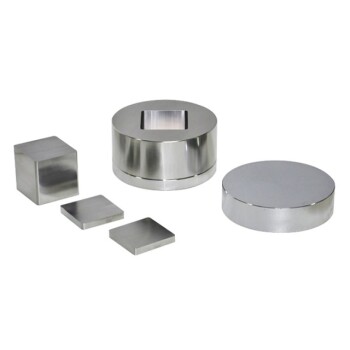
The pressed pellet method stands out for its exceptional balance of analytical quality and operational efficiency. It is a preferred technique for XRF sample preparation because it produces high-quality results while remaining a relatively quick and low-cost approach, making it ideal for laboratories that require high-throughput automation.
Core Takeaway While loose powders are faster and fusion beads offer ultimate precision, pressed pellets occupy the "sweet spot" for most industrial laboratories. They provide a solid, homogeneous sample that significantly reduces analytical error compared to loose powders, all without the high cost or time consumption of more complex methods.
Improving Data Quality
Achieving Homogeneity
The primary technical advantage of a pressed pellet is the creation of a solid, uniform sample. By grinding the material to a fine powder (ideally smaller than 75 micrometers) and mixing it thoroughly with a binder, you eliminate the inconsistencies found in loose powder samples.
Eliminating Signal-Distorting Voids
Loose powders contain air gaps that can scatter X-rays and skew results. Pressed pellets are compressed under high pressure—typically between 20 and 35 tons—for 1 to 2 minutes. This force ensures the binder recrystallizes and the sample is completely compacted, removing void spaces and ensuring reliable data.
Operational Efficiency and Speed
High Throughput Capability
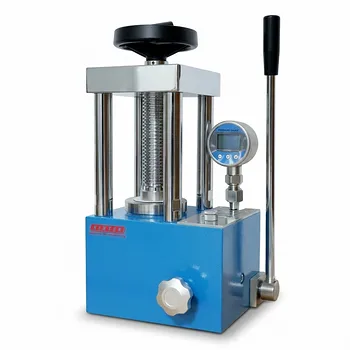
For laboratories analyzing a large volume of samples, the pressed pellet method is superior due to its speed. Modern hydraulic presses significantly accelerate the workflow, particularly in hand-fed systems where switching samples is fast and easy.
Suitability for Automation
The process is mechanically straightforward, making it highly suitable for simple and cost-effective automation. Unlike complex fusion methods that require high heat and delicate handling, pressed pellet preparation can be easily scaled up to handle heavy workloads with minimal manual intervention.
Cost and Versatility
Low Operational Costs
Compared to other rigorous preparation methods, pressed pellets are a low-cost approach. The primary consumables are simple aluminum cups and inexpensive binding agents (typically a cellulose wax mixture used at a 20% to 30% ratio), making the per-sample cost very manageable.
Sample Versatility
Hydraulic presses offer significant operational flexibility. They allow technicians to adjust speeds, forces, and pressures, enabling the preparation of a wide range of different sample types within a single piece of equipment.
Understanding the Trade-offs
While advantageous, the pressed pellet method is not immune to error. To maintain the advantages listed above, you must strictly control specific variables.
Critical Dependence on Particle Size
The quality of the pellet is directly tied to the quality of the grind. If the initial sample is not ground to a sufficiently fine powder (<75 micrometers), the resulting pellet will be inhomogeneous, leading to analytical errors.
Risk of Cross-Contamination
Because the process involves mechanical grinding and pressing, there is a physical risk of sample-to-sample cross-contamination. Equipment must be meticulously cleaned between samples, or the accuracy of the analysis will be compromised.
Making the Right Choice for Your Goal
When deciding if pressed pellets are the right fit for your laboratory, consider your primary objectives:
- If your primary focus is High Throughput: Implement the pressed pellet method with a hydraulic press to maximize speed and enable automation for large sample volumes.
- If your primary focus is Cost Management: Utilize this method to keep consumable costs low while still achieving result quality superior to loose powders.
- If your primary focus is Analytical Precision: Ensure you have a rigorous protocol for grinding particle size and binder mixing, as these are the most common sources of error in this method.
The pressed pellet method remains the standard for laboratories that need to deliver consistent, professional-grade results without sacrificing speed or budget.
Summary Table:
| Feature | Loose Powder | Pressed Pellet | Fusion Bead |
|---|---|---|---|
| Analytical Quality | Low (High Error) | High (Consistent) | Very High (Superior) |
| Preparation Speed | Fast | Moderate | Slow |
| Cost per Sample | Low | Low | High |
| Automation Potential | Low | High | Moderate |
| Primary Benefit | Minimal Prep | Efficiency/Value | Ultimate Precision |
Elevate Your Sample Preparation with KINTEK
Are you looking to enhance the accuracy and throughput of your XRF analysis? KINTEK specializes in providing high-performance laboratory solutions tailored to your specific needs. From our robust crushing and milling systems ensuring sub-75 micron particle size to our precision hydraulic pellet presses (manual, electric, and automatic), we offer the tools necessary to eliminate analytical errors and maximize efficiency.
Whether you require high-throughput automation or cost-effective manual systems, our comprehensive portfolio—including PTFE consumables, ceramic crucibles, and high-temperature furnaces—is designed to support your most demanding research and industrial applications.
Ready to achieve superior sample homogeneity? Contact KINTEK today to discuss how our laboratory equipment can optimize your workflow!
Related Products
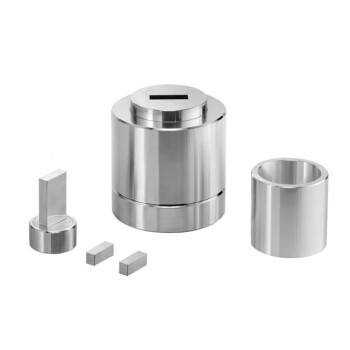
- XRF & KBR steel ring lab Powder Pellet Pressing Mold for FTIR
- XRF Boric Acid Lab Powder Pellet Pressing Mold for Laboratory Use
- XRF & KBR plastic ring lab Powder Pellet Pressing Mold for FTIR
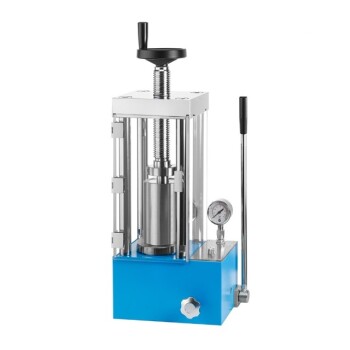
- Laboratory Hydraulic Pellet Press for XRF KBR FTIR Lab Applications
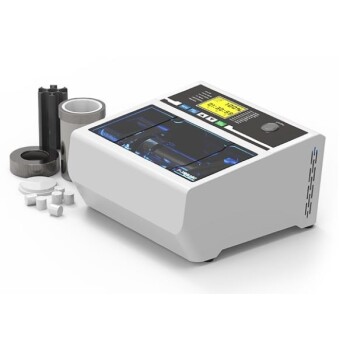
- Automatic Laboratory Hydraulic Press for XRF & KBR Pellet Press
People Also Ask
- What is the purpose of using a mold for pellet pressing when preparing catalyst test samples? Ensure Data Consistency
- What is the pressed powder pellet method? A Guide to Accurate FTIR Sample Preparation
- How does the selection of a pressure mold affect the performance of all-solid-state batteries? Expert Pelletizing Guide
- What are the different types of XRF samples? A Guide to Solid, Powder, and Liquid Prep
- How do you prepare samples for XRF? A Guide to Pressed Pellets, Fused Beads, and Solid Polishing