The primary benefit of a tubular crucible is the promotion of smooth, uniform gas flow around the iron sample. This design ensures that corrosive vapors make thorough contact with all sides of the metal, preventing the uneven exposure often seen in other configurations.
By eliminating stagnant zones in the gas flow, the tubular configuration ensures that critical data points—such as corrosion layer thickness and mass changes—accurately reflect the sample's overall behavior.
The Mechanics of Uniform Exposure
Eliminating Stagnant Zones
The geometry of a tubular crucible is specifically designed to manage aerodynamics within the furnace. By facilitating a smooth path for the vapors, it eliminates stagnant zones where gas might otherwise accumulate or stall.
Ensuring 360-Degree Contact
Standard crucibles may shield parts of a sample, leading to biased results. A tubular design allows the gas to flow freely across all sides of the sample, ensuring the iron surface is exposed uniformly to the corrosive environment.
Improving Data Reliability
Representative Corrosion Layering
For an experiment to be valid, the physical changes on the sample must be consistent. The uniform contact provided by this crucible style ensures that the resulting corrosion layer thickness is uniform and measurable.
Accurate Mass Change Analysis
Mass change is a primary metric for evaluating corrosion severity. Because the tubular design prevents irregular exposure, the recorded mass changes can be trusted to reflect the true corrosion behavior of the material, rather than artifacts of the experimental setup.
Risks of Alternative Geometries
The Impact of irregular Flow
While the reference highlights the benefits of the tubular design, it implicitly warns against geometries that disrupt flow. Using a design that does not prioritize smooth gas flow creates stagnant zones.
Skewed Experimental Data
If the gas flow is not uniform, the data collected regarding the sample's degradation will be flawed. The tubular design is a necessary safeguard to ensure your data represents the material properties, not just the airflow limitations of the furnace.
Making the Right Choice for Your Experiment
To ensure your corrosion data is scientifically valid, align your equipment choice with your specific analytical goals:
- If your primary focus is surface analysis: Choose a tubular crucible to ensure the corrosion layer thickness is uniform across the entire sample surface.
- If your primary focus is quantitative metrics: Rely on this design to ensure mass change data accurately reflects the overall corrosion behavior without flow-induced errors.
The tubular crucible is not just a vessel; it is a critical tool for ensuring the geometric fidelity of your corrosion exposure.
Summary Table:
| Feature | Tubular Crucible Benefit | Impact on Data Accuracy |
|---|---|---|
| Aerodynamics | Eliminates stagnant zones and gas accumulation | Prevents biased results from uneven exposure |
| Gas Contact | Ensures 360-degree contact with iron samples | Guarantees representative corrosion layer thickness |
| Flow Path | Facilitates smooth, uniform vapor flow | Delivers reliable and repeatable mass change metrics |
| Geometry | Prevents shielding of sample surfaces | Reflects true material behavior over airflow artifacts |
Elevate Your Material Research with KINTEK Precision
Don't let irregular airflow compromise your experimental integrity. KINTEK specializes in high-performance laboratory solutions designed for rigorous research environments. Whether you are conducting complex surface analysis in our high-temperature tube or vacuum furnaces or performing quantitative studies with our precision crushing and milling systems, we provide the tools you need for scientific excellence.
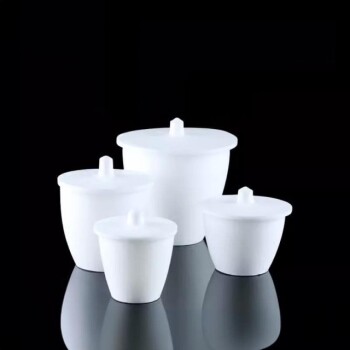
From advanced ceramic crucibles and PTFE products to specialized high-pressure reactors and battery research tools, KINTEK is your partner in achieving 100% data reliability.
Ready to optimize your furnace setup? Contact our technical experts today to find the perfect equipment and consumables for your specific application.
References
- Josh Aller, Paul Gannon. High-Temperature (550–700°C) Chlorosilane Interactions with Iron. DOI: 10.1149/2.0681610jes
This article is also based on technical information from Kintek Solution Knowledge Base .
Related Products
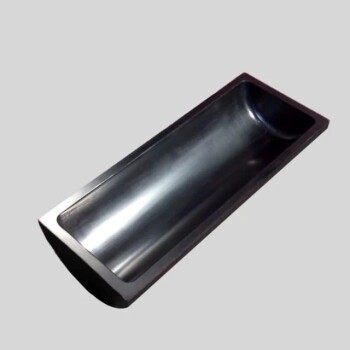
- Carbon Graphite Boat -Laboratory Tube Furnace with Cover
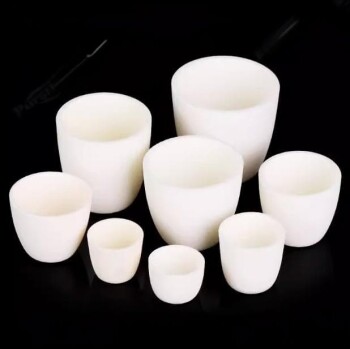
- Engineering Advanced Fine Ceramics Alumina Al2O3 Crucible With Lid Cylindrical Laboratory Crucible
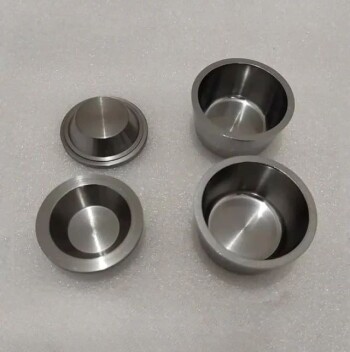
- Electron Beam Evaporation Coating Tungsten Crucible and Molybdenum Crucible for High Temperature Applications
- Arc-Shaped Alumina Ceramic Crucible High Temperature Resistant for Engineering Advanced Fine Ceramics
- Electron Beam Evaporation Coating Gold Plating Tungsten Molybdenum Crucible for Evaporation
People Also Ask
- What is the use of graphite furnace? Achieve Extreme-Temperature Processing for Advanced Materials
- Why is graphite used in furnaces? For Extreme Heat, Purity, and Efficiency
- What core conditions do high-temperature graphite tube furnaces provide during the pressureless sintering of Boron Carbide (B4C)?
- What is the use of graphite tube? Essential for Extreme Heat & Corrosive Environments
- What is the disadvantage of graphite furnace? Managing Reactivity and Contamination Risks