Knowledge What are the functions of a high-purity graphite crucible in the FFC Cambridge process? Optimize Your Alloy Production
Author avatar

Tech Team · Kintek Solution

Updated 19 hours ago

What are the functions of a high-purity graphite crucible in the FFC Cambridge process? Optimize Your Alloy Production


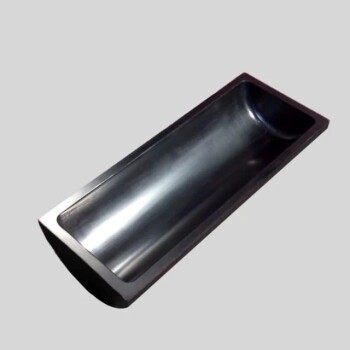
High-purity graphite crucibles serve as the fundamental integration hardware in the FFC Cambridge process, acting simultaneously as the structural vessel and the driving electrical component. Specifically, the crucible functions as a high-temperature container for the molten calcium chloride electrolyte while serving as the anode to conduct current and chemically remove oxygen from the system.

The graphite crucible is not merely a passive vessel; it is an active electrochemical component that sacrifices its own material to ensure the continuous deoxidation of metal precursors into ferrotitanium alloy.

The Dual-Role Architecture

To understand the efficiency of the FFC process, you must view the crucible as a unified system performing two distinct physical and chemical tasks.

Structural Containment

The most immediate function of the crucible is acting as a high-temperature reservoir.

It physically holds the molten calcium chloride (CaCl2) electrolyte, maintaining structural integrity under the intense thermal conditions required for electrolysis.

Using high-purity graphite is essential to prevent impurities from leaching into the molten salt, which could contaminate the final ferrotitanium alloy.

Electrochemical Conductivity

Beyond containment, the crucible acts as the anode for the electrochemical cell.

It conducts the necessary electric current into the molten salt system, completing the circuit with the cathode (where the metal oxide sits).

This conductivity is the mechanism that drives the reduction reaction, forcing oxygen to separate from the titanium and iron oxide precursors.

The Anodic Reaction Mechanism

The "Deep Need" of the process is the efficient removal of oxygen, and this is where the graphite crucible plays its most critical chemical role.

Facilitating Deoxidation

During electrolysis, oxygen ions are stripped from the metal oxides at the cathode and migrate through the molten salt toward the graphite crucible walls.

The crucible participates directly in the anodic reaction, chemically combining with these migrating oxygen ions.

Gas Evolution and Stability

When the carbon in the graphite combines with the oxygen ions, it releases carbon monoxide (CO) or carbon dioxide (CO2) gas.

This gas release is vital because it physically removes the oxygen from the system, preventing it from recombining with the metal.

By permanently extracting oxygen as a gas, the crucible ensures the continuous and stable reduction of the cathode, allowing the successful formation of the ferrotitanium alloy.

Understanding the Trade-offs

While the graphite crucible is efficient, its dual role introduces specific operational constraints that must be managed.

Anodic Consumption

Because the crucible participates in the reaction by converting solid carbon into CO and CO2 gas, the crucible is sacrificial.

Over time, the walls of the crucible will erode as the carbon is consumed by the oxygen removed from the alloy.

This requires careful monitoring of the crucible's structural integrity to prevent failure during the high-temperature process.

Making the Right Choice for Your Goal

The success of your ferrotitanium production depends on balancing the crucible's lifespan with the purity of the alloy.

  • If your primary focus is Alloy Purity: Prioritize the highest grade of graphite available; impurities in the crucible will degrade rapidly into the electrolyte and contaminate the ferrotitanium.
  • If your primary focus is Process Stability: Monitor the rate of carbon dioxide evolution closely, as this indicates both the speed of reduction and the rate at which your crucible is being consumed.

Ultimately, the graphite crucible is the engine of deoxidation, trading its own carbon mass to guarantee the conversion of oxides into pure metal.

Summary Table:

Function Category Role of Graphite Crucible Impact on FFC Process
Structural High-temperature reservoir for CaCl2 Ensures containment and prevents salt contamination.
Electrical Primary Anode Conducts current to drive the reduction of metal oxides.
Chemical Oxygen scavenger (Sacrificial) Combines with oxygen to form CO/CO2 gas, removing it from the alloy.
Purity Control Low-impurity material source Prevents leaching of trace elements into the ferrotitanium alloy.

Elevate Your Material Purity with KINTEK

Precision in the FFC Cambridge process starts with the integrity of your hardware. KINTEK specializes in high-purity graphite crucibles and advanced laboratory systems designed to withstand the rigors of electrochemical deoxidation.

Whether you are refining ferrotitanium or developing next-generation alloys, our portfolio—including high-temperature furnaces, high-pressure reactors, and specialized ceramics—provides the reliability your research demands.

Ready to optimize your production efficiency? Contact our technical experts today to find the perfect high-purity consumables and thermal solutions for your lab.

References

  1. Mrutyunjay Panigrahi, Takashi Nakamura. An Overview of Production of Titanium and an Attempt to Titanium Production with Ferro-Titanium. DOI: 10.1515/htmp.2010.29.5-6.495

This article is also based on technical information from Kintek Solution Knowledge Base .

Related Products

People Also Ask

Related Products

Custom Machined and Molded PTFE Teflon Parts Manufacturer with PTFE Crucible and Lid

Custom Machined and Molded PTFE Teflon Parts Manufacturer with PTFE Crucible and Lid

PTFE crucibles, made from pure Teflon, offer chemical inertness and resistance from -196°C to 280°C, ensuring compatibility with a wide range of temperatures and chemicals. These crucibles feature machine-finished surfaces for easy cleaning and prevention of contamination, making them ideal for precise laboratory applications.

Engineering Advanced Fine Alumina Al2O3 Ceramic Crucible for Laboratory Muffle Furnace

Engineering Advanced Fine Alumina Al2O3 Ceramic Crucible for Laboratory Muffle Furnace

Alumina ceramic crucibles are used in some materials and metal melting tools, and flat-bottomed crucibles are suitable for melting and processing larger batches of materials with better stability and uniformity.

Engineering Advanced Fine Ceramics Alumina Crucibles (Al2O3) for Thermal Analysis TGA DTA

Engineering Advanced Fine Ceramics Alumina Crucibles (Al2O3) for Thermal Analysis TGA DTA

TGA/DTA thermal analysis vessels are made of aluminum oxide (corundum or aluminum oxide). It can withstand high temperature and is suitable for analyzing materials that require high temperature testing.

Alumina Al2O3 Ceramic Crucible Semicircle Boat with Lid for Engineering Advanced Fine Ceramics

Alumina Al2O3 Ceramic Crucible Semicircle Boat with Lid for Engineering Advanced Fine Ceramics

Crucibles are containers widely used for melting and processing various materials, and semicircular boat-shaped crucibles are suitable for special smelting and processing requirements. Their types and uses vary by material and shape.

Evaporation Crucible for Organic Matter

Evaporation Crucible for Organic Matter

An evaporation crucible for organic matter, referred to as an evaporation crucible, is a container for evaporating organic solvents in a laboratory environment.

Electron Beam Evaporation Coating Tungsten Crucible and Molybdenum Crucible for High Temperature Applications

Electron Beam Evaporation Coating Tungsten Crucible and Molybdenum Crucible for High Temperature Applications

Tungsten and molybdenum crucibles are commonly used in electron beam evaporation processes due to their excellent thermal and mechanical properties.

Electron Beam Evaporation Coating Gold Plating Tungsten Molybdenum Crucible for Evaporation

Electron Beam Evaporation Coating Gold Plating Tungsten Molybdenum Crucible for Evaporation

These crucibles act as containers for the gold material evaporated by the electron evaporation beam while precisely directing the electron beam for precise deposition.

Arc-Shaped Alumina Ceramic Crucible High Temperature Resistant for Engineering Advanced Fine Ceramics

Arc-Shaped Alumina Ceramic Crucible High Temperature Resistant for Engineering Advanced Fine Ceramics

In the journey of scientific exploration and industrial production, every detail is crucial. Our arc-shaped alumina ceramic crucibles, with their excellent high temperature resistance and stable chemical properties, have become a powerful assistant in laboratories and industrial fields. They are made of high-purity alumina materials and manufactured through precision processes to ensure excellent performance in extreme environments.

High Temperature Muffle Oven Furnace for Laboratory Debinding and Pre Sintering

High Temperature Muffle Oven Furnace for Laboratory Debinding and Pre Sintering

KT-MD High temperature debinding and pre-sintering furnace for ceramic materials with various molding processes. Ideal for electronic components such as MLCC and NFC.

1200℃ Muffle Furnace Oven for Laboratory

1200℃ Muffle Furnace Oven for Laboratory

Upgrade your lab with our 1200℃ Muffle Furnace. Achieve fast, precise heating with Japan alumina fibers and Molybdenum coils. Features TFT touch screen controller for easy programming and data analysis. Order now!

Electron Beam Evaporation Coating Oxygen-Free Copper Crucible and Evaporation Boat

Electron Beam Evaporation Coating Oxygen-Free Copper Crucible and Evaporation Boat

Electron Beam Evaporation Coating Oxygen-Free Copper Crucible enables precise co-deposition of various materials. Its controlled temperature and water-cooled design ensure pure and efficient thin film deposition.

Vertical Laboratory Tube Furnace

Vertical Laboratory Tube Furnace

Elevate your experiments with our Vertical Tube Furnace. Versatile design allows for operation under various environments and heat treatment applications. Order now for precise results!

Electron Beam Evaporation Coating Conductive Boron Nitride Crucible BN Crucible

Electron Beam Evaporation Coating Conductive Boron Nitride Crucible BN Crucible

High-purity and smooth conductive boron nitride crucible for electron beam evaporation coating, with high temperature and thermal cycling performance.

Boron Nitride (BN) Crucible for Phosphorous Powder Sintered

Boron Nitride (BN) Crucible for Phosphorous Powder Sintered

Phosphorus powder sintered boron nitride (BN) crucible has a smooth surface, dense, pollution-free and long service life.

Vacuum Heat Treat and Pressure Sintering Furnace for High Temperature Applications

Vacuum Heat Treat and Pressure Sintering Furnace for High Temperature Applications

Vacuum pressure sintering furnaces are designed for high temperature hot pressing applications in metal and ceramic sintering. Its advanced features ensure precise temperature control, reliable pressure maintenance, and a robust design for seamless operation.

Dental Porcelain Zirconia Sintering Ceramic Furnace Chairside with Transformer

Dental Porcelain Zirconia Sintering Ceramic Furnace Chairside with Transformer

Experience top-notch sintering with Chairside Sintering Furnace with Transformer. Easy to operate, noise-free pallet, and automatic temperature calibration. Order now!

Glassy Carbon Sheet RVC for Electrochemical Experiments

Glassy Carbon Sheet RVC for Electrochemical Experiments

Discover our Glassy Carbon Sheet - RVC. Perfect for your experiments, this high-quality material will elevate your research to the next level.

Platinum Sheet Electrode for Laboratory and Industrial Applications

Platinum Sheet Electrode for Laboratory and Industrial Applications

Elevate your experiments with our Platinum Sheet Electrode. Crafted with quality materials, our safe and durable models can be tailored to fit your needs.

Laboratory Scientific Electric Heating Blast Drying Oven

Laboratory Scientific Electric Heating Blast Drying Oven

The desktop fast autoclave sterilizer is a compact and reliable device used for rapid sterilization of medical, pharmaceutical, and research items.

58L Precision Laboratory Ultra Low Temperature Upright Freezer for Critical Sample Storage

58L Precision Laboratory Ultra Low Temperature Upright Freezer for Critical Sample Storage

Ultra-low temperature freezer for labs, reliable -86°C storage, stainless steel interior, energy-efficient. Secure your samples now!


Leave Your Message