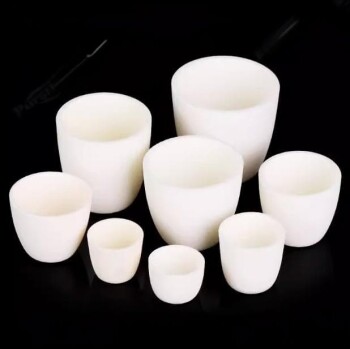
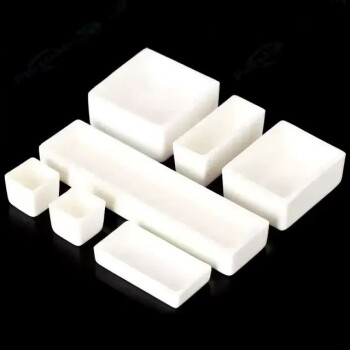
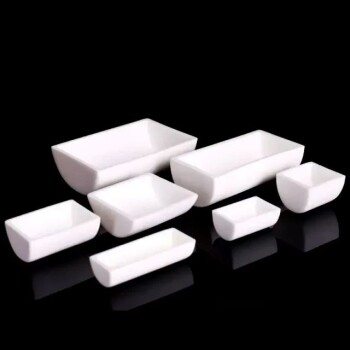
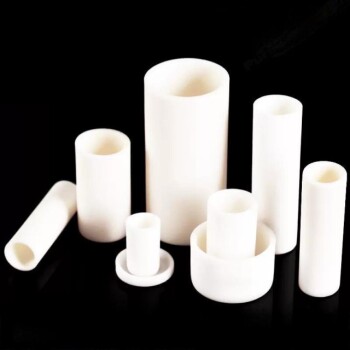
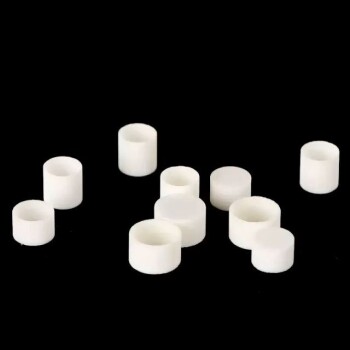
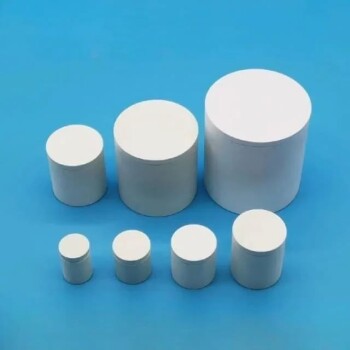
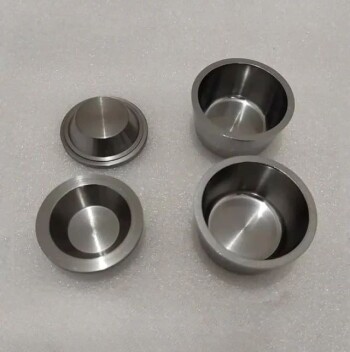
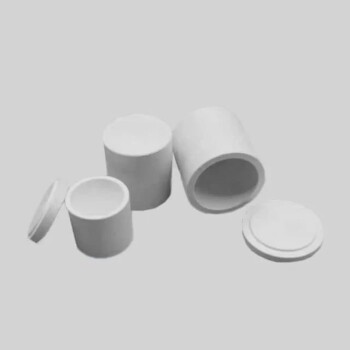
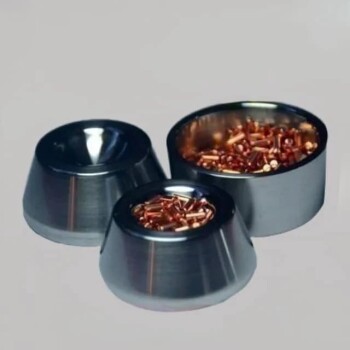
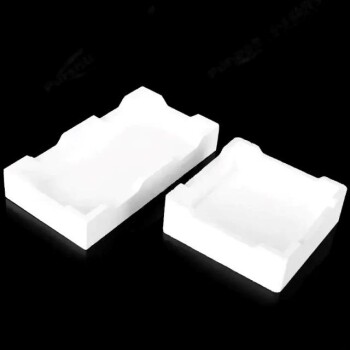
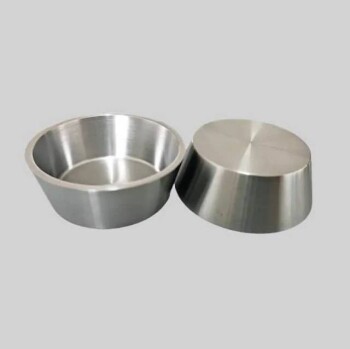
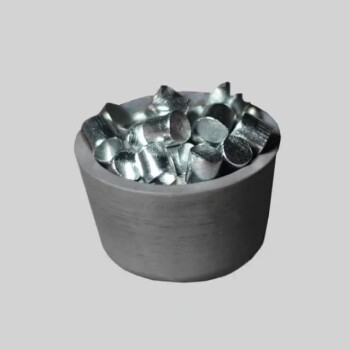
High-purity ceramic crucibles function as a strictly inert barrier, protecting the chemical integrity of your reactants during high-temperature synthesis. By resisting interaction with aggressive components like lanthanides or alkaline earth metals at temperatures exceeding 1000°C, they ensure the final perovskite powder retains the precise stoichiometry required for high electrical conductivity.
The primary value of a high-purity crucible lies in its refusal to participate in the reaction. It guarantees that the resulting material's properties derive solely from your formulation rather than container contamination, a requirement for validating theoretical models.
Preserving Chemical Integrity
To synthesize high-quality perovskite powders, you must maintain an exact atomic ratio between cations. High-purity ceramics are essential for achieving this control.
Preventing Cross-Contamination
Perovskite precursors often contain reactive elements, such as lanthanides or alkaline earth metals. Standard crucibles may leach impurities or react with these components.
High-purity alumina crucibles offer exceptional chemical inertness. They prevent the container material from diffusing into the powder, ensuring the final product remains chemically pure.
Maintaining Precise Stoichiometry
When a crucible reacts with the raw materials, it alters the intended chemical composition. This deviation shifts the stoichiometric ratio of the final product.
By utilizing high-purity ceramics, you prevent the loss of active ingredients to the container walls. This ensures the synthesized powder matches your theoretical calculations exactly.
Thermal and Physical Stability
The solid-state synthesis of perovskites requires aggressive heating profiles. The physical robustness of the crucible is a critical factor in process safety and success.
Withstanding Extreme Temperatures
Calcination processes for perovskites frequently exceed 1000°C. Low-grade materials may soften, deform, or outgas at these temperatures.
High-purity ceramic crucibles possess the thermal stability necessary to maintain structural integrity under these extreme conditions. They provide a stable vessel that will not introduce physical contaminants due to material degradation.
Protecting Furnace Equipment
Beyond protecting the sample, the crucible must contain the reaction safely. High-purity ceramics are dense and non-porous.
This density prevents acidic or strongly oxidizing components from penetrating the crucible wall. This containment is vital for preventing damage to sensitive furnace heating elements and linings.
Impact on Material Performance
The choice of crucible directly influences the functional properties of the synthesized material.
Eliminating Impurity Phases
Even trace amounts of contamination can induce the formation of secondary impurity phases. These phases can act as defects that disrupt the crystal lattice.
High-purity vessels ensure the material remains free of these "parasitic" phases. This is critical for applications relying on precise physical phenomena, such as electrical conductivity or magnetic susceptibility.
Validating Predictive Models
In advanced research, experimental data is often used to verify computational predictions.
If the sample is contaminated, the resulting data reflects the impurities, not the intrinsic material. High-purity synthesis provides the clean baseline data necessary to validate predictive models accurately.
Understanding the Trade-offs
While high-purity ceramics are superior for data quality, they come with specific operational considerations.
Thermal Shock Sensitivity
High-purity ceramics, particularly dense alumina, can be susceptible to thermal shock. Rapid heating or cooling rates can cause the crucible to crack or shatter.
Cost and Handling
These crucibles represent a higher consumable cost compared to standard labware. They require careful handling and cleaning protocols to prevent scratching the smooth inner surface, which could create nucleation sites for future contamination.
Making the Right Choice for Your Goal
Selecting the correct crucible depends on the specific requirements of your synthesis and the sensitivity of your characterization methods.
- If your primary focus is fundamental research: Use high-purity alumina to ensure that any measured physical properties, such as conductivity, are intrinsic to the material and not artifacts of contamination.
- If your primary focus is process safety: Prioritize high-purity, dense ceramics to contain volatile or corrosive precursors and protect your furnace equipment from damage.
Ultimately, the crucible is not just a container; it is a critical variable that dictates the purity and validity of your scientific results.
Summary Table:
| Technical Feature | Benefit for Perovskite Synthesis | Impact on Material Performance |
|---|---|---|
| Chemical Inertness | Prevents leaching of alumina or impurities | Maintains precise atomic stoichiometry |
| Thermal Stability | Resists deformation above 1000°C | Ensures structural integrity during calcination |
| High Density | Prevents penetration of reactive precursors | Protects furnace heating elements and linings |
| Phase Purity | Eliminates secondary "parasitic" phases | Optimizes electrical and magnetic properties |
| Surface Smoothness | Facilitates sample recovery and cleaning | Minimizes cross-batch contamination |
Elevate Your Synthesis Precision with KINTEK
Don't let container contamination compromise your research data. KINTEK specializes in premium laboratory equipment designed for the most demanding thermal processes. We provide high-purity ceramic crucibles, muffle furnaces, and advanced crushing systems tailored for material scientists and battery researchers.
Whether you are synthesizing high-performance perovskites or conducting complex solid-state reactions, our high-temperature solutions ensure the integrity of your results. Contact KINTEK today to discover how our high-purity consumables and precision furnaces can optimize your laboratory’s workflow and protect your critical equipment.
References
- Pikee Priya, N. R. Aluru. Accelerated design and discovery of perovskites with high conductivity for energy applications through machine learning. DOI: 10.1038/s41524-021-00551-3
This article is also based on technical information from Kintek Solution Knowledge Base .
Related Products
- High Purity Pure Graphite Crucible for Evaporation
- High Purity Pure Graphite Crucible for Electron Beam Evaporation
- Arc-Shaped Alumina Ceramic Crucible High Temperature Resistant for Engineering Advanced Fine Ceramics
- Engineering Advanced Fine Alumina Al2O3 Ceramic Crucible for Laboratory Muffle Furnace
- Alumina Al2O3 Ceramic Crucible Semicircle Boat with Lid for Engineering Advanced Fine Ceramics
People Also Ask
- Why are high-purity graphite crucibles preferred for sulfide solid electrolytes? Achieve Superior Material Purity
- Why is a high-purity graphite crucible required for Chromel-TaC composites? Ensure Peak Purity at 1400°C
- What role do high-purity graphite crucibles play in molten salt corrosion research? Ensure Reactor-Grade Precision
- Why are high-purity graphite crucibles used for magnesium distillation? Ensure 3N8 Purity & Thermal Stability
- Why is a high-purity graphite crucible ideal for nitrogen-doped graphene at 1500 °C? Maximize Purity and Stability