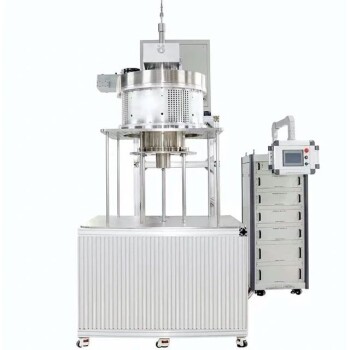
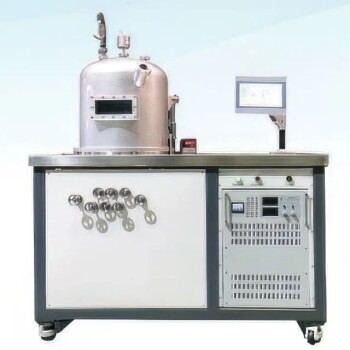
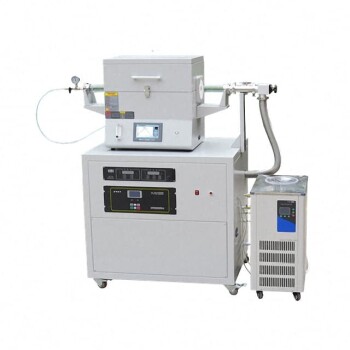
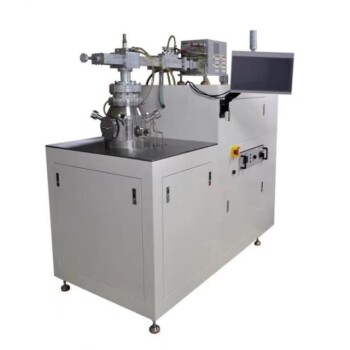
The main reaction chamber of an industrial Chemical Vapor Deposition (CVD) system establishes a precise, high-energy environment defined by extreme heat and low pressure. Specifically, the chamber maintains a high-temperature setting of approximately 1050°C combined with low pressure to facilitate the thermal activation required for gaseous precursors to deposit onto superalloy substrates.
The core function of the main chamber is to create a thermodynamically active zone where carrier gases and precursors can flow efficiently. This controlled environment allows for the precise management of coating thickness and elemental uniformity.
The Critical Environmental Parameters
High-Temperature Thermal Activation
The most defining characteristic of the main reaction chamber is its intense thermal environment. By sustaining temperatures around 1050°C, the system ensures that gaseous precursors possess the necessary energy to undergo thermal activation.
This activation energy is the catalyst for the chemical reaction at the substrate surface. Without this specific thermal threshold, the deposition process would fail to bond effectively with the superalloy components.
Controlled Low-Pressure Atmosphere
In addition to heat, the chamber operates under low-pressure conditions. This vacuum-like environment reduces the density of gas molecules, allowing for a more controlled mean free path for the reactants.
Low pressure is essential for ensuring that the reaction is driven by surface kinetics rather than gas-phase collisions. This results in a cleaner, more adherent coating structure.
Gas Flow and Deposition Control
Regulating Carrier Gases
The environment is further defined by the precise regulation of carrier gases, primarily hydrogen (H2) and argon (Ar). These gases transport the active chemical precursors through the chamber.
By manipulating the flow rates of these carrier gases, operators can influence the concentration and velocity of the reactants. This is the primary lever for controlling how the coating builds up on the part.
Managing Coating Characteristics
The interaction between the chamber's environment and the gas flow directly dictates the physical properties of the final coating. Through strict control of deposition time and gas distribution, the system typically targets a total coating thickness of around 50 micrometers.
Furthermore, the chamber's conditions enable the uniform distribution of modifying elements, such as zirconium (Zr). This uniformity is critical for the performance and longevity of the coated part.
Understanding the Trade-offs
Temperature vs. Substrate Integrity
While high temperature (1050°C) is necessary for deposition, it acts as a stressor on the substrate. The process relies on the superalloy's ability to withstand this heat without degrading its microstructural properties.
Deposition Rate vs. Uniformity
There is often a tension between the speed of deposition and the uniformity of the coating. Increasing gas flow to speed up the process can inadvertently lead to uneven distribution of elements like zirconium.
Precise calibration is required to balance the need for a 50-micrometer thickness with the requirement for chemical homogeneity. If the process is rushed, the modifying elements may not disperse evenly, compromising the protective qualities of the layer.
Making the Right Choice for Your Process
Optimizing an industrial CVD process requires balancing thermodynamic energy with precise timing. Here is how to prioritize your parameters based on your specific requirements:
- If your primary focus is Dimensional Accuracy: Strictly regulate the deposition time to hit the 50-micrometer target without overshooting, as thickness is a function of time and rate.
- If your primary focus is Elemental Homogeneity: Prioritize the precise flow regulation of carrier gases (H2 and Ar) to ensure modifying elements like zirconium are evenly distributed across the substrate.
Success in CVD lies in the rigorous maintenance of the 1050°C low-pressure environment to ensure consistent thermal activation.
Summary Table:
| Parameter | Standard Condition | Function in CVD Process |
|---|---|---|
| Temperature | ~1050°C | Facilitates thermal activation for precursor bonding |
| Pressure | Low Pressure | Ensures surface kinetics & cleaner, adherent structures |
| Carrier Gases | Hydrogen (H2) & Argon (Ar) | Transports precursors & controls reactant velocity |
| Modifying Elements | Zirconium (Zr) | Enhances coating durability via uniform distribution |
| Target Thickness | ~50 Micrometers | Provides optimal protection for superalloy substrates |
Elevate Your Material Performance with KINTEK Precision
Unlock the full potential of your coating processes with KINTEK’s advanced industrial solutions. Whether you require high-precision CVD and PECVD systems, robust high-temperature furnaces, or specialized crushing and milling equipment, our technology is engineered to maintain the rigorous 1050°C environments your research demands.
From high-pressure reactors to PTFE consumables and ceramic crucibles, we provide the comprehensive tools needed for elemental homogeneity and dimensional accuracy.
Ready to optimize your lab's efficiency? Contact our experts today to discover how KINTEK can provide the exact thermal and vacuum solutions tailored to your superalloy and battery research needs.
References
- Maciej Pytel, Р. Філіп. Structure of Pd-Zr and Pt-Zr modified aluminide coatings deposited by a CVD method on nickel superalloys. DOI: 10.4149/km_2019_5_343
This article is also based on technical information from Kintek Solution Knowledge Base .
Related Products
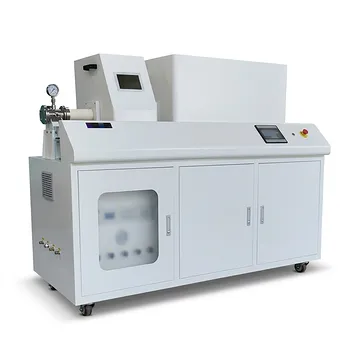
- Chemical Vapor Deposition CVD Equipment System Chamber Slide PECVD Tube Furnace with Liquid Gasifier PECVD Machine
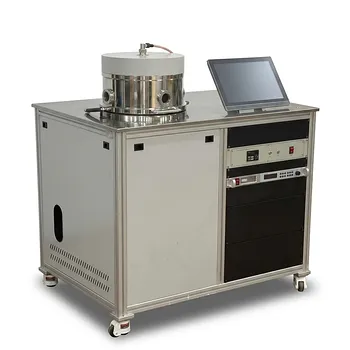
- Microwave Plasma Chemical Vapor Deposition MPCVD Machine System Reactor for Lab and Diamond Growth
- 915MHz MPCVD Diamond Machine Microwave Plasma Chemical Vapor Deposition System Reactor
- Customer Made Versatile CVD Tube Furnace Chemical Vapor Deposition Chamber System Equipment
- HFCVD Machine System Equipment for Drawing Die Nano-Diamond Coating
People Also Ask
- What are the advantages of chemical vapor deposition? Achieve Superior Thin Films for Your Lab
- What types of substrates are used in CVD to facilitate graphene films? Optimize Graphene Growth with the Right Catalyst
- What is the chemical vapor deposition growth process? Build Superior Thin Films from the Atom Up
- How expensive is chemical vapor deposition? Understanding the True Cost of High-Performance Coating
- Why is Chemical Vapor Deposition (CVD) equipment uniquely suited for constructing hierarchical superhydrophobic structures?