Knowledge muffle furnace What is a furnace used in a chemistry lab? A Guide to High-Temperature Material Transformation
Author avatar

Tech Team · Kintek Solution

Updated 2 months ago

What is a furnace used in a chemistry lab? A Guide to High-Temperature Material Transformation


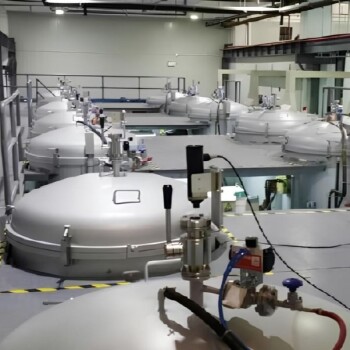
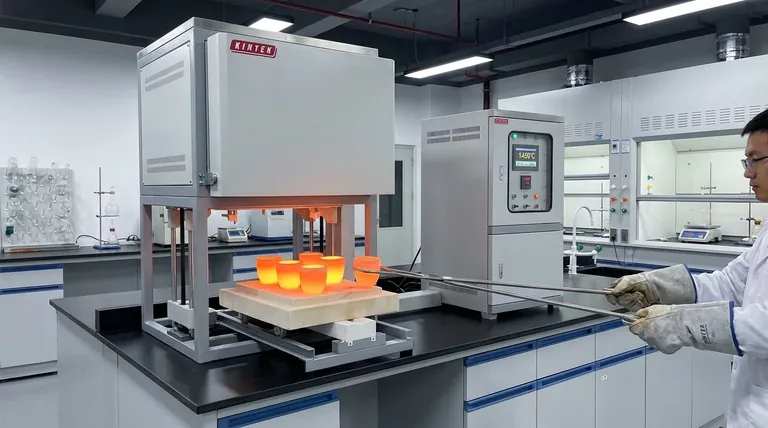
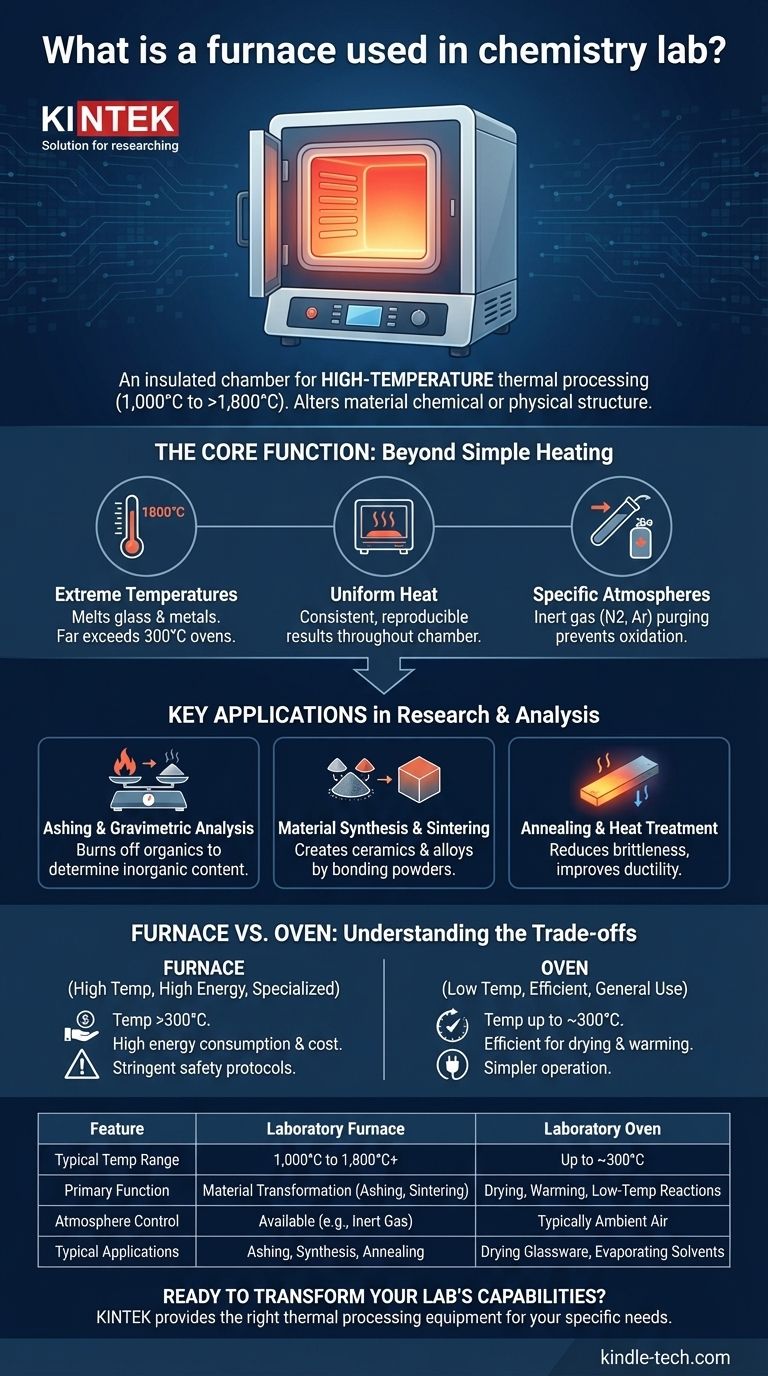
In a chemistry laboratory, a furnace is an insulated chamber designed for high-temperature thermal processing. Unlike a standard lab oven, which typically operates up to 300°C, a furnace can reach temperatures from 1,000°C to over 1,800°C. This capability allows for processes that fundamentally alter a material's chemical or physical structure, such as ashing, heat treatment, or synthesis.

A laboratory furnace should not be seen as just a more powerful oven. It is a precision instrument for controlled, extreme heat treatment, essential for tasks where the goal is to induce a fundamental change in the material itself, not just to dry or warm it.
What is a furnace used in a chemistry lab? A Guide to High-Temperature Material Transformation

The Core Function: Beyond Simple Heating

The primary role of a laboratory furnace is to provide a tightly controlled, high-temperature environment. This capability is critical for applications that are impossible to perform in standard ovens or with open-flame burners.

Reaching Extreme Temperatures

The defining feature of a furnace is its temperature range. Most lab ovens are limited to around 300°C (approx. 570°F), which is sufficient for drying glassware or removing moisture from samples.

Furnaces, by contrast, start where ovens leave off. They routinely operate at temperatures that can melt glass and metals, enabling a different class of chemical and physical transformations.

Ensuring Temperature Uniformity

A high-quality furnace provides uniform heat throughout its chamber. This ensures that an entire sample or batch of samples is exposed to the exact same thermal conditions, leading to consistent, reproducible results.

Creating Specific Atmospheres

Many chemical processes at high temperatures are sensitive to oxygen. Advanced furnaces, particularly tube furnaces, allow for the internal atmosphere to be purged and replaced with an inert gas like nitrogen or argon, preventing oxidation and unwanted side reactions.

Key Applications in Research and Analysis

Furnaces are not used for everyday tasks but are reserved for specific, high-impact procedures.

Ashing and Gravimetric Analysis

One of the most common uses is ashing. A sample is heated to a high temperature (e.g., 500-900°C) to completely burn off all organic matter. The remaining inorganic residue, or ash, can then be weighed to determine the inorganic content of the original sample.

Material Synthesis and Sintering

Furnaces are central to materials science. They are used to create ceramics, alloys, and other advanced materials by heating precursor powders to the point where they bond together, a process known as sintering.

Annealing and Heat Treatment

In metallurgy and glassworking, annealing involves heating a material to a specific temperature and then carefully cooling it. This process can reduce brittleness, remove internal stresses, and improve a material's ductility and toughness.

Understanding the Trade-offs: Furnace vs. Oven

Choosing between a furnace and an oven depends entirely on the required temperature and the nature of the process. Understanding their differences is key to proper lab procedure.

Temperature is the Deciding Factor

The single biggest differentiator is the operating temperature range. If your process requires temperatures above 300°C, a furnace is your only option. For simple drying or low-temperature heating, a furnace is inefficient and unnecessary.

Energy Consumption and Cost

Furnaces require immense amounts of energy to reach and maintain their target temperatures. They are significantly more expensive to purchase and operate than laboratory ovens due to their specialized heating elements and heavy-duty insulation.

Safety and Operational Complexity

Operating a furnace requires more stringent safety protocols. The extreme temperatures pose a significant burn and fire risk. Modern furnaces incorporate sophisticated safety interlocks and self-diagnostic features—such as overheat prevention, sensor error detection, and heater disconnection—to mitigate these dangers and ensure mechanical stability.

Making the Right Choice for Your Goal

Selecting the correct thermal processing tool is fundamental to achieving valid scientific results safely and efficiently. Use the specific requirements of your procedure as your guide.

  • If your primary focus is drying samples or low-temperature reactions below 300°C: A standard laboratory oven is the more efficient, cost-effective, and appropriate tool.
  • If your primary focus is determining inorganic content (ashing) or heat-treating metals: A muffle furnace, which can reliably reach 900-1200°C, is the required instrument.
  • If your primary focus is creating new materials or running reactions in an oxygen-free environment: You need a specialized tube furnace that allows for precise atmospheric control.

Ultimately, your choice depends on whether you need to simply heat a sample or fundamentally transform it.

Summary Table:

Feature Laboratory Furnace Laboratory Oven
Typical Temperature Range 1,000°C to 1,800°C+ Up to ~300°C
Primary Function Fundamental material transformation (e.g., ashing, sintering) Drying, warming, low-temperature reactions
Atmosphere Control Available (e.g., inert gas in tube furnaces) Typically ambient air
Typical Applications Ashing, gravimetric analysis, material synthesis, annealing Drying glassware, evaporating solvents, incubation

Ready to transform your lab's capabilities?

Whether your research requires precise ashing, high-temperature material synthesis, or controlled atmosphere heat treatment, KINTEK's range of laboratory furnaces is engineered for accuracy, safety, and reproducibility.

We specialize in providing the right thermal processing equipment for your specific laboratory needs.

Contact our experts today to find the perfect furnace solution for your application.

Visual Guide
What is a furnace used in a chemistry lab? A Guide to High-Temperature Material Transformation Visual Guide

Related Products

People Also Ask

Related Products

Graphite Vacuum Furnace High Thermal Conductivity Film Graphitization Furnace

Graphite Vacuum Furnace High Thermal Conductivity Film Graphitization Furnace

The high thermal conductivity film graphitization furnace has uniform temperature, low energy consumption and can operate continuously.

Rotary Tube Furnace Split Multi Heating Zone Rotating Tube Furnace

Rotary Tube Furnace Split Multi Heating Zone Rotating Tube Furnace

Multi zone rotary furnace for high-precision temperature control with 2-8 independent heating zones. Ideal for lithium ion battery electrode materials and high-temperature reactions. Can work under vacuum and controlled atmosphere.

High Temperature Muffle Oven Furnace for Laboratory Debinding and Pre Sintering

High Temperature Muffle Oven Furnace for Laboratory Debinding and Pre Sintering

KT-MD High temperature debinding and pre-sintering furnace for ceramic materials with various molding processes. Ideal for electronic components such as MLCC and NFC.

1700℃ Controlled Atmosphere Furnace Nitrogen Inert Atmosphere Furnace

1700℃ Controlled Atmosphere Furnace Nitrogen Inert Atmosphere Furnace

KT-17A Controlled atmosphere furnace: 1700℃ heating, vacuum sealing technology, PID temperature control, and versatile TFT smart touch screen controller for laboratory and industrial use.

1400℃ Controlled Atmosphere Furnace with Nitrogen and Inert Atmosphere

1400℃ Controlled Atmosphere Furnace with Nitrogen and Inert Atmosphere

Achieve precise heat treatment with KT-14A controlled atmosphere furnace. Vacuum sealed with a smart controller, it's ideal for lab and industrial use up to 1400℃.

1200℃ Split Tube Furnace with Quartz Tube Laboratory Tubular Furnace

1200℃ Split Tube Furnace with Quartz Tube Laboratory Tubular Furnace

KT-TF12 split tube furnace: high-purity insulation, embedded heating wire coils, and max. 1200C. Widely used for new materials and chemical vapour deposition.

Vertical High Temperature Graphite Vacuum Graphitization Furnace

Vertical High Temperature Graphite Vacuum Graphitization Furnace

Vertical high temperature graphitization furnace for carbonization and graphitization of carbon materials up to 3100℃.Suitable for shaped graphitization of carbon fiber filaments and other materials sintered in a carbon environment.Applications in metallurgy, electronics, and aerospace for producing high-quality graphite products like electrodes and crucibles.

Controlled Nitrogen Inert Hydrogen Atmosphere Furnace

Controlled Nitrogen Inert Hydrogen Atmosphere Furnace

KT-AH Hydrogen atmosphere furnace - induction gas furnace for sintering/annealing with built-in safety features, dual housing design, and energy-saving efficiency. Ideal for lab and industrial use.

Ultra-High Temperature Graphite Vacuum Graphitization Furnace

Ultra-High Temperature Graphite Vacuum Graphitization Furnace

The ultra-high temperature graphitization furnace utilizes medium frequency induction heating in a vacuum or inert gas environment. The induction coil generates an alternating magnetic field, inducing eddy currents in the graphite crucible, which heats up and radiates heat to the workpiece, bringing it to the desired temperature. This furnace is primarily used for graphitization and sintering of carbon materials, carbon fiber materials, and other composite materials.

Graphite Vacuum Furnace Bottom Discharge Graphitization Furnace for Carbon Materials

Graphite Vacuum Furnace Bottom Discharge Graphitization Furnace for Carbon Materials

Bottom-out graphitization furnace for carbon materials, ultra-high temperature furnace up to 3100°C, suitable for graphitization and sintering of carbon rods and carbon blocks. Vertical design, bottom discharging, convenient feeding and discharging, high temperature uniformity, low energy consumption, good stability, hydraulic lifting system, convenient loading and unloading.

600T Vacuum Induction Hot Press Furnace for Heat Treat and Sintering

600T Vacuum Induction Hot Press Furnace for Heat Treat and Sintering

Discover the 600T Vacuum Induction Hot Press Furnace, designed for high-temperature sintering experiments in vacuum or protected atmospheres. Its precise temperature and pressure control, adjustable working pressure, and advanced safety features make it ideal for nonmetal materials, carbon composites, ceramics, and metal powders.

Laboratory Muffle Oven Furnace Bottom Lifting Muffle Furnace

Laboratory Muffle Oven Furnace Bottom Lifting Muffle Furnace

Efficiently produce batches with excellent temperature uniformity using our Bottom Lifting Furnace. Features two electric lifting stages and advanced temperature control up to 1600℃.

2200 ℃ Graphite Vacuum Heat Treat Furnace

2200 ℃ Graphite Vacuum Heat Treat Furnace

Discover the power of the KT-VG Graphite Vacuum Furnace - with a maximum working temperature of 2200℃, it's perfect for vacuum sintering of various materials. Learn more now.

Horizontal High Temperature Graphite Vacuum Graphitization Furnace

Horizontal High Temperature Graphite Vacuum Graphitization Furnace

Horizontal Graphitization Furnace: This type of furnace is designed with the heating elements placed horizontally, allowing for uniform heating of the sample. It's well-suited for graphitizing large or bulky samples that require precise temperature control and uniformity.

Vacuum Heat Treat and Pressure Sintering Furnace for High Temperature Applications

Vacuum Heat Treat and Pressure Sintering Furnace for High Temperature Applications

Vacuum pressure sintering furnaces are designed for high temperature hot pressing applications in metal and ceramic sintering. Its advanced features ensure precise temperature control, reliable pressure maintenance, and a robust design for seamless operation.

Vacuum Sealed Continuous Working Rotary Tube Furnace Rotating Tube Furnace

Vacuum Sealed Continuous Working Rotary Tube Furnace Rotating Tube Furnace

Experience efficient material processing with our vacuum-sealed rotary tube furnace. Perfect for experiments or industrial production, equipped with optional features for controlled feeding and optimized results. Order now.

Molybdenum Vacuum Heat Treat Furnace

Molybdenum Vacuum Heat Treat Furnace

Discover the benefits of a high-configuration molybdenum vacuum furnace with heat shield insulation. Ideal for high-purity, vacuum environments like sapphire crystal growth and heat treatment.

Vacuum Hot Press Furnace Machine Heated Vacuum Press

Vacuum Hot Press Furnace Machine Heated Vacuum Press

Discover the advantages of Vacuum Hot Press Furnace! Manufacture dense refractory metals & compounds, ceramics, and composites under high temp and pressure.

Vacuum Heat Treat and Molybdenum Wire Sintering Furnace for Vacuum Sintering

Vacuum Heat Treat and Molybdenum Wire Sintering Furnace for Vacuum Sintering

A vacuum molybdenum wire sintering furnace is a vertical or bedroom structure, which is suitable for withdrawal, brazing, sintering and degassing of metal materials under high vacuum and high temperature conditions. It is also suitable for dehydroxylation treatment of quartz materials.

Laboratory Rapid Thermal Processing (RTP) Quartz Tube Furnace

Laboratory Rapid Thermal Processing (RTP) Quartz Tube Furnace

Get lightning-fast heating with our RTP Rapid Heating Tube Furnace. Designed for precise, high-speed heating and cooling with convenient sliding rail and TFT touch screen controller. Order now for ideal thermal processing!


Leave Your Message