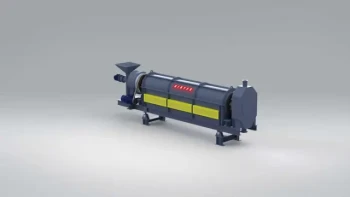
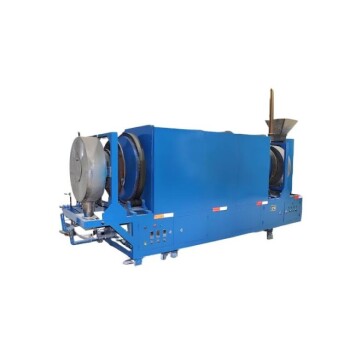
An indirect arc furnace is a type of electric furnace where the material is heated without being part of the electrical circuit. The electric arc is generated between two electrodes positioned above the material, and the intense heat is transferred to the substance below primarily through radiation, much like a broiler.
The core distinction of an indirect arc furnace lies in its heating method. Unlike direct arc furnaces that pass a current through the material, this furnace heats radiantly from above, offering a cleaner, more controlled process ideal for specialized applications.
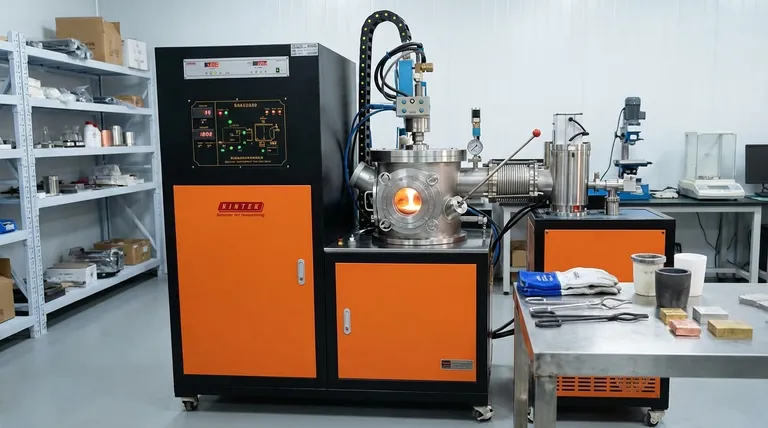
The Core Principle: Heating by Radiation
The operation of an indirect arc furnace is defined by how it generates and transfers thermal energy. Its design prioritizes control and purity over the raw power of other furnace types.
How the Arc is Formed
An intense electric arc is struck in the space between two or more graphite electrodes. These electrodes are typically positioned horizontally, spanning the furnace chamber just above the material (known as the "charge") to be heated.
The electric current flows from one electrode to the other, creating a sustained, high-temperature arc. The material itself never comes into direct contact with this electrical circuit.
The Role of Radiant Heat
The arc can reach temperatures of several thousand degrees. This immense energy radiates outwards, primarily downwards onto the surface of the charge. The furnace roof and walls, lined with refractory materials, reflect additional heat onto the charge, melting it from the top down.
To ensure even heating, many indirect arc furnaces are built in a cylindrical or "rocking" shape. This allows the furnace to be gently agitated or rotated, mixing the molten material and exposing new surfaces to the radiant heat.
How this Affects Material Purity
Because the electric current does not pass through the charge, there is significantly less risk of contamination from the electrodes. This makes the indirect arc process exceptionally clean, which is critical when producing high-purity metals or specific non-ferrous alloys where composition must be precise.
Key Differences: Indirect vs. Direct Arc Furnaces
Understanding the indirect arc furnace requires comparing it to its more common counterpart, the direct arc furnace (DAF).
The Path of Electricity
In an indirect arc furnace, the current path is simply electrode-to-electrode.
In a direct arc furnace, the current flows from the electrode, through the material itself, and out through a conductive hearth at the bottom of the furnace. The material is an active part of the circuit.
Heat Transfer Mechanism
The indirect furnace relies almost exclusively on radiation from the arc to the charge.
The direct furnace uses a combination of radiation from the arc and resistance heating as the massive current passes directly through the metallic charge. This dual-method is what gives it such high power and speed.
Common Applications
Indirect arc furnaces are best suited for smaller, specialized tasks. This includes melting non-ferrous metals like copper, brass, and bronze, as well as producing high-quality alloy steels in foundries or laboratory settings.
Direct arc furnaces are the industry standard for high-volume steel production, particularly for melting down scrap metal. Their scale and efficiency are unmatched for bulk processing.
Understanding the Trade-offs
No single technology is superior in all situations. The choice between furnace types depends entirely on the operational goal, material, and required scale.
Advantage: Temperature Uniformity and Control
The radiant heating method, especially when paired with a rocking mechanism, provides excellent temperature uniformity throughout the molten bath. This leads to a highly consistent final product, justifying its use in scientific and research applications where results must be repeatable.
Disadvantage: Lower Thermal Efficiency
A significant portion of the arc's heat radiates to the furnace roof and walls rather than directly into the charge. This heat loss makes the indirect arc furnace less energy-efficient than a direct arc furnace, where energy is generated within the charge itself.
Disadvantage: Slower Melting Rates
Because heat transfer is less direct, melting times are generally longer compared to a DAF of similar power rating. This limits its use for high-throughput, large-scale production.
Making the Right Choice for Your Goal
Selecting the correct furnace technology is a critical decision based on your specific operational needs for purity, volume, and material type.
- If your primary focus is large-scale steel production from scrap: A direct arc furnace is the correct choice due to its superior speed and thermal efficiency for bulk melting.
- If your primary focus is high-purity, non-ferrous alloys (bronze, brass): An indirect arc furnace offers the necessary control and prevents contamination from the electrodes.
- If your primary focus is research or small-batch foundry work: The stable, uniform heating of an indirect arc furnace makes it the ideal equipment for achieving precise metallurgical properties.
Ultimately, choosing the right tool requires a clear understanding of whether your process prioritizes raw power and efficiency or precision and purity.
Summary Table:
| Feature | Indirect Arc Furnace | Direct Arc Furnace |
|---|---|---|
| Heating Method | Radiant heat from arc above material | Resistance heating + radiation (current through material) |
| Current Path | Electrode to Electrode | Electrode → Material → Hearth |
| Primary Use | High-purity non-ferrous metals, alloys, R&D | Large-scale steel production from scrap |
| Key Advantage | Superior control & material purity | High power & melting speed |
| Key Disadvantage | Lower thermal efficiency, slower melting | Less control, risk of contamination |
Need precise thermal processing for your lab or foundry?
At KINTEK, we specialize in providing high-quality laboratory equipment, including furnaces tailored for controlled melting and alloy production. Our solutions help you achieve the purity and consistency critical for research and specialized manufacturing.
Let's discuss your application. Contact our experts today to find the perfect furnace for your needs.
Visual Guide

Related Products
- Non Consumable Vacuum Arc Induction Melting Furnace
- Vacuum Arc Induction Melting Furnace
- Controlled Nitrogen Inert Hydrogen Atmosphere Furnace
- 1200℃ Controlled Atmosphere Furnace Nitrogen Inert Atmosphere Furnace
- 1700℃ Controlled Atmosphere Furnace Nitrogen Inert Atmosphere Furnace
People Also Ask
- How do vacuum induction or arc melting furnaces facilitate the synthesis of U-Al-C MAX phases? Precision Heat & Purity
- What is the function of a vacuum arc melting furnace? Prepare High-Purity Alx(CrFeNi)1-x High-Entropy Alloys
- What is the temperature range of the induction melting furnace? Find the Right Heat for Your Metals
- What is the primary function of a vacuum arc melting furnace in RHEA preparation? Achieving Extreme Thermal Fusion
- What are the advantages of induction melting furnace? Achieve Purity, Efficiency, and Safety