The high vacuum environment is the decisive factor in achieving optical transparency for Pr3+:CaF2 ceramics. It performs two critical functions simultaneously: it extracts residual gases to prevent physical defects and isolates the material to prevent chemical degradation. Without this controlled environment, the material would fail to achieve the optical quality required for transparent ceramics.
Achieving transparency in ceramics is not just about densification; it is about absolute purity. The high vacuum environment is essential because it eliminates light-scattering centers caused by trapped gas and impurity phases caused by oxidation, ensuring the final material transmits light rather than blocking it.
The Mechanics of Transparency
To understand why high vacuum is non-negotiable, you must look at what happens to the ceramic microstructure during the sintering process.
Eliminating Physical Defects
The primary mechanical function of the vacuum is the removal of residual gases trapped within the ceramic powder compact.
During sintering, the material densifies and pores begin to close. If gases are present during this stage, they become trapped inside the material.
These trapped gases create permanent pores or bubbles. In the context of optics, these bubbles act as scattering centers, deflecting light and causing the ceramic to appear opaque or cloudy.
Preserving Chemical Purity
The second critical function is chemical protection. At the high temperatures required for sintering, the fluoride matrix becomes highly reactive.
The vacuum environment removes oxygen and moisture present in the ambient air.
Without this removal, the fluoride matrix would react with oxygen or water vapor. This reaction leads to the formation of oxide impurity phases. These impurities degrade the crystal structure and significantly lower the optical transmittance of the final product.
Understanding the Risks of Vacuum Failure
While high vacuum is a standard requirement, understanding the specific consequences of a compromised vacuum environment helps in troubleshooting sintering failures.
The Impact on Light Transmission
If the vacuum pressure is not sufficiently low, gas evacuation is incomplete. Even microscopic pockets of residual gas can prevent the material from achieving theoretical density.
The result is a material that may look mechanically sound but fails optically due to internal haze.
The Sensitivity of Fluorides
Fluoride materials are particularly sensitive to moisture and oxygen at high heat. Unlike some oxide ceramics that are sintered in air, Pr3+:CaF2 requires strict environmental control.
A breach in the vacuum integrity leads to immediate contamination. Once oxides form within the fluoride matrix, they cannot be removed, permanently compromising the material's purity.
Making the Right Choice for Your Goal
When configuring your sintering profile for Pr3+:CaF2, prioritize the vacuum level based on your specific quality metrics.
- If your primary focus is Optical Clarity: Prioritize a deep vacuum during the pore closure stage to ensure total gas evacuation and eliminate light-scattering centers.
- If your primary focus is Material Purity: maintain a strict vacuum from the onset of heating to prevent any interaction between the fluoride matrix and atmospheric moisture.
The vacuum is not merely a process variable; it is the active shield that allows a powder compact to transform into a high-grade transparent ceramic.
Summary Table:
| Function | Mechanism | Impact on Quality |
|---|---|---|
| Gas Extraction | Removes trapped residual gases during densification | Eliminates pores and bubbles (scattering centers) |
| Chemical Isolation | Prevents reactions with oxygen and moisture | Stops formation of opaque oxide impurity phases |
| Microstructure Control | Facilitates pore closure at high temperatures | Ensures theoretical density and maximum transmittance |
| Optical Optimization | Maintains high purity of fluoride matrix | Prevents internal haze and ensures material clarity |
Elevate Your Material Purity with KINTEK Precision
Achieving theoretical density and absolute optical transparency in Pr3+:CaF2 ceramics requires uncompromising environmental control. At KINTEK, we specialize in high-performance laboratory equipment designed for the most sensitive sintering processes.
Whether you are developing advanced optics or exploring battery research, our comprehensive range of high-temperature vacuum furnaces, rotary and CVD systems, and precision hydraulic presses provides the reliability your research demands. From high-temperature high-pressure reactors to specialized ceramics and crucibles, we deliver the tools necessary to eliminate scattering centers and prevent oxidation.
Ready to optimize your sintering profile? Contact our experts today to find the perfect vacuum solution for your laboratory.
Related Products
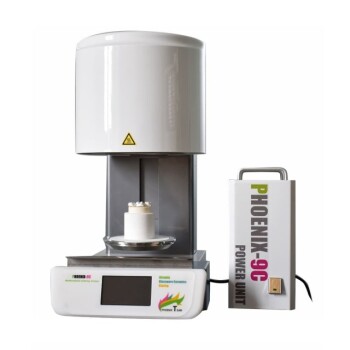
- Vacuum Dental Porcelain Sintering Furnace
- Vacuum Heat Treat and Pressure Sintering Furnace for High Temperature Applications
- Vacuum Heat Treat and Sintering Furnace with 9MPa Air Pressure
- Dental Porcelain Zirconia Sintering Ceramic Vacuum Press Furnace
- 2200 ℃ Tungsten Vacuum Heat Treat and Sintering Furnace
People Also Ask
- What is the primary function of a dental sintering furnace? Transform Zirconia into Durable Crowns & Bridges
- What is sintering dentistry? The Key to Strong, Aesthetic Dental Restorations
- What is sintering process in dentistry? Transform Milled 'Chalk' into Durable Dental Restorations
- What factors are important to consider when choosing a dental sintering furnace? Match Your Workflow for Optimal Results
- What does sintering mean in dentistry? The Essential Process for Strong, Durable Restorations