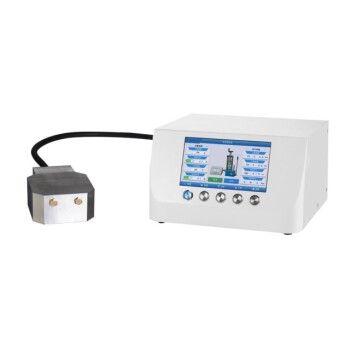
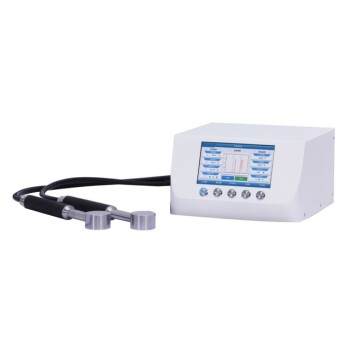
The primary function of a hot plate in this context is to thermally treat the wet film immediately after the solid electrolyte slurry has been cast onto a substrate. It provides a stable, elevated temperature (such as 240°C) to accelerate the evaporation of solvents and effectively cure the binder material. This process is critical for transforming the liquid slurry into a solid, cohesive composite layer capable of high performance.
Casting a slurry is only half the battle; the final quality of the solid electrolyte depends entirely on the drying and curing phase. The hot plate serves as a precision tool to drive off solvents and lock the composite structure in place, directly influencing the material's electrochemical capability.
The Mechanics of Solidification
The transition from a wet slurry to a functional solid electrolyte involves two simultaneous physical processes driven by thermal energy.
Accelerating Solvent Evaporation
The slurry contains a liquid solvent that allows for mixing and coating but serves no purpose in the final product. The hot plate provides the thermal energy required to vaporize this solvent rapidly.
By maintaining a high temperature, the device ensures the solvent is removed efficiently rather than remaining trapped within the layer.
Curing the Binder
Slurries rely on a binder to hold the solid electrolyte particles together. The heat from the hot plate triggers the curing process, essentially hardening this "glue."
This transforms the wet, delicate film into a mechanically robust solid composite that adheres firmly to the substrate.
Optimizing Electrochemical Performance
Beyond simple drying, the hot plate plays a vital role in ensuring the electrolyte actually functions as intended in a battery cell.
Removing Residual Solvents
Any solvent left behind in the film acts as an impurity. These residuals can block ion pathways and degrade the electrochemical performance of the cell.
The hot plate ensures deep drying to remove these traces, thereby optimizing the ionic conductivity of the layer.
Creating a Uniform Layer
Stable heating helps produce a consistent film thickness and density.
By providing a uniform heat source, the hot plate minimizes gradients that could lead to uneven drying or warping of the electrolyte layer.
Critical Considerations and Trade-offs
While necessary, the application of heat via a hot plate introduces specific risks that must be managed to avoid ruining the sample.
The Risk of Thermal Shock
If the temperature is too high or applied too abruptly, the solvent may boil rather than evaporate smoothly.
This rapid expansion can cause the film to crack or bubble, destroying the structural integrity of the electrolyte layer.
Material Degradation
There is an upper limit to the heat your specific electrolyte materials can withstand.
Exceeding this thermal threshold (e.g., going significantly beyond 240°C for sensitive materials) can decompose the binder or the solid electrolyte itself, rendering the component useless.
Making the Right Choice for Your Process
The way you utilize the hot plate should be dictated by the specific constraints of your materials and your production goals.
- If your primary focus is maximizing throughput: utilize the highest temperature your material can safely withstand to accelerate evaporation and reduce processing time.
- If your primary focus is layer quality and cohesion: prioritize a lower, more gradual heating profile to prevent cracking and ensure the binder cures uniformly.
Control the heat precisely to turn a fragile wet film into a robust, high-performance solid electrolyte.
Summary Table:
| Process Function | Description | Impact on Quality |
|---|---|---|
| Solvent Evaporation | Rapidly vaporizes liquid carriers at stable temperatures (e.g., 240°C). | Prevents impurities and improves ionic conductivity. |
| Binder Curing | Hardens the binder material to lock the composite structure. | Ensures mechanical robustness and substrate adhesion. |
| Uniform Heating | Provides consistent thermal distribution across the film. | Minimizes warping and ensures consistent layer thickness. |
| Thermal Control | Manages heating rates to avoid boiling or degradation. | Prevents cracking, bubbling, and material decomposition. |
Elevate Your Battery Research with KINTEK Precision
Transitioning from a wet slurry to a high-performance solid electrolyte requires absolute thermal precision. At KINTEK, we specialize in providing the high-end laboratory equipment necessary for advanced material synthesis and battery research.
Whether you are refining solid-state electrolytes or developing next-generation energy storage, our comprehensive portfolio—including advanced hot plates, vacuum systems, high-temperature furnaces, and specialized battery research tools—is designed to meet the rigorous demands of your lab. From PTFE consumables to complex PECVD systems, we provide the tools that turn fragile films into robust, high-conductivity layers.
Ready to optimize your drying and curing processes? Contact our technical experts today to find the perfect solution for your research and production goals.
Related Products
- Automatic High Temperature Heated Hydraulic Press Machine with Heated Plates for Lab
- Heated Hydraulic Press Machine with Heated Plates for Vacuum Box Laboratory Hot Press
- Manual Heated Hydraulic Press Machine with Heated Plates for Laboratory Hot Press
- Manual High Temperature Heated Hydraulic Press Machine with Heated Plates for Lab
- 24T 30T 60T Heated Hydraulic Press Machine with Heated Plates for Laboratory Hot Press
People Also Ask
- Why is a heated hydraulic press used for warm pressing NASICON green tapes? Optimize Your Solid Electrolyte Density
- What is a heated hydraulic press used for? Essential Tool for Curing, Molding, and Laminating
- Why is a heated laboratory hydraulic press necessary for composite laminates? Achieve Void-Free Structural Integrity
- What is a hot hydraulic press? Harness Heat and Pressure for Advanced Manufacturing
- What are heated hydraulic presses used for? Molding Composites, Vulcanizing Rubber, and More