The primary function of a laboratory drying oven in biomass pretreatment is to provide a controlled, constant thermal environment that thoroughly removes free moisture from materials like cassava peels and maize cobs. By maintaining temperatures typically between 50°C and 105°C until the sample achieves a constant mass, the oven standardizes the material for accurate downstream testing.
The removal of moisture is not merely a preparatory step; it is a fundamental requirement for data integrity. Any remaining moisture in biomass will directly distort lower heating value calculations and interfere with the accuracy of proximate analysis results.
The Critical Role of Moisture Removal
Ensuring Analytical Accuracy
The presence of water is the single largest variable in biomass characterization.
If moisture is not removed, it acts as a dilutant during compositional analysis, skewing the percentages of carbon, volatile matter, and ash.
Impact on Heating Value Tests
For energy-related biomass like maize cobs, the "heating value" is a key performance metric.
Residual moisture absorbs heat during combustion to vaporize water, artificially lowering the measured energy output (Lower Heating Value). Oven drying eliminates this interference, providing a true baseline for the fuel's potential.
Achieving "Constant Mass"
The goal of the drying process is to reach a state of constant mass.
This occurs when the weight of the sample stops decreasing, indicating that all free moisture has been evaporated. This provides a reliable dry-basis weight for all subsequent calculations.
Operational Mechanism
Uniform Temperature Distribution
Laboratory ovens utilize heating elements and air circulation fans to ensure the chamber temperature remains uniform.
This prevents "hot spots" that could char the biomass and "cold spots" that would leave pockets of moisture.
Effective Vapor Removal
As the biomass heats up, water within the pores turns to vapor and exits the material.
The oven is designed to continuously intake fresh air and expel this moist air, preventing high humidity within the chamber that would slow or stop the drying process.
Understanding the Trade-offs
Loss of Volatiles
While higher temperatures (near 105°C) dry samples faster, they pose a risk to biomass containing volatile organic compounds.
If the temperature is too high, you risk evaporating valuable chemical components alongside the water, effectively altering the chemical composition you intend to study.
Structural Alteration
Excessive heat or prolonged drying times can lead to thermal degradation or surface hardening.
This can close off pores or chemically alter the surface, which may be detrimental if the biomass is intended for further porous structure analysis or adsorption studies.
Making the Right Choice for Your Goal
- If your primary focus is fuel characterization (Heating Value): Prioritize drying at 105°C to ensure absolute moisture removal, as water is your primary source of error.
- If your primary focus is chemical extraction or delicate analysis: Consider lower temperatures (e.g., 50°C - 60°C) over a longer period to preserve volatile compounds and prevents thermal degradation.
Reliable biomass analysis requires that you treat moisture removal as a precise standardization process, not just a simple drying step.
Summary Table:
| Feature | Fuel Characterization (Heating Value) | Chemical & Delicate Analysis |
|---|---|---|
| Target Temperature | 105°C | 50°C - 60°C |
| Primary Objective | Absolute moisture removal to prevent LHV error | Preservation of volatile organic compounds |
| Risk Factor | Potential loss of volatile chemicals | Longer drying duration required |
| Key Outcome | Accurate dry-basis energy baseline | Maintained chemical & structural integrity |
Elevate Your Biomass Research with KINTEK Precision
Don’t let residual moisture compromise your data integrity. KINTEK specializes in high-performance laboratory equipment designed to meet the rigorous demands of material science and biomass characterization. Whether you are prepping cassava peels for chemical extraction or maize cobs for energy testing, our comprehensive range of laboratory drying ovens, high-temperature furnaces, and crushing and milling systems ensures your samples achieve perfect uniformity and constant mass every time.
From high-precision muffle and vacuum furnaces to essential crucibles and ceramics, KINTEK provides the end-to-end solutions your lab needs for reliable, repeatable results. Contact us today to find the perfect equipment for your research goals!
References
- Samomssa Inna, Kamga Richard. Assessment of Efficient Thermal Conversion Technologies and HHV from Compositional Characteristics of Cassava Peelings, Plantain Peelings and Corn Cobs. DOI: 10.3844/erjsp.2022.30.41
This article is also based on technical information from Kintek Solution Knowledge Base .
Related Products
- Laboratory Scientific Electric Heating Blast Drying Oven
- 56L Vertical Laboratory Vacuum Drying Oven
- 23L Laboratory Vacuum Drying Oven
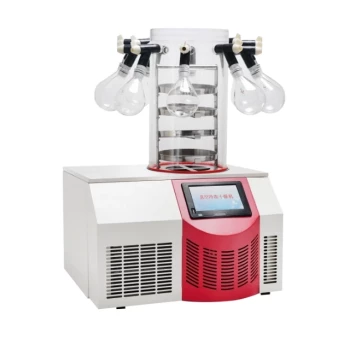
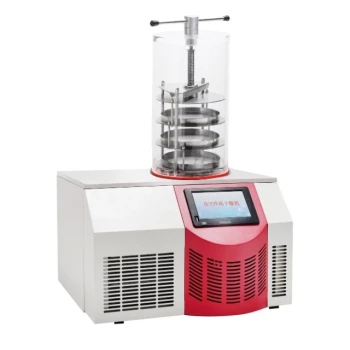
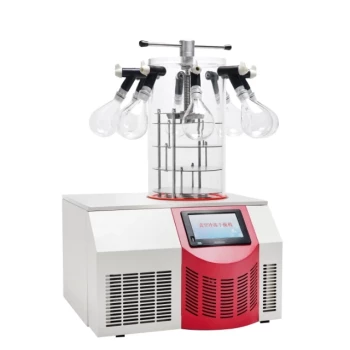
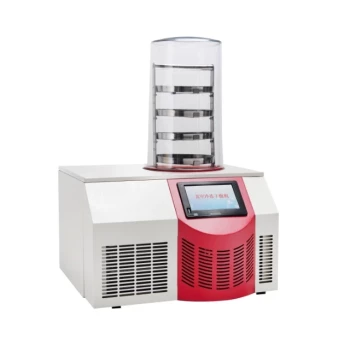
- High Performance Laboratory Freeze Dryer
- High Performance Laboratory Freeze Dryer for Research and Development
People Also Ask
- How does a laboratory electric drying oven contribute to the formation of the initial coating? Expert Insights
- What role does a precision laboratory drying oven play in the synthesis of GO-PANI nanocomposites? Protect Material Integrity
- What role does a laboratory drying oven play in the preparation of zinc oxide nanoparticle precursors?
- What is the necessity of using a laboratory drying oven when processing MoO3/GO composite nanopowders? Find out here.
- What is the role of a laboratory drying oven in cellulose citrate production? Ensure Material Stability & Purity