Knowledge Vacuum Furnace What is the melting process in an electric arc furnace? A Step-by-Step Guide to Efficient Steel Production
Author avatar

Tech Team · Kintek Solution

Updated 2 months ago

What is the melting process in an electric arc furnace? A Step-by-Step Guide to Efficient Steel Production


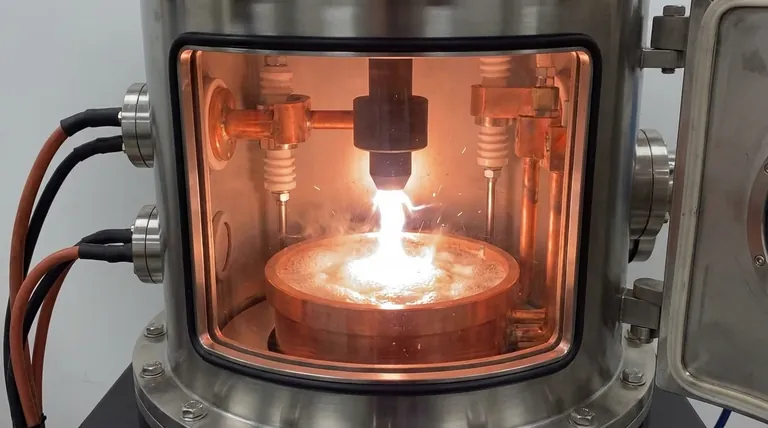
The core of the electric arc furnace (EAF) melting process is the strategic use of high-power electric arcs to convert solid metal scrap into a molten bath. This is not simply a brute-force heating method; it involves a controlled sequence where operators first establish a stable arc shielded by the scrap itself, and only then increase the voltage to accelerate the meltdown efficiently.

The EAF process is defined by its two-stage approach: first, creating a protected, stable arc by boring electrodes into the scrap, and second, maximizing energy transfer by increasing voltage and immersing the electrodes for a rapid, controlled melt.
What is the melting process in an electric arc furnace? A Step-by-Step Guide to Efficient Steel Production

The EAF Melting Sequence: From Scrap to Molten Steel

The journey from a furnace full of cold scrap to a ready-to-tap heat of liquid steel follows a precise and dynamic sequence. Each step is designed to maximize heating efficiency while protecting the furnace itself from the extreme temperatures involved.

The Initial Bore-In

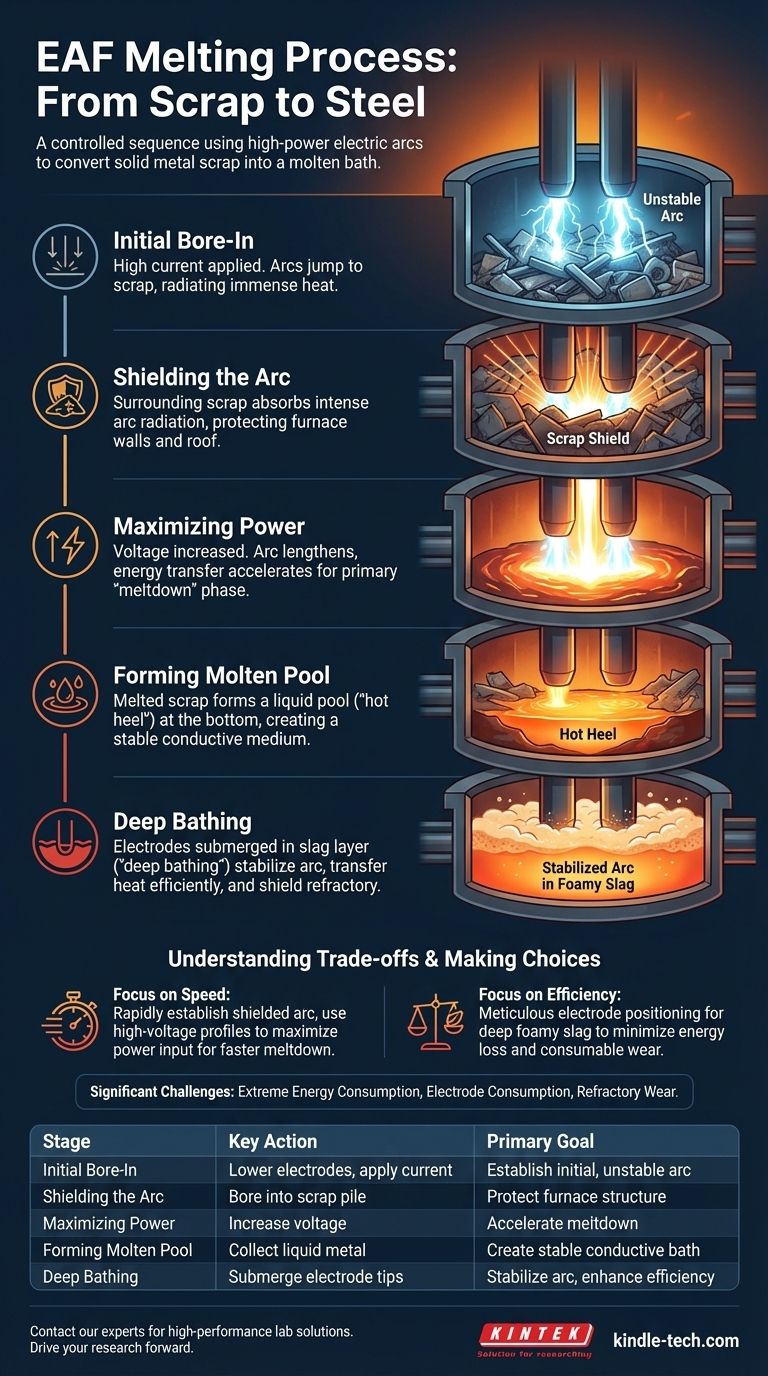
The process begins by lowering massive graphite electrodes toward the pile of charged scrap metal. A high current is applied, creating a powerful electric arc that jumps from the electrode tip to the nearest piece of scrap. This initial arc is unstable and radiates immense heat in all directions.

Shielding the Arc

During the initial phase, the electrodes effectively bore a path down into the scrap pile. The surrounding solid scrap acts as a natural shield, absorbing the arc's intense radiation. This shielding is critical for protecting the furnace's water-cooled walls and roof from damage.

Maximizing Power Input

Once the arcs are sufficiently shielded by the surrounding scrap, it is safe to increase the power. Operators will increase the voltage, which lengthens the arc and dramatically increases the rate of energy transfer. This is the primary "meltdown" phase where the bulk of the scrap is liquefied.

Forming the Molten Pool

As scrap melts, it drips down and forms a liquid pool, or "hot heel," at the bottom of the furnace. This growing bath of molten metal becomes the new target for the electric arcs, providing a more stable and conductive medium than the solid scrap.

Deep Bathing for Efficiency

To complete the melt, operators will lower the electrodes so their tips are submerged in the slag layer that floats on top of the molten steel. This is known as deep bathing or a "foamy slag" practice. This technique stabilizes the arc, transfers heat directly and efficiently into the molten bath, and further shields the furnace refractory from radiation, speeding up the final meltdown of any remaining scrap. A typical melt cycle, or tap-to-tap time, can be as short as 20-30 minutes in modern, high-powered furnaces.

Understanding the Trade-offs

While the EAF is a fast and flexible steelmaking technology, it operates in an extreme environment that presents significant operational challenges and costs.

Extreme Energy Consumption

The EAF is one of the largest single electrical loads on any power grid. Managing electricity costs, especially during peak demand periods, is a primary concern for any EAF operator.

Electrode Consumption

The graphite electrodes are not permanent. The intense heat of the arc causes them to slowly vaporize and break down, making them a significant and costly consumable in the steelmaking process.

Refractory Wear

The inner lining of the furnace, made of heat-resistant refractory bricks, is under constant attack from thermal stress, chemical reactions with slag, and the intense arc radiation. Proper shielding and deep bathing practices are essential to prolong refractory life, but frequent maintenance and relining are unavoidable costs.

Making the Right Choice for Your Goal

Understanding the EAF melting process allows for better control over the balance between production speed and operational cost.

  • If your primary focus is speed and throughput: The key is to establish a shielded arc as quickly as possible to allow for the use of high-voltage profiles that maximize power input and accelerate the meltdown.
  • If your primary focus is operational efficiency: Meticulous control of electrode positioning to create a deep, foamy slag bath is essential for minimizing energy loss, reducing electrode consumption, and extending the life of the furnace lining.

Ultimately, mastering the EAF melting process is a continuous exercise in balancing raw power with precise control.

Summary Table:

Stage Key Action Primary Goal
Initial Bore-In Lower electrodes to create an arc on scrap. Establish an initial, unstable arc.
Shielding the Arc Use surrounding scrap to absorb radiation. Protect furnace walls and roof from damage.
Maximizing Power Increase voltage to lengthen the arc. Accelerate the primary meltdown phase.
Forming Molten Pool Collect liquid metal as a 'hot heel' at the furnace bottom. Create a stable, conductive bath for the arc.
Deep Bathing Submerge electrode tips in the slag layer. Stabilize the arc and transfer heat efficiently to complete the melt.

Master the balance between speed and cost-efficiency in your melting operations. KINTEK specializes in the high-performance lab equipment and consumables essential for advanced metallurgical processes. Our expertise supports the precise control needed for optimal EAF operation. Contact our experts today to discuss how our solutions can enhance your laboratory's capabilities and drive your research forward.

Visual Guide
What is the melting process in an electric arc furnace? A Step-by-Step Guide to Efficient Steel Production Visual Guide

Related Products

People Also Ask

Related Products

Vacuum Arc Induction Melting Furnace

Vacuum Arc Induction Melting Furnace

Discover the power of Vacuum Arc Furnace for melting active & refractory metals. High-speed, remarkable degassing effect, and free of contamination. Learn more now!

Non Consumable Vacuum Arc Induction Melting Furnace

Non Consumable Vacuum Arc Induction Melting Furnace

Explore the benefits of Non-Consumable Vacuum Arc Furnace with high melting point electrodes. Small, easy to operate & eco-friendly. Ideal for laboratory research on refractory metals & carbides.

Electric Rotary Kiln Pyrolysis Furnace Plant Machine Calciner Small Rotary Kiln Rotating Furnace

Electric Rotary Kiln Pyrolysis Furnace Plant Machine Calciner Small Rotary Kiln Rotating Furnace

Electric rotary kiln - precisely controlled, it's ideal for calcination and drying of materials like lithium cobalate, rare earths, and non-ferrous metals.

Electric Rotary Kiln Small Rotary Furnace for Activated Carbon Regeneration

Electric Rotary Kiln Small Rotary Furnace for Activated Carbon Regeneration

Revitalize your activated carbon with KinTek's Electric Regeneration Furnace. Achieve efficient and cost-effective regeneration with our highly automated rotary kiln and intelligent thermal controller.

Electric Rotary Kiln Continuous Working Small Rotary Furnace Heating Pyrolysis Plant

Electric Rotary Kiln Continuous Working Small Rotary Furnace Heating Pyrolysis Plant

Efficiently calcine and dry bulk powder and lump fluid materials with an electric heating rotary furnace. Ideal for processing lithium ion battery materials and more.

Silicon Carbide SiC Thermal Heating Elements for Electric Furnace

Silicon Carbide SiC Thermal Heating Elements for Electric Furnace

Experience the advantages of Silicon Carbide (SiC) Heating Element: Long service life, high corrosion and oxidation resistance, fast heating speed, and easy maintenance. Learn more now!

Spark Plasma Sintering Furnace SPS Furnace

Spark Plasma Sintering Furnace SPS Furnace

Discover the benefits of Spark Plasma Sintering Furnaces for rapid, low-temperature material preparation. Uniform heating, low cost & eco-friendly.

Graphite Vacuum Furnace Negative Material Graphitization Furnace

Graphite Vacuum Furnace Negative Material Graphitization Furnace

Graphitization furnace for battery production has uniform temperature and low energy consumption. Graphitization furnace for negative electrode materials: an efficient graphitization solution for battery production and advanced functions to enhance battery performance.

Vertical High Temperature Graphite Vacuum Graphitization Furnace

Vertical High Temperature Graphite Vacuum Graphitization Furnace

Vertical high temperature graphitization furnace for carbonization and graphitization of carbon materials up to 3100℃.Suitable for shaped graphitization of carbon fiber filaments and other materials sintered in a carbon environment.Applications in metallurgy, electronics, and aerospace for producing high-quality graphite products like electrodes and crucibles.

High Temperature Muffle Oven Furnace for Laboratory Debinding and Pre Sintering

High Temperature Muffle Oven Furnace for Laboratory Debinding and Pre Sintering

KT-MD High temperature debinding and pre-sintering furnace for ceramic materials with various molding processes. Ideal for electronic components such as MLCC and NFC.

Vertical Laboratory Tube Furnace

Vertical Laboratory Tube Furnace

Elevate your experiments with our Vertical Tube Furnace. Versatile design allows for operation under various environments and heat treatment applications. Order now for precise results!

1700℃ Controlled Atmosphere Furnace Nitrogen Inert Atmosphere Furnace

1700℃ Controlled Atmosphere Furnace Nitrogen Inert Atmosphere Furnace

KT-17A Controlled atmosphere furnace: 1700℃ heating, vacuum sealing technology, PID temperature control, and versatile TFT smart touch screen controller for laboratory and industrial use.

Large Vertical Graphite Vacuum Graphitization Furnace

Large Vertical Graphite Vacuum Graphitization Furnace

A large vertical high-temperature graphitization furnace is a type of industrial furnace used for the graphitization of carbon materials, such as carbon fiber and carbon black. It is a high-temperature furnace that can reach temperatures of up to 3100°C.

600T Vacuum Induction Hot Press Furnace for Heat Treat and Sintering

600T Vacuum Induction Hot Press Furnace for Heat Treat and Sintering

Discover the 600T Vacuum Induction Hot Press Furnace, designed for high-temperature sintering experiments in vacuum or protected atmospheres. Its precise temperature and pressure control, adjustable working pressure, and advanced safety features make it ideal for nonmetal materials, carbon composites, ceramics, and metal powders.

Horizontal High Temperature Graphite Vacuum Graphitization Furnace

Horizontal High Temperature Graphite Vacuum Graphitization Furnace

Horizontal Graphitization Furnace: This type of furnace is designed with the heating elements placed horizontally, allowing for uniform heating of the sample. It's well-suited for graphitizing large or bulky samples that require precise temperature control and uniformity.

Mesh belt controlled atmosphere furnace

Mesh belt controlled atmosphere furnace

Discover our KT-MB mesh belt sintering furnace - perfect for high-temperature sintering of electronic components & glass insulators. Available for open air or controlled atmosphere environments.

Graphite Vacuum Furnace High Thermal Conductivity Film Graphitization Furnace

Graphite Vacuum Furnace High Thermal Conductivity Film Graphitization Furnace

The high thermal conductivity film graphitization furnace has uniform temperature, low energy consumption and can operate continuously.

1400℃ Controlled Atmosphere Furnace with Nitrogen and Inert Atmosphere

1400℃ Controlled Atmosphere Furnace with Nitrogen and Inert Atmosphere

Achieve precise heat treatment with KT-14A controlled atmosphere furnace. Vacuum sealed with a smart controller, it's ideal for lab and industrial use up to 1400℃.

Laboratory Muffle Oven Furnace Bottom Lifting Muffle Furnace

Laboratory Muffle Oven Furnace Bottom Lifting Muffle Furnace

Efficiently produce batches with excellent temperature uniformity using our Bottom Lifting Furnace. Features two electric lifting stages and advanced temperature control up to 1600℃.

Graphite Vacuum Continuous Graphitization Furnace

Graphite Vacuum Continuous Graphitization Furnace

High-temperature graphitization furnace is a professional equipment for graphitization treatment of carbon materials. It is a key equipment for the production of high-quality graphite products. It has high temperature, high efficiency and uniform heating. It is suitable for various high-temperature treatments and graphitization treatments. It is widely used in metallurgy, electronics, aerospace, etc. industry.


Leave Your Message