Knowledge What is the primary function of a vacuum induction furnace? Optimize FeCrAl Alloy Smelting with High Purity
Author avatar

Tech Team · Kintek Solution

Updated 3 days ago

What is the primary function of a vacuum induction furnace? Optimize FeCrAl Alloy Smelting with High Purity


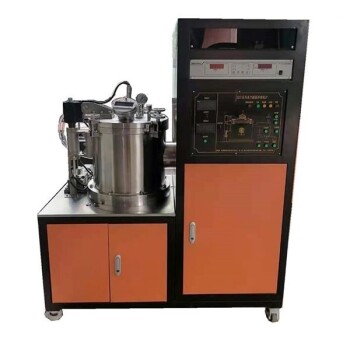
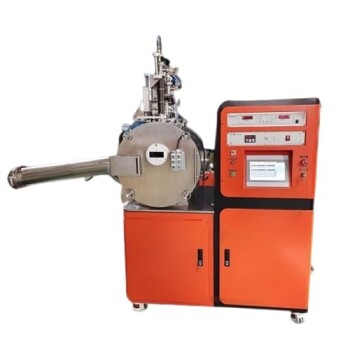
The primary function of a vacuum induction furnace is to create a high-vacuum environment, typically maintained below 100 Pa, to prevent the oxidation of active elements like iron, chromium, and aluminum during smelting. This specific environment ensures high chemical purity and allows for precise control over the alloy's composition, which is critical for maintaining the material's structural integrity.

By isolating the melt from atmospheric contaminants, vacuum induction melting transforms the smelting process from simple liquefaction into a method for purification and precise chemical engineering.

Preserving Alloy Integrity

Preventing Oxidation of Reactive Elements

FeCrAl alloys contain elements—specifically iron, chromium, and aluminum—that are highly chemically active.

In standard environments, these elements react aggressively with oxygen at high temperatures. The vacuum induction furnace eliminates this risk, preserving the intended ratio of these critical components.

Achieving High Chemical Purity

For applications requiring rigorous analysis, such as studying radiation damage, purity is non-negotiable.

The vacuum environment ensures that the final alloy is free from oxides that would otherwise compromise experimental data or material performance.

Enhancing Physical Properties

Removal of Interstitial Gases

Beyond preventing oxidation, the vacuum process actively degasses the molten metal.

It significantly reduces the presence of interstitial elements such as oxygen, nitrogen, and hydrogen, which can embrittle the alloy.

Elimination of Volatile Impurities

The process is effective at removing harmful, low-melting-point metal impurities like lead (Pb), bismuth (Bi), and copper (Cu).

By removing these contaminants and non-metallic inclusions, the alloy’s maximum operating temperature can often be increased significantly—in some cases shifting the ceiling from 750–810 °C to nearly 1090 °C.

Operational Efficiency and Control

Precision Temperature Regulation

Modern vacuum induction furnaces utilize advanced control systems to regulate heat with high precision.

This capability allows operators to adjust the chemical composition and organizational structure of the molten steel dynamically.

Energy and Time Efficiency

Despite the complexity of the equipment, the process is energy-efficient due to optimized thermal control.

High automation levels support continuous production and rapid switching between steel types, shortening overall smelting times.

Understanding the Trade-offs

Strict Parameter Requirements

Achieving these results requires rigorous control over process parameters, particularly regarding the physical properties of the metal.

Operators must carefully monitor the melting point, wettability, and surface tension of the melt to ensure the vacuum environment does not lead to unwanted evaporation or instability.

Complexity of Volatile Elements

While the vacuum removes unwanted gases, it also complicates the management of desired volatile elements.

Elements with a high affinity for oxygen, such as aluminum, titanium, and magnesium, require careful balancing to ensure they are retained in the alloy rather than lost to the vacuum or reactions.

Making the Right Choice for Your Goal

If you are evaluating vacuum induction melting for your FeCrAl alloy production, consider your specific end-goals:

  • If your primary focus is Research and Development: Prioritize this method to ensure the high chemical purity required to study intrinsic material effects without contamination.
  • If your primary focus is High-Temperature Performance: Use this process to eliminate low-melting-point impurities, thereby raising the alloy's maximum operating temperature range.
  • If your primary focus is Process Efficiency: Leverage the furnace's automation and temperature precision to reduce energy consumption and shorten production cycles.

Vacuum induction melting is the definitive solution when the cost of material failure outweighs the complexity of production.

Summary Table:

Feature Benefit for FeCrAl Alloys
High-Vacuum Environment Prevents oxidation of reactive Fe, Cr, and Al elements.
Interstitial Degassing Removes O2, N2, and H2 to prevent material embrittlement.
Impurity Removal Eliminates Pb, Bi, and Cu, raising max operating temps to 1090°C.
Temperature Precision Allows dynamic control of chemical composition and structure.
Process Efficiency High automation reduces smelting time and energy consumption.

Elevate Your Material Standards with KINTEK

Precision in smelting is the difference between material failure and peak performance. KINTEK specializes in advanced laboratory equipment, offering high-performance vacuum induction melting systems and induction melting furnaces designed for the rigorous demands of FeCrAl alloy production and battery research.

Whether you need to achieve high chemical purity for R&D or enhance the thermal limits of your industrial alloys, our comprehensive portfolio—including high-temperature furnaces, crushing systems, and hydraulic presses—provides the reliability your lab requires.

Ready to optimize your smelting process? Contact KINTEK today to discover how our tailored solutions can enhance your lab's efficiency and material integrity.

References

  1. Jian Sun, Xuelin Wang. The Effect of Black-Dot Defects on FeCrAl Radiation Hardening. DOI: 10.3390/met13030458

This article is also based on technical information from Kintek Solution Knowledge Base .

Related Products

People Also Ask

Related Products

Vacuum Heat Treat Furnace and Levitation Induction Melting Furnace

Vacuum Heat Treat Furnace and Levitation Induction Melting Furnace

Experience precise melting with our Vacuum Levitation Melting Furnace. Ideal for high melting point metals or alloys, with advanced technology for effective smelting. Order now for high-quality results.

Small Vacuum Heat Treat and Tungsten Wire Sintering Furnace

Small Vacuum Heat Treat and Tungsten Wire Sintering Furnace

The small vacuum tungsten wire sintering furnace is a compact experimental vacuum furnace specially designed for universities and scientific research institutes. The furnace features a CNC welded shell and vacuum piping to ensure leak-free operation. Quick-connect electrical connections facilitate relocation and debugging, and the standard electrical control cabinet is safe and convenient to operate.

Vacuum Heat Treat Furnace with Ceramic Fiber Liner

Vacuum Heat Treat Furnace with Ceramic Fiber Liner

Vacuum furnace with polycrystalline ceramic fiber insulation liner for excellent heat insulation and uniform temperature field. Choose from 1200℃ or 1700℃ max. working temperature with high vacuum performance and precise temperature control.

Laboratory Vacuum Tilt Rotary Tube Furnace Rotating Tube Furnace

Laboratory Vacuum Tilt Rotary Tube Furnace Rotating Tube Furnace

Discover the versatility of Laboratory Rotary Furnace: Ideal for calcination, drying, sintering, and high-temperature reactions. Adjustable rotating and tilting functions for optimal heating. Suitable for vacuum and controlled atmosphere environments. Learn more now!

Ultra-High Temperature Graphite Vacuum Graphitization Furnace

Ultra-High Temperature Graphite Vacuum Graphitization Furnace

The ultra-high temperature graphitization furnace utilizes medium frequency induction heating in a vacuum or inert gas environment. The induction coil generates an alternating magnetic field, inducing eddy currents in the graphite crucible, which heats up and radiates heat to the workpiece, bringing it to the desired temperature. This furnace is primarily used for graphitization and sintering of carbon materials, carbon fiber materials, and other composite materials.

Vacuum Heat Treat Sintering Brazing Furnace

Vacuum Heat Treat Sintering Brazing Furnace

A vacuum brazing furnace is a type of industrial furnace used for brazing, a metalworking process that joins two pieces of metal using a filler metal that melts at a lower temperature than the base metals. Vacuum brazing furnaces are typically used for high-quality applications where a strong, clean joint is required.

Molybdenum Vacuum Heat Treat Furnace

Molybdenum Vacuum Heat Treat Furnace

Discover the benefits of a high-configuration molybdenum vacuum furnace with heat shield insulation. Ideal for high-purity, vacuum environments like sapphire crystal growth and heat treatment.

Vacuum Sealed Continuous Working Rotary Tube Furnace Rotating Tube Furnace

Vacuum Sealed Continuous Working Rotary Tube Furnace Rotating Tube Furnace

Experience efficient material processing with our vacuum-sealed rotary tube furnace. Perfect for experiments or industrial production, equipped with optional features for controlled feeding and optimized results. Order now.

Vacuum Dental Porcelain Sintering Furnace

Vacuum Dental Porcelain Sintering Furnace

Get precise and reliable results with KinTek's Vacuum Porcelain Furnace. Suitable for all porcelain powders, it features hyperbolic ceramic furnace function, voice prompt, and automatic temperature calibration.

600T Vacuum Induction Hot Press Furnace for Heat Treat and Sintering

600T Vacuum Induction Hot Press Furnace for Heat Treat and Sintering

Discover the 600T Vacuum Induction Hot Press Furnace, designed for high-temperature sintering experiments in vacuum or protected atmospheres. Its precise temperature and pressure control, adjustable working pressure, and advanced safety features make it ideal for nonmetal materials, carbon composites, ceramics, and metal powders.

Graphite Vacuum Furnace High Thermal Conductivity Film Graphitization Furnace

Graphite Vacuum Furnace High Thermal Conductivity Film Graphitization Furnace

The high thermal conductivity film graphitization furnace has uniform temperature, low energy consumption and can operate continuously.

Horizontal High Temperature Graphite Vacuum Graphitization Furnace

Horizontal High Temperature Graphite Vacuum Graphitization Furnace

Horizontal Graphitization Furnace: This type of furnace is designed with the heating elements placed horizontally, allowing for uniform heating of the sample. It's well-suited for graphitizing large or bulky samples that require precise temperature control and uniformity.

2200 ℃ Tungsten Vacuum Heat Treat and Sintering Furnace

2200 ℃ Tungsten Vacuum Heat Treat and Sintering Furnace

Experience the ultimate refractory metal furnace with our Tungsten vacuum furnace. Capable of reaching 2200℃, perfect for sintering advanced ceramics and refractory metals. Order now for high-quality results.

Laboratory Rapid Thermal Processing (RTP) Quartz Tube Furnace

Laboratory Rapid Thermal Processing (RTP) Quartz Tube Furnace

Get lightning-fast heating with our RTP Rapid Heating Tube Furnace. Designed for precise, high-speed heating and cooling with convenient sliding rail and TFT touch screen controller. Order now for ideal thermal processing!

1800℃ Muffle Oven Furnace for Laboratory

1800℃ Muffle Oven Furnace for Laboratory

KT-18 muffle furnace with Japan Al2O3 polycrystalline fibe and Silicon Molybdenum heating element, up to 1900℃, PID temperature control and 7" smart touch screen. Compact design, low heat loss, and high energy efficiency. Safety interlock system and versatile functions.

Graphite Vacuum Furnace Bottom Discharge Graphitization Furnace for Carbon Materials

Graphite Vacuum Furnace Bottom Discharge Graphitization Furnace for Carbon Materials

Bottom-out graphitization furnace for carbon materials, ultra-high temperature furnace up to 3100°C, suitable for graphitization and sintering of carbon rods and carbon blocks. Vertical design, bottom discharging, convenient feeding and discharging, high temperature uniformity, low energy consumption, good stability, hydraulic lifting system, convenient loading and unloading.

2200 ℃ Graphite Vacuum Heat Treat Furnace

2200 ℃ Graphite Vacuum Heat Treat Furnace

Discover the power of the KT-VG Graphite Vacuum Furnace - with a maximum working temperature of 2200℃, it's perfect for vacuum sintering of various materials. Learn more now.

1400℃ Controlled Atmosphere Furnace with Nitrogen and Inert Atmosphere

1400℃ Controlled Atmosphere Furnace with Nitrogen and Inert Atmosphere

Achieve precise heat treatment with KT-14A controlled atmosphere furnace. Vacuum sealed with a smart controller, it's ideal for lab and industrial use up to 1400℃.

1200℃ Controlled Atmosphere Furnace Nitrogen Inert Atmosphere Furnace

1200℃ Controlled Atmosphere Furnace Nitrogen Inert Atmosphere Furnace

Discover our KT-12A Pro Controlled atmosphere furnace - high precision, heavy duty vacuum chamber, versatile smart touch screen controller, and excellent temperature uniformity up to 1200C. Ideal for both laboratory and industrial application.

Vacuum Heat Treat and Sintering Furnace with 9MPa Air Pressure

Vacuum Heat Treat and Sintering Furnace with 9MPa Air Pressure

The air pressure sintering furnace is a high-tech equipment commonly used for the sintering of advanced ceramic materials. It combines vacuum sintering and pressure sintering techniques to achieve high-density and high-strength ceramics.


Leave Your Message