Knowledge What is the primary function of a Vacuum Induction Melting Furnace? Ensure High-Purity GH3535 Alloy Ingot Preparation
Author avatar

Tech Team · Kintek Solution

Updated 1 day ago

What is the primary function of a Vacuum Induction Melting Furnace? Ensure High-Purity GH3535 Alloy Ingot Preparation


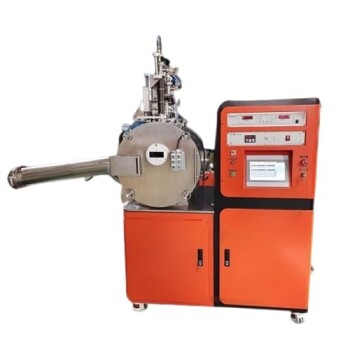
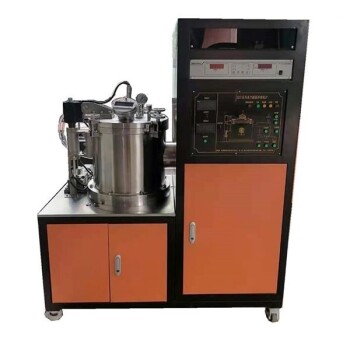
The primary function of a Vacuum Induction Melting (VIM) furnace in the preparation of GH3535 alloy ingots is to melt raw materials using electromagnetic induction within a strictly controlled vacuum environment. This process prevents the oxidation of active alloying elements, specifically chromium and molybdenum, while removing gases and volatile impurities to ensure a precise, high-purity chemical composition.

Core Takeaway: The VIM furnace acts as a purification and homogenization stage, establishing a standardized, oxidation-free alloy substrate essential for accurate research on material behaviors like carbide precipitation.

The Mechanics of High-Purity Melting

Electromagnetic Induction Heating

The furnace utilizes the principle of electromagnetic induction to generate eddy currents directly within the metal raw materials.

This internal energy generation causes the materials to heat rapidly and melt from the inside out.

The result is a highly efficient thermal process that facilitates thorough mixing and homogenization of the chemical components in the liquid state.

The Role of the Vacuum Environment

The defining feature of this equipment is the maintenance of a vacuum during the melting process.

This environment isolates the molten pool from atmospheric contaminants, specifically preventing the introduction of interstitial impurities such as oxygen and nitrogen.

Preserving Critical Alloy Elements

Preventing Oxidation Loss

GH3535 alloy relies on specific active elements, such as chromium (Cr) and molybdenum (Mo), to define its properties.

In a standard open-air furnace, these elements are highly reactive and susceptible to oxidation, which would alter the alloy's final composition.

The VIM furnace effectively suppresses this oxidation loss, ensuring that the final ingot retains the exact amount of active elements intended by the design.

Ensuring Compositional Precision

By protecting reactive elements, the furnace guarantees precise composition ratios.

This precision is critical for creating a "standardized substrate," which provides a reliable baseline for subsequent scientific research, particularly regarding carbide precipitation.

Refining and Degassing

Removal of Volatiles

The vacuum pressure facilitates the evaporation and removal of harmful gases and volatile impurities from the molten pool.

This "degassing" capability creates a cleaner, denser material structure compared to non-vacuum melting methods.

Creation of Master Alloys

Because of this high level of control, VIM is typically used to manufacture the initial experimental electrodes and blanks.

It serves as the foundational step, producing high-quality master alloys that meet strict purity standards before any further processing occurs.

Understanding the Trade-offs

Initial Structure vs. Final Structure

While VIM excels at chemical homogenization and purity, it is primarily a preparation stage.

The ingots produced are often considered "base materials" or electrodes intended for further refinement.

The Need for Secondary Processing

For applications requiring optimized physical structure (such as grain structure refinement), the VIM ingot often undergoes subsequent processes.

Techniques like Vacuum Arc Remelting (VAR) are frequently employed after VIM to further refine the material structure, using the VIM ingot as the consumable electrode.

Making the Right Choice for Your Goal

To maximize the utility of a Vacuum Induction Melting furnace in your workflow:

  • If your primary focus is Chemical Purity: Rely on VIM to prevent the loss of reactive elements like Chromium and Molybdenum and to eliminate gaseous impurities.
  • If your primary focus is Research Consistency: Use VIM ingots to create a standardized substrate, ensuring that variations in your data (such as carbide precipitation) are due to experimental variables, not inconsistent raw materials.
  • If your primary focus is Structural Optimization: Treat the VIM process as the foundational step to create high-quality electrodes for secondary refining processes like VAR.

The VIM furnace is the non-negotiable first step for establishing the chemical integrity required for high-performance GH3535 alloys.

Summary Table:

Feature Function in GH3535 Preparation Key Benefit
Vacuum Environment Prevents interaction with O2 and N2 Zero oxidation of Chromium (Cr) and Molybdenum (Mo)
Induction Heating Generates internal eddy currents Rapid, uniform melting and thorough homogenization
Degassing Removes volatile impurities and gases Produces a clean, dense, and high-purity alloy substrate
Compositional Control Maintains exact alloying element ratios Standardized material for reliable research on carbides

Elevate Your Materials Research with KINTEK Precision

High-performance alloys like GH3535 demand the uncompromising purity and control that only expert-grade equipment can provide. KINTEK specializes in advanced laboratory solutions, offering state-of-the-art vacuum induction melting (VIM) furnaces designed to eliminate contamination and ensure compositional precision for your most critical experiments.

Beyond melting, our comprehensive portfolio supports your entire workflow—from crushing and milling systems to high-temperature furnaces, hydraulic presses, and specialized consumables. Whether you are developing master alloys or conducting fundamental research on carbide precipitation, KINTEK provides the reliability and technical excellence your lab needs to succeed.

Ready to optimize your alloy preparation? Contact us today to find the perfect solution for your facility!

References

  1. Jiang Li, Xingtai Zhou. Formation of nano-sized M2C carbides in Si-free GH3535 alloy. DOI: 10.1038/s41598-018-26426-0

This article is also based on technical information from Kintek Solution Knowledge Base .

Related Products

People Also Ask

Related Products

Vacuum Heat Treat Furnace and Levitation Induction Melting Furnace

Vacuum Heat Treat Furnace and Levitation Induction Melting Furnace

Experience precise melting with our Vacuum Levitation Melting Furnace. Ideal for high melting point metals or alloys, with advanced technology for effective smelting. Order now for high-quality results.

Small Vacuum Heat Treat and Tungsten Wire Sintering Furnace

Small Vacuum Heat Treat and Tungsten Wire Sintering Furnace

The small vacuum tungsten wire sintering furnace is a compact experimental vacuum furnace specially designed for universities and scientific research institutes. The furnace features a CNC welded shell and vacuum piping to ensure leak-free operation. Quick-connect electrical connections facilitate relocation and debugging, and the standard electrical control cabinet is safe and convenient to operate.

600T Vacuum Induction Hot Press Furnace for Heat Treat and Sintering

600T Vacuum Induction Hot Press Furnace for Heat Treat and Sintering

Discover the 600T Vacuum Induction Hot Press Furnace, designed for high-temperature sintering experiments in vacuum or protected atmospheres. Its precise temperature and pressure control, adjustable working pressure, and advanced safety features make it ideal for nonmetal materials, carbon composites, ceramics, and metal powders.

Molybdenum Vacuum Heat Treat Furnace

Molybdenum Vacuum Heat Treat Furnace

Discover the benefits of a high-configuration molybdenum vacuum furnace with heat shield insulation. Ideal for high-purity, vacuum environments like sapphire crystal growth and heat treatment.

Vacuum Heat Treat Sintering Brazing Furnace

Vacuum Heat Treat Sintering Brazing Furnace

A vacuum brazing furnace is a type of industrial furnace used for brazing, a metalworking process that joins two pieces of metal using a filler metal that melts at a lower temperature than the base metals. Vacuum brazing furnaces are typically used for high-quality applications where a strong, clean joint is required.

Vacuum Heat Treat Furnace with Ceramic Fiber Liner

Vacuum Heat Treat Furnace with Ceramic Fiber Liner

Vacuum furnace with polycrystalline ceramic fiber insulation liner for excellent heat insulation and uniform temperature field. Choose from 1200℃ or 1700℃ max. working temperature with high vacuum performance and precise temperature control.

Laboratory Vacuum Tilt Rotary Tube Furnace Rotating Tube Furnace

Laboratory Vacuum Tilt Rotary Tube Furnace Rotating Tube Furnace

Discover the versatility of Laboratory Rotary Furnace: Ideal for calcination, drying, sintering, and high-temperature reactions. Adjustable rotating and tilting functions for optimal heating. Suitable for vacuum and controlled atmosphere environments. Learn more now!

Vacuum Heat Treat and Sintering Furnace with 9MPa Air Pressure

Vacuum Heat Treat and Sintering Furnace with 9MPa Air Pressure

The air pressure sintering furnace is a high-tech equipment commonly used for the sintering of advanced ceramic materials. It combines vacuum sintering and pressure sintering techniques to achieve high-density and high-strength ceramics.

Ultra-High Temperature Graphite Vacuum Graphitization Furnace

Ultra-High Temperature Graphite Vacuum Graphitization Furnace

The ultra-high temperature graphitization furnace utilizes medium frequency induction heating in a vacuum or inert gas environment. The induction coil generates an alternating magnetic field, inducing eddy currents in the graphite crucible, which heats up and radiates heat to the workpiece, bringing it to the desired temperature. This furnace is primarily used for graphitization and sintering of carbon materials, carbon fiber materials, and other composite materials.

Horizontal High Temperature Graphite Vacuum Graphitization Furnace

Horizontal High Temperature Graphite Vacuum Graphitization Furnace

Horizontal Graphitization Furnace: This type of furnace is designed with the heating elements placed horizontally, allowing for uniform heating of the sample. It's well-suited for graphitizing large or bulky samples that require precise temperature control and uniformity.

Non Consumable Vacuum Arc Induction Melting Furnace

Non Consumable Vacuum Arc Induction Melting Furnace

Explore the benefits of Non-Consumable Vacuum Arc Furnace with high melting point electrodes. Small, easy to operate & eco-friendly. Ideal for laboratory research on refractory metals & carbides.

2200 ℃ Tungsten Vacuum Heat Treat and Sintering Furnace

2200 ℃ Tungsten Vacuum Heat Treat and Sintering Furnace

Experience the ultimate refractory metal furnace with our Tungsten vacuum furnace. Capable of reaching 2200℃, perfect for sintering advanced ceramics and refractory metals. Order now for high-quality results.

Vacuum Sealed Continuous Working Rotary Tube Furnace Rotating Tube Furnace

Vacuum Sealed Continuous Working Rotary Tube Furnace Rotating Tube Furnace

Experience efficient material processing with our vacuum-sealed rotary tube furnace. Perfect for experiments or industrial production, equipped with optional features for controlled feeding and optimized results. Order now.

1800℃ Muffle Oven Furnace for Laboratory

1800℃ Muffle Oven Furnace for Laboratory

KT-18 muffle furnace with Japan Al2O3 polycrystalline fibe and Silicon Molybdenum heating element, up to 1900℃, PID temperature control and 7" smart touch screen. Compact design, low heat loss, and high energy efficiency. Safety interlock system and versatile functions.

Vacuum Hot Press Furnace Machine Heated Vacuum Press

Vacuum Hot Press Furnace Machine Heated Vacuum Press

Discover the advantages of Vacuum Hot Press Furnace! Manufacture dense refractory metals & compounds, ceramics, and composites under high temp and pressure.

2200 ℃ Graphite Vacuum Heat Treat Furnace

2200 ℃ Graphite Vacuum Heat Treat Furnace

Discover the power of the KT-VG Graphite Vacuum Furnace - with a maximum working temperature of 2200℃, it's perfect for vacuum sintering of various materials. Learn more now.

Laboratory Rapid Thermal Processing (RTP) Quartz Tube Furnace

Laboratory Rapid Thermal Processing (RTP) Quartz Tube Furnace

Get lightning-fast heating with our RTP Rapid Heating Tube Furnace. Designed for precise, high-speed heating and cooling with convenient sliding rail and TFT touch screen controller. Order now for ideal thermal processing!

Graphite Vacuum Furnace IGBT Experimental Graphitization Furnace

Graphite Vacuum Furnace IGBT Experimental Graphitization Furnace

IGBT experimental graphitization furnace, a tailored solution for universities and research institutions, with high heating efficiency, user-friendliness, and precise temperature control.

Graphite Vacuum Furnace Bottom Discharge Graphitization Furnace for Carbon Materials

Graphite Vacuum Furnace Bottom Discharge Graphitization Furnace for Carbon Materials

Bottom-out graphitization furnace for carbon materials, ultra-high temperature furnace up to 3100°C, suitable for graphitization and sintering of carbon rods and carbon blocks. Vertical design, bottom discharging, convenient feeding and discharging, high temperature uniformity, low energy consumption, good stability, hydraulic lifting system, convenient loading and unloading.

Graphite Vacuum Furnace High Thermal Conductivity Film Graphitization Furnace

Graphite Vacuum Furnace High Thermal Conductivity Film Graphitization Furnace

The high thermal conductivity film graphitization furnace has uniform temperature, low energy consumption and can operate continuously.


Leave Your Message