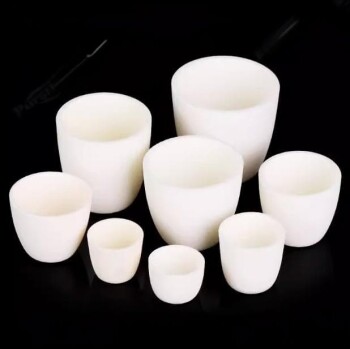
The primary function of an alumina crucible in the synthesis of lithium nickel nitride (Li2.07Ni0.62N) is to serve as a chemically inert, heat-resistant isolation vessel. It physically separates the pressed precursor pellets from the stainless steel reactor walls during the 720°C heat treatment, preventing contamination that would compromise the material's purity.
In this synthesis, the alumina crucible acts as a critical protective barrier that withstands high thermal loads while ensuring the chemical reaction remains contained strictly within the precursor materials.
The Role of Material Selection
Thermal Stability at High Temperatures
The synthesis of Li2.07Ni0.62N requires heat treatment at approximately 720°C.
At this temperature, many standard containment materials might soften or degrade. Alumina retains its structural rigidity, providing a stable platform for the reaction throughout the heating cycle.
Stability in Nitrogen Atmospheres
This solid-state reaction occurs specifically within a nitrogen atmosphere.
Alumina is non-reactive in this environment. It does not release oxygen or adsorb nitrogen in a way that would interfere with the delicate nitriding process required to form the final compound.
Protecting Sample Integrity
Preventing Reactor Contamination
The most critical function of the crucible is to prevent the sample from touching the stainless steel reactor.
Without the alumina vessel, the precursors could react with the iron, chromium, or nickel in the stainless steel. This would introduce metallic impurities that destroy the electrochemical properties of the final product.
Ensuring Stoichiometric Accuracy
Success in solid-state synthesis depends on maintaining precise ratios of elements (stoichiometry).
By acting as a passive container, the crucible ensures that no precursor material is lost to side reactions with the vessel. This guarantees the final product matches the target formula of Li2.07Ni0.62N.
Understanding the Trade-offs
Context-Specific Inertness
It is vital to understand that alumina is chosen specifically for its compatibility with this reaction.
While alumina is ideal here, it is not a universal solution for all lithium compounds. Other syntheses involving highly corrosive lithium salts (like Li2OHCl) may require nickel crucibles to prevent corrosion, as alumina might degrade under those specific conditions.
Thermal Shock Sensitivity
While alumina has excellent heat resistance, it can be susceptible to thermal shock if cooled too rapidly.
The user must ensure the cooling ramp rates of the furnace are controlled. Rapid temperature changes could crack the crucible, potentially exposing the sample to the reactor environment.
Making the Right Choice for Your Goal
To ensure high-quality synthesis results, consider the following based on your specific experimental priorities:
- If your primary focus is Chemical Purity: Ensure the alumina crucible is high-grade and free of cracks to completely isolate the pellets from the stainless steel reactor.
- If your primary focus is Stoichiometric Control: Verify that the precursor pellets are fully contained within the crucible to prevent any mass loss during the heating phase.
The choice of crucible material is the first line of defense in protecting the chemical identity of your synthesized material.
Summary Table:
| Feature | Function in Li2.07Ni0.62N Synthesis |
|---|---|
| Thermal Stability | Maintains structural integrity at 720°C heat treatment |
| Chemical Inertness | Prevents reaction between precursors and stainless steel reactor walls |
| Atmospheric Compatibility | Remains non-reactive within nitrogen-rich synthesis environments |
| Purity Protection | Eliminates metallic contamination (Fe, Cr) from the reactor |
| Stoichiometry | Ensures precise elemental ratios by preventing side reactions |
Elevate Your Materials Synthesis with KINTEK Precision
Achieving the perfect stoichiometric balance in high-temperature solid-state reactions requires more than just skill—it demands high-performance equipment. KINTEK specializes in providing the global scientific community with premium laboratory solutions, including our high-grade alumina and ceramic crucibles, high-temperature furnaces, and stainless steel high-pressure reactors.
Whether you are synthesizing advanced battery materials or conducting delicate nitriding processes, our portfolio offers the thermal stability and chemical resistance your research depends on. From muffle and tube furnaces to specialized battery research tools and corrosion-resistant consumables, KINTEK is your partner in laboratory excellence.
Ready to optimize your synthesis purity? Contact our technical experts today to find the ideal containment and heating solutions for your lab.
Related Products
- Arc-Shaped Alumina Ceramic Crucible High Temperature Resistant for Engineering Advanced Fine Ceramics
- Alumina Al2O3 Ceramic Crucible Semicircle Boat with Lid for Engineering Advanced Fine Ceramics
- Engineering Advanced Fine Ceramics Alumina Al2O3 Crucible With Lid Cylindrical Laboratory Crucible
- Engineering Advanced Fine Ceramics Alumina Crucibles (Al2O3) for Thermal Analysis TGA DTA
- Engineering Advanced Fine Alumina Al2O3 Ceramic Crucible for Laboratory Muffle Furnace
People Also Ask
- Why Use Alumina Crucibles & Powder Burial for NaSICON? Ensure Phase Purity and Prevent Elemental Volatilization
- What is the primary purpose of using alumina crucibles for LLTO ceramics? Optimize Your High-Temperature Sintering
- Why are alumina crucibles and mother powder essential for LATP sintering? Optimize Your Solid Electrolyte Performance
- Why are high-purity alumina crucibles used for liquid lead corrosion experiments? Ensure Data Accuracy at 550°C
- Primary considerations for choosing alumina crucibles and quartz tubes in indium intercalation: Ensure Material Purity