The primary purpose of Silicon Carbide (SiC) grinding consumables is to serve as a precision polishing agent for sintered LiZr2(PO4)3 (LZP) ceramic pellets. By utilizing materials such as SiC sandpaper, researchers mechanically remove surface roughness and exterior impurities that result from the sintering process. This treatment creates a highly flat and chemically clean surface, which is a non-negotiable requirement for high-performance solid-state battery interfaces.
Surface preparation is not merely cosmetic; using SiC to achieve a pristine, flat surface is a fundamental requirement for lowering interfacial resistance and ensuring the accuracy of electrochemical performance data.
Achieving Surface Integrity
Removal of Surface Roughness
Sintered ceramic pellets, including LZP, naturally emerge from the furnace with microscopic irregularities and texture.
Elimination of Impurities
The outer layer of a pellet often contains contaminants or segregation phases formed during high-temperature processing.
Creating a Uniform Baseline
SiC grinding systematically strips away these defective layers. This exposes the dense, uniform bulk material necessary for reliable testing.
The Impact on Electrochemical Performance
Optimizing Electrode Deposition
For solid-state electrolytes to function, they must make perfect contact with electrodes. A flat surface is vital for the successful deposition of gold electrodes.
Reducing Interfacial Resistance
The most critical technical outcome of SiC polishing is the reduction of interfacial resistance. Rough surfaces create physical gaps between the electrolyte and the anode (such as metallic lithium), which act as insulating barriers.
Ensuring Characterization Accuracy
To characterize the material's intrinsic properties, the interface must not be the limiting factor. Polishing ensures that performance data reflects the chemistry of the LZP, not the poor quality of the contact.
Critical Process Considerations
The Necessity of Flatness
Without the flatness provided by SiC grinding, the contact area between the electrolyte and the metal anode is significantly reduced. This leads to uneven current distribution and potential hot spots during battery operation.
Material Compatibility
While other materials like zirconia are used for processing different electrolytes (such as LLZTO) due to hardness and inertness, SiC is specifically highlighted here for the surface finishing of LZP. It provides the necessary abrasion to handle the ceramic pellet without damaging the bulk structure.
Applying This to Your Process
If your primary focus is minimizing resistance:
- Ensure the polishing process continues until the surface is optically flat to eliminate physical gaps that impede ion flow.
If your primary focus is data reliability:
- Treat SiC polishing as a standardization step to remove surface impurities that could skew electrochemical characterization results.
By rigorously smoothing the LZP surface with SiC consumables, you transform a rough ceramic pellet into a viable, high-efficiency electrolyte component.
Summary Table:
| Objective | Action of SiC Grinding | Benefit to LZP Electrolyte Performance |
|---|---|---|
| Surface Texture | Removes microscopic irregularities | Creates a flat surface for uniform electrode deposition |
| Chemical Purity | Strips away segregation phases | Eliminates exterior impurities formed during sintering |
| Interface Quality | Minimizes physical gaps | Significantly reduces interfacial resistance with metal anodes |
| Data Integrity | Standardizes the testing baseline | Ensures electrochemical data reflects bulk material properties |
Elevate Your Battery Research with KINTEK Precision Solutions
High-performance solid-state electrolytes like LZP require uncompromising surface integrity. KINTEK specializes in providing the high-quality laboratory equipment and consumables necessary for every stage of your material synthesis and characterization.
Whether you need precision crushing and milling systems to prepare raw powders, high-temperature muffle or vacuum furnaces for sintering, or hydraulic pellet presses and SiC grinding consumables for surface finishing, we have the expertise to support your workflow. Our portfolio also includes electrolytic cells, battery research tools, and high-durability crucibles designed to withstand rigorous lab environments.
Ready to minimize interfacial resistance and maximize your research accuracy? Contact KINTEK today to discover how our comprehensive range of lab solutions can streamline your battery development process.
Related Products
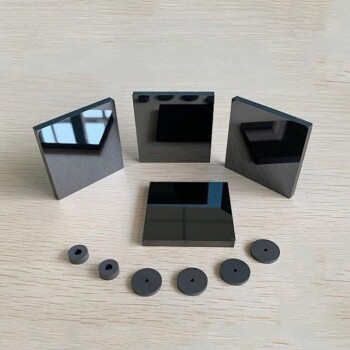
- Silicon Carbide (SIC) Ceramic Sheet Wear-Resistant Engineering Advanced Fine Ceramics
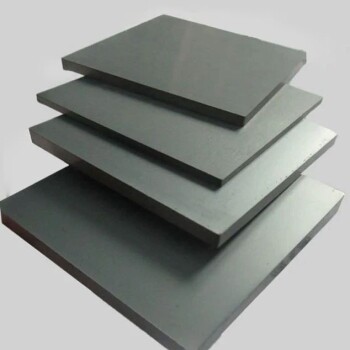
- Silicon Carbide (SIC) Ceramic Plate for Engineering Advanced Fine Ceramics
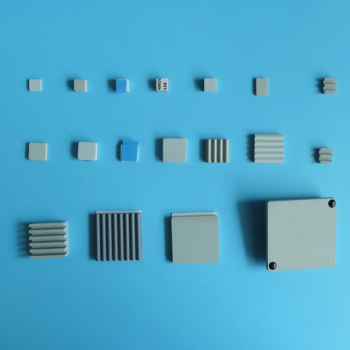
- Silicon Carbide (SIC) Ceramic Sheet Flat Corrugated Heat Sink for Engineering Advanced Fine Ceramics
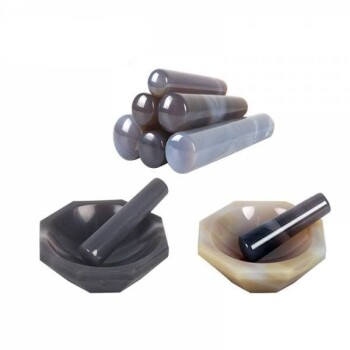
- Nature Agate Mortar and Pestle for Grinding and Mixing
- Liquid Nitrogen Cryogenic Grinder Mill Cryomill Airflow Ultrafine Pulverizer
People Also Ask
- What is the strongest ceramics? Silicon Carbide Leads in Hardness & Thermal Strength
- What are the properties and applications of silicon carbide ceramics? Solve Extreme Engineering Challenges
- What are the uses of silicon carbide ceramics in different industries? Master Extreme Performance in Aerospace, Semiconductors & More
- What are the properties of SiC? Unlock High-Temperature, High-Frequency Performance
- What are the applications of silicon carbide? From Abrasives to High-Tech Semiconductors